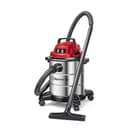
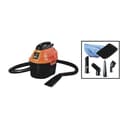
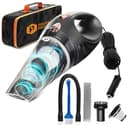
Wet pickup is the spec that decides what you can do
Of everything in the comparison table above, this is the line to read first. A dry-only vacuum removes loose debris. A wet/dry vacuum removes loose debris and liquid, which unlocks a different class of work:
- Carpet and seat extraction. Spray an interior cleaner, agitate it with a brush, then pull the dirty solution back out of the fibres. Without wet pickup you can only blot it with a towel, which leaves most of the soil and all of the moisture behind.
- Spills, right now. A drink in a footwell is a wet-vacuum job within minutes or a smell problem within days.
- Water ingress. A left-open window or a blocked sunroof drain puts water under the carpet, where it will grow mould. See our guide to car smells for why that matters.
Both wet/dry machines under this cap do all three. Neither handheld does any of them. That is the entire argument for spending sixty dollars rather than twenty.
Why peak horsepower is a weak number, and what to do about it
Both wet/dry vacuums here publish a “peak HP” figure — 4 and 2 — and it is worth being clear about what that is. Peak horsepower on a consumer vacuum is a momentary inrush figure measured at startup, not sustained power at the nozzle, and there is no requirement anywhere that two brands measure it identically. It is directionally useful between two machines of the same type and nearly meaningless across types.
Neither handheld publishes any power figure at all, which means the only honest comparison available is the one the table makes: wet or dry, tank size, power source. We report the blanks rather than filling them with estimates — and a published number we cannot verify is reported as the maker’s claim, which is what it is.
The order of operations that does more than extra suction
This is the part of an interior detail that costs nothing and is skipped most often:
- Take the mats out first and do them separately. Rubber mats get hosed; carpet mats get brushed and vacuumed outside the car where you can be rough with them.
- Brush before you vacuum, not after. Work the pile with a stiff brush in two directions. You will see grit come to the surface that no amount of suction would have lifted.
- Work high to low. Headliner, seats, console, carpet. Everything you disturb falls down, so finish at the bottom.
- Crevice tool along every seam. Seat rails, the gap between seat base and back, under the console lip. This is where the dirt a casual vacuum leaves behind actually lives.
- Then clean, then protect. Vacuum first, then clean the hard surfaces, then protect the fabric. Our full interior guide walks the whole sequence.
Corded, cordless or 12V - pick on where you park
All three power sources appear under this cap and the right answer is entirely situational. Corded wet/dry is the most capable and needs a household outlet within an extension lead of the car. Cordless is the most pleasant to use in a cabin and the least capable, limited by runtime rather than suction. A 12V handheld is the only one that works wherever the car is, which is why it is the one that gets used.
The genuinely good answer for most people is two machines: a sub-$25 12V handheld that lives in the car permanently, and one wet/dry vacuum in the garage for the twice-a-year deep clean. Both of those together still fit under this page’s cap, which is a better outcome than one $95 vacuum.
What the $100 cap excludes, and why it costs more
A ceiling is only honest if it cuts something off. This one excludes the 5-gallon Shop-Vac, at well over $150. What the extra money buys is brand-name build and parts availability over a long service life rather than any additional capability — it is the same tank size and the same wet/dry function as the Vacmaster at the top of this page. Our shop vac versus car vacuum comparison covers whether a workshop machine is the right tool for a cabin at all.
About the prices on this page
Every figure is read live from the price layer and stamped with its own date; nothing is typed into this page. The $100 ceiling is applied against that live data, on November 23, 2026, and the page states the date in prose rather than hard-coding a number that could rot. If the daily refresh ever stops, the numbers disappear and the buttons fall back to “Check price on Amazon” rather than showing you something stale.