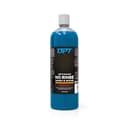
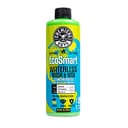
Buy Optimum No Rinse if you can put a bucket down, and Chemical Guys EcoSmart if you cannot. That is genuinely the whole decision, because these two products are not competing on quality — they are competing on what your parking space allows. A rinseless wash needs water in a bucket and handles a car with road film on it. A waterless wash needs nothing and is for dust.
What makes this pair worth a dedicated page is that both makers publish a dilution figure, which is rare enough in this category to be the headline. ONR is 0.5 oz per gallon for rinseless washing; EcoSmart is 16:1. Those two numbers tell you more about long-run cost than any review could.
What each one publishes
| Published claim | Optimum No Rinse | Chemical Guys EcoSmart (concentrate) |
|---|
| Method | Rinseless — dilute into a bucket | Waterless — spray and wipe |
| Dilution | 0.5 oz per gallon (rinseless washing) | “Dilute 16:1” |
| Finished volume per bottle | 32 oz makes ~64 gallons | “up to 2 gallons” from 16 oz |
| Other published dilutions | ~30 uses, 0.5 to 8 oz/gal | None |
| Mechanism (maker’s words) | Not published | Hyper-surfactants + lubricating agents, carnauba emulsion |
| Rated surfaces | Not on the maker page (retail listing: paint, coatings, glass, interior) | Paintwork, glass, plastic, rubber, stainless, metal, aluminum |
| Coating compatibility | Not published by the maker | Not published |
| How dirty a car it suits | Not published | Not published |
| pH | Not published | Not published |
| Protection duration | Not claimed | Not published (carnauba gloss claimed) |
Read the bottom half of that table as carefully as the top. Both products are quiet about the thing a buyer most wants to know — how dirty a car they can safely handle — and neither publishes a coating-compatibility statement on the maker’s own page. The thirty-use ONR table is genuinely exceptional data, and it is data about dilution, not about safety limits.
Why the dilution gap is bigger than it looks
Half an ounce per gallon is roughly 1:256. Sixteen to one is, obviously, 1:16. So a 32 oz bottle of ONR makes about 64 gallons of wash solution, while a 16 oz bottle of EcoSmart concentrate makes two gallons of ready-to-use spray.
Those are not comparable units — a gallon of bucket solution washes a car, a gallon of waterless spray wipes several — so do not read it as a 32x value difference. What it does tell you is that neither product is expensive per use, and that the rinseless route is cheaper per wash by a wide margin once you account for the fact that a bucket of solution does a whole car.
The second thing the ONR table tells you is that the bottle is not just a wash product. Clay lube at 2 oz/gal, drying aid and quick detailer at 8, glass and interior cleaner at 6, pad washer and windshield washer fluid at 1 — those are products you otherwise buy separately. If you are assembling a first kit, that consolidation is worth more than the wash performance.
The honest limit on both of them
Neither of these is a replacement for a pressure rinse on a dirty car, and the quiet in the published data is the tell. Chemical Guys publishes no grit warning and no dirt-level guidance for EcoSmart; Optimum publishes no equivalent either.
The physics is the same in both cases. Any no-rinse method relies on lubrication to carry grit away from the clear coat instead of dragging it across. Lubrication has a capacity. Past it, you are polishing your paint with road grit and a microfiber towel, and you will see the result the first time you put an inspection light across the panel.
So the rule for both: dust, light film and a car washed often — yes. Mud, winter salt, a month of highway commuting — rinse it first, which on a hose-less setup means the bucket-and-pump approach rather than a bottle. Our winter washing guide covers the season where this matters most.
Towels are the real running cost
With a hose wash you own one mitt. With either of these methods you need a stack of towels — one clean face per panel, swapped the instant it loads — and that stack is the actual consumable. Eight to ten plush towels for a sedan is a normal count.
Which makes towel laundry a safety issue rather than housekeeping. Chemical Guys’ own microfiber guidance is to keep fabric softener and high dryer heat away from detailing towels, because softener films the split fibres and heat fuses the tips — both largely permanent. A towel that has stopped grabbing is a towel that drags. See how to wash microfiber towels and the drying towel roundup.
Which to buy, in one line each
- Carport, shared driveway, water restriction, frozen hose: ONR. The published dilution table makes it the best-value bottle on this site.
- Street parking, no water access at all:EcoSmart concentrate — and know the dust-only limit going in.
- You have a hose and a pressure washer: neither, as your main wash. Use a two-bucket wash and keep a waterless spray for dust.
- You want one bottle to replace five: ONR, on the strength of the thirty-use table.