Buy on throw only if you are correcting whole cars: a 15 mm machine finishes a full vehicle in noticeably fewer passes, and a 8-9 mm machine is easier to control everywhere a panel curves. For a first polisher on a first car, the 9 mm Griot’s G9 is the pick on this page, because it publishes the most complete spec sheet of any machine here and sits deliberately between the two extremes. If you already know you are doing a neglected whole car, the 15 mm Adam’s Swirl Killer is the one that saves you the afternoon.
The honest headline, though, is that throw is a smaller variable than the internet treats it as — and the industry knows it. Griot’s own buffers education page lists orbit sizes for every machine in its range and never explains what the number means. Porter-Cable, whose 7424XP taught a generation to polish, does not publish an orbit figure at all.
The published figures, side by side
| Machine | Published throw | Published speed | Plate | Best suited to |
|---|
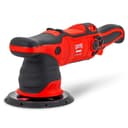
| Chemical Guys TORQX kit | 8 mm | Variable | Ships as a kit | First machine, spot work, tight panels |
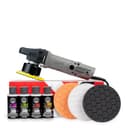
| Griot’s G9 | 9 mm | 6 settings, 2,000-6,400 OPM | 6 in vented | Light to moderate correction, whole car with patience |
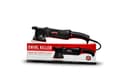
| Adam’s Swirl Killer 15 | 15 mm | Not published | 5-6 in | Whole-car correction, fewest passes |
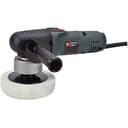
| Porter-Cable 7424XP | Not published | 2,500-6,800 OPM | 6 in | Budget entry with the biggest tutorial library |
Two of these four machines publish no throw figure or no speed figure. That is not an oversight on our part — it is the state of the category, and it is why a page that ranks polishers purely on orbit size is ranking on data that half the market does not supply.
What the number actually changes
A random orbital does two things at once: the backing plate spins, and the whole plate travels around a small circle. Throw is the diameter of that circle. Everything else follows from it:
- Coverage per pass. A bigger orbit sweeps the pad across more paint for the same number of rotations. This is the real, measurable benefit, and on a full-size SUV it is the difference between one session and two.
- Cut rate.More pad travel means more abrasive work done per second, so a long throw removes defects faster — and removes clear coat faster, which is the same sentence with a different emphasis.
- Control on curves. A long-throw pad is livelier. On a flat hood it is lovely. Around a mirror cap, a fender arch or a sharp body line it wants to walk, and keeping it flat takes more hand.
- Heat and load.More travel plus a heavy pad plus downward pressure heats a panel and bogs a motor faster. This is why Griot’s publishes Constant Speed Control on the G9 as a feature: it “ensures consistent speed regardless of downward pressure”.
What throw does not change is paint safety in the way people often assume. The reason a dual action is forgiving is the random orbit itself, not the size of the orbit. A rotary of any kind can burn paint; a random orbital of any throw is far harder to burn with. That distinction is covered properly in polisher vs buffer, and it matters more than any figure on this page.
How the makers draw the line themselves
Griot’s is the useful case study, because it sells machines across the range and publishes a positioning sentence for each. The G9, at 9 mm, is for “Versatile, light to moderate paint correction and wax application”. The BOSS G15 and G21 — the longer-throw machines — are for “Professional-level, light to severe paint correction and paint finishing”. The GR3 Mini Rotary is an “Innovative solution for spot repair, removal of isolated severe paint defects”, and the G8 Mini is for tight spaces.
Read that as the maker’s own answer to this page’s question: throw scales with how severe a defect you intend to chase, and the small machines exist because the big ones cannot reach. Nothing in that positioning says a longer throw produces a better finish — it says it produces more correction capability.
So which one should you actually buy?
If it is your first machine: 8-9 mm. The TORQX kit if you want pads and polishes in the box, the G9 if you want the tool you will still be using in five years. Both are genuinely forgiving, and neither will leave you unable to correct a normal daily driver.
If you are correcting a whole neglected car, or several cars: 15 mm, and accept that you will slow down and tidy up around the curves afterwards. Plenty of people own both for exactly this reason — a long throw for the flat panels, a short throw or a small cordless machine for everything else.
If you are chasing a single scratch or a headlight, throw is irrelevant and you want a small tool. See removing scratches and restoring headlights instead.