Clay & Coat

Best Water Spot Remover for Glass

Glass is where hard water etches first and shows worst. The removers whose listings are actually rated for it, the gel that stays put on a windscreen, the one to keep off a coated car - and the repellent that stops the whole cycle.

By Stephen V.Last updated How we pick

The verdict

Buy Adam’s Water Spot Remover. It is the only product here whose listing names windows among its rated surfaces, and it is also the cheapest remover on the page — so it is both the top pick and the budget pick. It is for the common case: hard-water staining on glass from a sprinkler, a car wash or drying in the sun, on a car with no ceramic coating to worry about.

Two situations change the answer. On a windscreen or a side window, where a liquid runs off before it can dwell, the Chemical Guys Heavy Duty Water Spot Remover Gelis the pick — a gel is the format that stays where you put it on a vertical pane. For severe etching plus iron fallout, CARPRO IronX LimeScale does both in one pass, with one important caveat: its own listing states it may damage ceramic coatings, so it is not for a coated car.

And the pick that stops you coming back: Rain-X Original at the cheap end or Aquapel for longevity. Removing spots treats the symptom; a glass repellent makes water leave the pane before it can dry on it.

Glass shows hard-water damage earlier and more obviously than paint, for two reasons. It is perfectly flat and optically clear, so a mineral deposit scatters light in a way you look straight through every time you drive. And it has no clear coat — what etches on glass etches the glass itself, and no amount of polishing wax over the top hides it.

A water spot is not dirt. It is what is left when a droplet evaporates and the dissolved minerals it was carrying stay behind. There are three stages of severity and the products below do different jobs across them. Surface deposits sit on top and come off with an acidic or chelating remover. Bonded deposits have begun to attach and need dwell time and agitation. Etchingis a physical depression in the glass, and chemistry cannot fill it — that is a mechanical job, or a replacement.

So this page ranks on four things. Whether the listing names glass at all, because a remover sold for paint is not automatically rated for a windscreen with a rain sensor behind it. Format, since a liquid runs off a vertical pane and a gel does not. Whether the maker says anything about ceramic coatings— one product here says it may damage them, which is far more useful than the silence everybody else offers. And whether a published method exists, which on one product it does, in unusual detail.

The honesty note that runs through the whole table: not one product on this page publishes a pH figure. Every remover in this category is doing acid-and-chelation chemistry of some kind and none of them will tell you how strong it is, which is exactly the figure you would want before putting it on trim, on a coating, or near bare metal. Where a field is blank below, that is a finding about the category rather than a gap in our reading.

How this is funded: we earn a commission if you buy through our links, at no extra cost to you. It never changes which product we recommend, and we’ll tell you when we’d skip one. Full disclosure.

Quick picks

Ranked on published specs, coverage and buyer fit. Select a row to jump to the full write-up. We haven’t tested these in a lab — here is exactly what we do instead.

#ProductKey specsBest forPrice
1
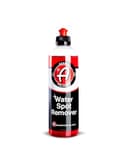
Adam's Polishes Water Spot Remover

Adam's Polishes Water Spot Remover

The household crossover: Adam's lists it for shower doors and windows alongside car paint and glass. That is a fair signal of what it is - a hard-water stain remover that happens to be car-safe, rather than a paint-correction product.

Type
Hard-water stain remover
Rated surfaces
Glass, paint, windows
Best overall - and the cheapest remover
$14.44 · View on Amazon

Price as of November 12, 2026. #ad How we’re funded

2
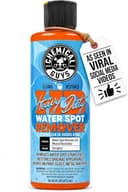
Chemical Guys Heavy Duty Water Spot Remover Gel

Chemical Guys Heavy Duty Water Spot Remover Gel

A gel rather than a spray, and that is the useful part - it clings to vertical glass and does not run off the spot you are trying to treat before it has had time to work.

Type
Gel water-spot remover
Rated surfaces
Glass, paint
Size
16 oz
Best for vertical glass
$19.97 · View on Amazon

Price as of November 12, 2026. #ad How we’re funded

3
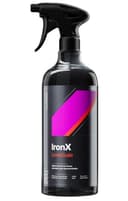
CARPRO IronX LimeScale Iron & Mineral Spot Remover

CARPRO IronX LimeScale Iron & Mineral Spot Remover

The strongest chemical answer here to deposits that have already etched in. CARPRO builds it as a dual-action product - it dissolves calcium and hard-water minerals and strips iron fallout in the same pass - so a decontamination that would otherwise be two steps becomes one. It is the specialist tool, not the everyday bottle.

Type
Dual-action iron + mineral remover
Rated surfaces
Paint, glass, wheels
Size
34 fl oz
Best for severe etching plus fallout
$36.96 · View on Amazon

Price as of November 12, 2026. #ad How we’re funded

4
Griot's Garage Water Spot Remover

Griot's Garage Water Spot Remover

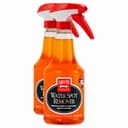
The bottle most people should reach for first. It has the broadest surface rating of the group - Griot's lists paint, chrome, plastic trim and glass - and the listing describes the formula as free of harsh substances, so it is the low-anxiety choice when spots have landed across a whole side of the car rather than one etched patch.

Type
Multi-surface water-spot remover
Rated surfaces
Paint, chrome, plastic trim, glass
Use
Spray, dwell ~1 minute, wipe damp then dry, follow with a wash
Size
22 fl oz, 2-pack
Best for mixed surfaces in one pass
$27.98 · View on Amazon

Price as of November 12, 2026. #ad How we’re funded

5
Rain-X Original Glass Treatment

Rain-X Original Glass Treatment

The one everybody has heard of, and at this price the sensible place to start. It does not last as long as the coatings above, but it is available in every filling station and reapplying it is a five-minute job.

Type
Glass water repellent
Rated surfaces
Exterior glass
Size
7 oz
Cheapest prevention
$9.18 · View on Amazon

Price as of November 12, 2026. #ad How we’re funded

6
Aquapel Glass Treatment Applicators

Aquapel Glass Treatment Applicators

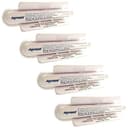
Sold as sealed single-use applicators, which is unusual and genuinely clever: the chemistry cannot go off in a half-used bottle in your garage, and each application is the same as the last.

Type
Glass water repellent
Size
4 applicators
Best long-term prevention
$40.98 · View on Amazon

Price as of November 12, 2026. #ad How we’re funded

7
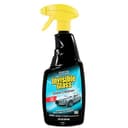
Invisible Glass Auto Glass Cleaner (22 oz)

Invisible Glass Auto Glass Cleaner (22 oz)

The category benchmark, and remarkably cheap. It is ammonia-free, which is the specification that actually matters in a car - ammonia attacks window tint and can damage the anti-glare coatings on screens.

Size
22 fl oz
Best final clean
$4.48 · View on Amazon

Price as of November 12, 2026. #ad How we’re funded

Specs as published on each product’s own listing, read between August 18, 2026 and September 7, 2026. Prices are live, as of November 12, 2026. A figure a brand does not publish is left out of this table and shown as “Not published” in that product’s full write-up below.

The picks in full

#1Top pick — Best overall - and the cheapest remover

Adam's Polishes Water Spot Remover

The household crossover: Adam's lists it for shower doors and windows alongside car paint and glass. That is a fair signal of what it is - a hard-water stain remover that happens to be car-safe, rather than a paint-correction product.

Who it is for:the common case. Sprinkler overspray, a drive-through car wash that let the car dry itself, or a hose-down in the sun — hard-water staining on glass that has not yet become etching, on an uncoated car.

It wins on the thing this page is about: Adam’s publishes its rated surfaces as glass, paint and windows, and it is the only entry on this page whose listing names windows specifically. Every other remover here lists glass among several surfaces, which is not the same statement. It is also the lowest-priced remover in the group, which makes the usual trade — buy the right tool or buy the cheap one — disappear entirely.

What Adam’s does not publish: a size, a pH, a dwell time, or anything about ceramic coatings. Work on cool glass out of direct sun, keep it off dried-out trim, and rinse thoroughly — the standard precautions, because the label will not give you specific ones.

Strengths

  • Rated for glass, shower doors, windows and paint
  • Sensible price for a bottle you will use a few times a year
  • Widely available in a larger twin pack

Trade-offs

  • Aimed at surface staining rather than deep etching
  • As with any acidic cleaner, keep it off hot panels and rinse well
What it isHard-water stain remover for glass and paint
SizeNot published
CoverageNot published
TypeHard-water stain remover
Rated surfacesGlass, paint, windows
pHNot published

Specs read from the product listing, on August 18, 2026. “Not published” means the brand does not state that figure.

#2Best for vertical glass

Chemical Guys Heavy Duty Water Spot Remover Gel

A gel rather than a spray, and that is the useful part - it clings to vertical glass and does not run off the spot you are trying to treat before it has had time to work.

Who it is for:windscreens, side windows and rear glass — the panes where a sprayed liquid runs to the bottom of the pane and dwells where you did not want it. If your problem is on a window rather than on a roof or a bonnet, start here.

The format is the feature. A clinging gel stays on a vertical surface long enough to work, which is a genuine mechanical advantage rather than a marketing one, and Chemical Guys rates it for glass and paint. On a stubborn windscreen the practical routine is gel, dwell, agitate with a soft pad, then re-apply to the spots that remain rather than flooding the whole pane again.

It is heavy-duty, which cuts both ways: no pH is published, and the same cling that keeps it on glass keeps it on rubber trim and in panel gaps. Mask or avoid the surround, and rinse thoroughly.

Strengths

  • Gel consistency clings to vertical surfaces and stays on the spot
  • Rated for both glass and paint
  • Easier to control and localize than a liquid

Trade-offs

  • Gel needs more thorough rinsing than a thin liquid
  • Heavy-duty chemistry - not something to leave dwelling in the sun
What it isClinging gel water-spot remover, 16 oz
Size16 oz
CoverageNot published
TypeGel water-spot remover
Rated surfacesGlass, paint
pHNot published

Specs read from the product listing, on August 18, 2026. “Not published” means the brand does not state that figure.

#3Best for severe etching plus fallout

CARPRO IronX LimeScale Iron & Mineral Spot Remover

The strongest chemical answer here to deposits that have already etched in. CARPRO builds it as a dual-action product - it dissolves calcium and hard-water minerals and strips iron fallout in the same pass - so a decontamination that would otherwise be two steps becomes one. It is the specialist tool, not the everyday bottle.

Who it is for:the worst case, and only the worst case. Long-term hard-water staining with embedded iron in the mix — a car parked under a rail line, or a neglected one where the glass has orange specks as well as rings.

It is a dual-action product, attacking the mineral deposit and the ferrous contamination in the same pass, and it is rated for paint, glass and wheels. At 34 fl oz it is also by far the largest bottle here, which matters because this is the job where you will use the most product.

One hard constraint, from CARPRO’s own listing: it may damage ceramic coatings and is not described as coating-safe.On a coated car this is the wrong product — use the Griot’s or Adam’s bottles and accept more passes. That disclosure is genuinely to CARPRO’s credit, because every other remover on this page is silent on the question, which is not the same as being safe.

Strengths

  • Dual action - dissolves mineral deposits and removes iron fallout in a single step
  • Rated for paint, glass and wheels, and aimed at prep before polishing or sealing
  • Dissolving deposits chemically saves the clear coat you would remove by compounding them out

Trade-offs

  • CARPRO's own listing warns it may damage ceramic coatings - not the bottle for a coated car
  • The listing calls for ventilation, PPE and a test in an inconspicuous area first
  • The most expensive option here, and CARPRO states it carries 10% less iron-removing active than plain IronX
What it isDual-action iron and mineral spot remover, 34 fl oz
Size34 fl oz
CoverageNot published
TypeDual-action iron + mineral remover
Rated surfacesPaint, glass, wheels
Ceramic coatingsMay damage - not coating-safe per listing
pHNot published

Specs read from the product listing, on September 3, 2026. “Not published” means the brand does not state that figure.

#4Best for mixed surfaces in one pass

Griot's Garage Water Spot Remover

The bottle most people should reach for first. It has the broadest surface rating of the group - Griot's lists paint, chrome, plastic trim and glass - and the listing describes the formula as free of harsh substances, so it is the low-anxiety choice when spots have landed across a whole side of the car rather than one etched patch.

Who it is for:spotting that is not confined to the glass. Water marks across glass, paint, chrome and plastic trim together — which is what a sprinkler or a hard-water rinse actually produces.

Griot’s publishes the broadest rated-surfaces list on this page — paint, chrome, plastic trim and glass — and, uniquely here, publishes an actual method: spray, dwell around one minute, wipe damp and then dry, and follow with a wash. That is four more pieces of usable instruction than any other label in this group provides, and on a car with mixed spotting it means you can do the whole vehicle with one bottle instead of switching products at every trim line.

It is a two-pack of 22 fl oz bottles, so the sticker price is for twice the product. No pH is published and nothing is said about coatings.

Strengths

  • Rated for paint, chrome, plastic trim and glass - the widest surface list here
  • Griot's describes the patented formula as free of harsh substances, unlike the specialist removers
  • Costs far less per ounce than the specialist bottle, and now ships as two 22 oz bottles

Trade-offs

  • Only sold as a two-pack now, so the minimum spend is double a single bottle
  • Less aggressive than a dedicated mineral dissolver on deposits that have already etched
  • Not a wipe-and-go - it needs about a minute of dwell, a damp-towel wipe, a dry pass, then a wash
What it isMulti-surface water-spot remover, 22 oz x 2
Size22 fl oz, 2-pack
CoverageNot published
TypeMulti-surface water-spot remover
Rated surfacesPaint, chrome, plastic trim, glass
UseSpray, dwell ~1 minute, wipe damp then dry, follow with a wash
pHNot published

Specs read from the product listing, on September 3, 2026. “Not published” means the brand does not state that figure.

#5Cheapest prevention

Rain-X Original Glass Treatment

The one everybody has heard of, and at this price the sensible place to start. It does not last as long as the coatings above, but it is available in every filling station and reapplying it is a five-minute job.

Who it is for:everyone, after the removal is done — and particularly anyone whose spots keep coming back, which means the real problem is the water supply rather than the glass.

This is the cheapest product on the entire page and the only one that addresses the cause. A glass repellent lowers the surface energy of the pane so water beads tightly and is thrown off by airflow or by a wiper instead of sitting in a flat film and evaporating in place. Fewer droplets that dry on the glass means fewer mineral rings, which is the whole mechanism.

Rain-X publishes its rated surface as exterior glass and no durability figure, so expect to reapply and treat it as maintenance rather than a coating. It also has to go on genuinely clean, spot-free glass — applied over existing deposits it seals the view you were trying to fix. Removal first, always. Our Aquapel vs Rain-X comparison covers the trade between the two.

Strengths

  • Costs a few dollars and is stocked absolutely everywhere
  • Immediate, obvious improvement in rain visibility
  • Reapplication is quick and cheap enough to be routine

Trade-offs

  • Shortest-lived option here - months, not a year
  • Can cause wiper judder on some cars as it wears unevenly
What it isConsumer glass water repellent, 7 oz
Size7 oz
CoverageNot published
TypeGlass water repellent
Rated surfacesExterior glass
Rated durabilityNot published

Specs read from the product listing, on August 18, 2026. “Not published” means the brand does not state that figure.

#6Best long-term prevention

Aquapel Glass Treatment Applicators

Sold as sealed single-use applicators, which is unusual and genuinely clever: the chemistry cannot go off in a half-used bottle in your garage, and each application is the same as the last.

Who it is for: someone who would rather do this once a season than once a month, and anyone who dislikes storing a part-used bottle of anything.

Sealed single-use applicators, four to a pack, which is a genuinely different product format rather than a premium version of the same thing. The practical benefit is consistency: each application comes from a fresh sealed ampoule rather than from a bottle that has been open in a hot garage since spring, which removes the most common reason a glass treatment underperforms.

Aquapel publishes no durability figure, so the longevity claim is ours from the product class and not a number anyone has stated. It is the most expensive prevention option here and it is still cheap relative to replacing an etched windscreen.

Strengths

  • Single-use sealed applicators - no degraded half-bottle problem
  • Long-standing reputation among windshield installers
  • Very quick to apply, one window at a time

Trade-offs

  • Cost per application is high compared with a bottle
  • Once an applicator is opened it must be used
What it isSingle-use windshield treatment applicators (4-pack)
Size4 applicators
CoverageNot published
TypeGlass water repellent
FormatSealed single-use applicators
Rated durabilityNot published

Specs read from the product listing, on August 18, 2026. “Not published” means the brand does not state that figure.

#7Best final clean

Invisible Glass Auto Glass Cleaner (22 oz)

The category benchmark, and remarkably cheap. It is ammonia-free, which is the specification that actually matters in a car - ammonia attacks window tint and can damage the anti-glare coatings on screens.

Who it is for:the step immediately after removal and immediately before a repellent goes on — and then every week afterwards.

A water-spot remover leaves residue behind by definition; the chemistry has to be taken off before you can judge the result or apply anything else. This is the cheapest item on the page, it is ammonia-free and stated tint-safe, and both of those matter on a car: ammonia attacks aftermarket tint film, and the inside of your rear window usually has some.

The practical routine is two towels — one to clean with, one dry to finish — and vertical strokes on the outside, horizontal on the inside, so you can tell which face a streak is on. Our streak-free glass guide has the rest, and the glass cleaner roundup ranks the category.

Strengths

  • Ammonia-free, so it is safe on aftermarket window tint
  • Leaves no residue film, which is what causes night-time glare
  • Costs a few dollars and is available everywhere

Trade-offs

  • Trigger spray produces a wider mist than an aerosol
  • Heavy interior film may need two passes
What it isAmmonia-free automotive glass cleaner, tint safe
Size22 fl oz
CoverageNot published
Ammonia-freeYes
Tint safeYes
FormatTrigger spray

Specs read from the product listing, on September 7, 2026. “Not published” means the brand does not state that figure.

Work out which of the three problems you have

Test one: does it wipe away wet? Spray the glass with plain water and wipe with a clean microfiber. If the rings disappear while wet and return as it dries, you have surface mineral deposits. Any remover on this page will take them off, and the cheapest one will do.

Test two: can you feel it?Run a fingertip over a dry, clean pane. A raised, slightly gritty texture is bonded deposit — that needs dwell time and agitation, which is where the gel earns its place on a vertical window.

Test three: is it a depression rather than a deposit?If the mark is visible through the glass at an angle, survives a chemical pass, and cannot be felt as anything raised, it is etching. Chemistry does not fill a depression. The honest options are a mechanical glass polish, living with it, or replacement — and no product on this page claims otherwise.

Method, in the order that works

Wash the car first. Removers are not cleaners. Spraying one onto a dusty pane spends it on dust.

Work cool, and out of the sun. Hot glass makes any of these products dry before they can act, which is how you get a second problem on top of the first.

Give it the dwell time, then agitate.Only Griot’s publishes a figure — around one minute — so with the others, apply to a small test area and watch it rather than walking away. Agitate with a soft applicator, not an abrasive pad.

Rinse thoroughly, then wash the panel.Griot’s explicitly says to follow with a wash, and that is good practice with all of them: residue left in a window seal or on a wiper blade is residue that works on rubber for weeks.

Then clean, then protect. Glass cleaner to get the chemistry off and see what you achieved, then a repellent on clean, dry, spot-free glass.

Four cautions specific to glass

Coated cars.If your glass or paint is ceramic-coated, the IronX LimeScale is out — its own listing says it may damage coatings. Every other remover here is silent on the subject, and silence is not a safety claim. Test an inconspicuous area, and read coating maintenance before you reach for anything strong.

Trim and rubber.The gel’s cling is an advantage on a pane and a liability in a window surround. Keep all of these off dried-out rubber and plastic, and rinse what lands there immediately.

Tint.Aftermarket film is on the inside face, so interior cleaning is where tint gets damaged — which is why ammonia-free matters on the cleaner you finish with. Removers are an exterior job; keep them there.

Wipers and sensors. A modern windscreen has a rain sensor, a camera mount or both behind the glass at the top centre. Nothing here is rated for those fittings because nobody publishes a rating, so work around them rather than over them.

The real fix is upstream

Almost every water spot on glass is created by one of three things, and all three are preventable. Drying in the sun— wash in the shade or early, and dry the car rather than letting it dry. Sprinklers— the worst offender, because sprinkler water is often the hardest water a car meets and it dries on in place. And rinsing with hard tap water and walking away.

A blower is the single most effective preventative purchase, because it removes water from glass, seals and mirror housings without touching the surface at all — see the car dryer roundup. After that it is drying technique: how to dry your car without scratching and how to prevent water spots cover the rest. For the paint side of the same problem, the main water spot remover roundup ranks the category without the glass constraint.

About the prices on this page

Every figure in the table is read live from the price layer and carries its own date. Note the volume differences before comparing stickers: the IronX LimeScale is 34 fl oz, the Griot’s is a two-pack of 22 fl oz bottles, and the Adam’s publishes no size at all — which is the single most annoying gap in this category.
Frequently asked questions

What is the best water spot remover for car glass?

Adam's Water Spot Remover, because it is the only product in this group whose listing names windows among its rated surfaces - glass, paint and windows - rather than listing glass among several surfaces in passing. It is also the cheapest remover here, which makes it both the top pick and the budget pick. On a windscreen or side window specifically, the Chemical Guys gel is the better format, because a gel clings to a vertical pane long enough to work while a sprayed liquid runs to the bottom of it.

Can hard water spots be removed from glass permanently?

Deposits can; etching cannot. If the mark is a mineral deposit sitting on the glass, a remover takes it off and it is gone. If the water sat long enough to attack the glass itself, what you have is a physical depression, and chemistry cannot fill a depression - no product on this page claims it can. The test is whether the mark survives a chemical pass and cannot be felt as anything raised. At that point the honest options are a mechanical glass polish, living with it, or replacement.

Will a water spot remover damage a ceramic coating?

CARPRO states that IronX LimeScale may damage coatings and does not describe it as coating-safe, so on a coated car that one is out. Every other remover on this page is silent on the question, and silence is not a safety claim - none of them publishes a pH either, which is the figure you would actually want. The practical approach on a coated car is to use the mildest product that works, test an inconspicuous area first, keep dwell times short, and rinse thoroughly.

Should I use a gel or a spray on a windscreen?

A gel, for a mechanical reason rather than a chemical one. A sprayed liquid on a vertical pane runs to the bottom within seconds, so the top of the windscreen gets almost no dwell time and the lower edge and the seal get all of it. A clinging gel stays where you put it, which is why the Chemical Guys Heavy Duty gel is our pick for windows specifically. The trade is that the same cling keeps it on the rubber surround too, so mask or avoid the edges and rinse well.

Does Rain-X remove water spots?

No - it prevents them, which is a different and arguably more useful job. A glass repellent lowers the surface energy of the pane so water beads tightly and gets thrown off by airflow or a wiper instead of lying in a flat film and evaporating in place. Fewer droplets drying on the glass means fewer mineral rings. It has to go onto genuinely clean, spot-free glass, though: applied over existing deposits it seals in the view you were trying to fix. Remove first, then protect.

What causes water spots on car windows?

Dissolved minerals left behind when a droplet evaporates in place. The three common sources are drying in the sun after a wash, lawn sprinklers - usually the worst, because sprinkler water is often very hard and dries on undisturbed - and rinsing with hard tap water and walking away. All three are preventable, and prevention is cheaper than any product on this page: wash in the shade, dry the car rather than letting it dry, and park out of sprinkler range.

How do I stop water spots coming back on glass?

Two things, in order. First, stop letting water dry on the glass: a blower removes water from panes, seals and mirror housings without touching the surface, and good drying technique handles the rest. Second, treat the glass with a repellent so the water that does land beads and leaves. Neither maker here publishes a durability figure for their treatment, so reapply as maintenance rather than assuming it is permanent - and always apply to clean, dry glass with no deposits left on it.

Sources

  • Chemical Guys — Ceramic Coating Maintenance — On coating longevity: durability drops toward 1-2 years without care but reaches multiple years with pH-neutral washing and periodic maintenance (accessed July 18, 2026)
  • Griot's Garage — How-To: Polish — Machine polishing removes swirls, light scratches, water spots and oxidation; work small sections and start least-aggressive (accessed July 18, 2026)
  • Aquapel (PGW Auto Glass) — Aquapel Glass Treatment — Maker page: Aquapel 'forms a chemical bond with the glass which increases water repellency, causing water to bead and easily shed off the glass', as opposed to products that 'simply coat glass'; 'One application can last for months!' and it 'lasts up to 6 times longer than silicone-based products'; single-use applicator is squeezed by the wings 'until a popping sound is heard', wiped up and down then side to side on clean glass and dried immediately; claims it 'improves vision in the rain, day and night' and makes it 'easier to clear ice, snow, and even dirt and bugs'; cites a University of Michigan study in which hydrophobic coatings improved visual acuity by nearly 34% and response time by 25 percent, from four seconds to three (accessed October 5, 2026)
  • Rain-X — Original Glass Water Repellent — Maker page: rated for exterior glass; directions are to clean and dry the glass, apply in temperatures above 40 degrees F, apply to 'a small, folded, dry cloth', wipe on 'using a firm, circular and overlapping motion', allow to dry ('a slight haze may appear'), then 'Reapply Rain-X to ensure complete and uniform coverage' and remove the final haze; NO durability figure and NO reapplication interval are published anywhere on the page; carries a California Proposition 65 warning that the product 'can expose you to chemicals including Naphthalene, which is known to the State of California to cause cancer' (accessed October 5, 2026)
  • Invisible Glass — Products (Stoner Car Care) — Maker page: the automotive cleaner is "Engineered to remove road film, interior haze, and grime from automotive glass without streaks or residue" with "Trusted performance for windshields, windows, and mirrors"; the home version promises "the same streak-free clarity trusted in vehicles"; automotive spray listed at 22 fl oz plus an aerosol. The maker's own product page does NOT state whether the formula contains ammonia, does NOT mention window tint, ceramic film or tinted film anywhere, and publishes NO ingredient list, pH or VOC figure — the ammonia-free and tint-safe claims this site cites for the product come from the retail listing, not from this page (accessed October 17, 2026)

Keep reading