Clay & Coat

Meguiar's Ultimate Compound Alternatives

Ultimate Compound is a diminishing abrasive rated for hand or machine use, which is a genuinely hard combination to replace. These are the five registry compounds that match it on a stated strength or undercut it on price - and which one fits your paint.

By Stephen V.Last updated How we pick

The verdict

The closest alternative is Griot’s Garage Complete Compound, and the reason is a published figure: Griot’s states it is rated for all automotive paint finishes. That is the sentence you want on a modern hard clear coat, where a softer compound tends to glaze over the defect instead of cutting it. It is for someone correcting a recent car by machine, at roughly the same price.

The budget pick is Mothers California Gold Scratch Remover — the cheapest product here that does a job worth doing, which is spot-treating an individual scratch by hand. It is not a whole-car compound and nothing about it pretends to be.

Two specialists change the answer. If you want a proper two-stage correction rather than one all-round bottle, Chemical Guys V36 is the cutting stage designed to be followed by a finishing polish. And if your paint is older single-stage or lacquer, Adam’s One Step Polish is the only product here whose listing states it is rated for those finishes — which on a classic is the difference between a correction and a very expensive mistake.

Meguiar’s Ultimate Compound is one of the hardest products in car care to replace, and it is worth being precise about why before offering anything instead of it. Three published properties do the work. It is a diminishing abrasive, so the abrasives break down as you work them — the same bottle cuts at the start of a set and refines toward the end of it. It is rated for hand or machine use, which very few compounds are, and which means you can test a panel by hand before committing a polisher to it. And it is cheap, in a 15.2 oz bottle, which makes it the default one-bottle answer for someone who is only buying one.

So the honest framing of this page is that most alternatives beat it on one axis and lose on another. A dedicated cutting compound cuts harder and cannot be used by hand. A one-step polish is gentler and more forgiving on soft paint. A professional-volume compound is better value per ounce and comes in a quart you will not finish. Nothing in our registry is strictly better at all three things at once, and a page that claimed otherwise would be selling you something.

This page therefore ranks on the four published figures that decide which swap suits you: abrasive type, where a maker states it; whether hand application is rated; cut grade or stage, which tells you whether a product expects a second bottle behind it; and rated paint types, which matters enormously on anything older than a modern clear coat and which exactly one product here publishes.

A note on what no one in this category publishes. There is no standard numeric cut scale in consumer car care, so “cut grade” is a word rather than a number on every product here — Meguiar’s publishes none for Ultimate Compound, Griot’s publishes none, and the only quantitative-sounding claims are role descriptions like “cutting stage 1 of 2”. That is why the right method is always the same: test the least aggressive combination that works on one small area, with a light, before you touch the rest of the car.

How this is funded: we earn a commission if you buy through our links, at no extra cost to you. It never changes which product we recommend, and we’ll tell you when we’d skip one. Full disclosure.

Quick picks

Ranked on published specs, coverage and buyer fit. Select a row to jump to the full write-up. We haven’t tested these in a lab — here is exactly what we do instead.

#ProductKey specsBest forPrice
1
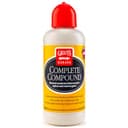
Griot's Garage Complete Compound

Griot's Garage Complete Compound

Griot's positions this for all automotive paint finishes, which matters more than it sounds - modern ceramic clear coats are harder than older paint and not every compound is formulated with them in mind.

Application
Machine
Closest direct alternative
$13.99 · View on Amazon

Price as of November 12, 2026. #ad How we’re funded

2
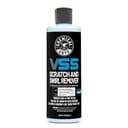
Chemical Guys VSS One-Step Scratch & Swirl Remover

Chemical Guys VSS One-Step Scratch & Swirl Remover

A genuine one-step: it cuts and then finishes in the same pass, so you correct and refine without swapping products or pads. For a light-to-moderate swirl problem on a car you want back together the same afternoon, that is the right trade.

Application
Hand or machine
Best match on hand-or-machine use
$22.97 · View on Amazon

Price as of November 12, 2026. #ad How we’re funded

3
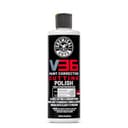
Chemical Guys V36 Optical Grade Cutting Polish

Chemical Guys V36 Optical Grade Cutting Polish

Part of a deliberate multi-step system rather than a do-everything bottle. V36 cuts, V38 finishes; if you want the results a professional two-stage correction gives, this is the honest way to get there.

Application
Machine
Cut grade
Cutting (stage 1 of 2)
Best for a proper two-stage correction
$22.99 · View on Amazon

Price as of November 12, 2026. #ad How we’re funded

4
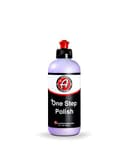
Adam's Polishes One Step Polish

Adam's Polishes One Step Polish

The safest one-step for unusual paint. Adam's states it is safe on clear coat, single stage and lacquer alike, which is a genuinely useful thing to know if you are working on an older or restored car.

Rated paint types
Clear coat, single stage, lacquer
Best for single-stage and lacquer paint
$21.24 · View on Amazon

Price as of November 12, 2026. #ad How we’re funded

5
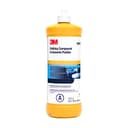
3M Rubbing Compound 05973

3M Rubbing Compound 05973

The body-shop bottle. A full quart of genuine cutting compound at a price per ounce nothing else here matches - the pick if you are correcting a whole neglected car rather than spot-treating a door.

Application
Machine
Cut grade
Cutting (rubbing) compound
Best for heavy oxidation and whole-car volume
$35.98 · View on Amazon

Price as of November 12, 2026. #ad How we’re funded

6
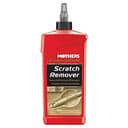
Mothers California Gold Scratch Remover

Mothers California Gold Scratch Remover

The small bottle for the small job. At 8 oz it is aimed squarely at spot-treating a scuff on a bumper or a scratch by a door handle, by hand, without dragging a polisher out of the garage.

Application
Hand
Budget pick
$10.68 · View on Amazon

Price as of November 12, 2026. #ad How we’re funded

Specs as published on each product’s own listing, read on August 18, 2026. Prices are live, as of November 12, 2026. A figure a brand does not publish is left out of this table and shown as “Not published” in that product’s full write-up below.

The picks in full

#1Top pick — Closest direct alternative

Griot's Garage Complete Compound

Griot's positions this for all automotive paint finishes, which matters more than it sounds - modern ceramic clear coats are harder than older paint and not every compound is formulated with them in mind.

Who it is for: someone correcting a modern car with a hard clear coat, by machine, who wants one bottle and wants the maker to have said what paint it suits.

Matches Ultimate Compound on: price class and the one-bottle proposition. Beats it on:a published compatibility statement — Griot’s states it is rated for all automotive paint finishes, and Meguiar’s publishes no paint-type rating for Ultimate Compound at all. On a hard modern clear, which is where most frustration with gentle compounds comes from, that is the figure that predicts whether you will get a result.

Loses on:hand use. Griot’s publishes machine application only, so you lose the hand-test option that makes Ultimate Compound so forgiving to learn with. Griot’s also publishes no abrasive type and no size, so you cannot tell from the listing whether it is diminishing or fixed-abrasive — which changes how long you should work a set. If you do not own a machine, this is the wrong swap; see the sub-$200 polisher page.

Strengths

  • Rated by the manufacturer for all automotive paint finishes
  • Pairs naturally with Griot's own polisher and pad ecosystem
  • Finishes cleanly enough that a separate polish step is often optional

Trade-offs

  • Best results need a machine - it is less effective by hand than Meguiar's
  • Cut grade is not published
What it isMachine compound rated for all automotive paint finishes
SizeNot published
CoverageNot published
Abrasive typeNot published
ApplicationMachine
Cut gradeNot published

Specs read from the product listing, on August 18, 2026. “Not published” means the brand does not state that figure.

#2Best match on hand-or-machine use

Chemical Guys VSS One-Step Scratch & Swirl Remover

A genuine one-step: it cuts and then finishes in the same pass, so you correct and refine without swapping products or pads. For a light-to-moderate swirl problem on a car you want back together the same afternoon, that is the right trade.

Who it is for:the person whose actual reason for liking Ultimate Compound is that it works by hand as well as by machine — and who wants light to moderate swirling gone in one pass.

Matches Ultimate Compound on: the rarest of its properties. Chemical Guys publishes VSS as rated for hand or machine use, which almost nothing else in this category does, and as a one-step cut-and-polish. That means the same bottle removes the defect and refines the finish, which is the same single-purchase promise.

Loses on:price, and on abrasive disclosure — Chemical Guys publishes no abrasive type and no cut grade for it, so there is no way to tell from the listing whether it diminishes. A one-step is also a stated compromise by design: it will not cut as hard as a dedicated compound nor finish as clearly as a dedicated polish. For light to moderate swirling that is the right trade; for deep defects it is not. See the swirl remover roundup.

Strengths

  • Cut and polish in a single product and a single pass
  • Saves buying and switching a second pad and bottle
  • Forgiving on soft paint where a hard compound would haze

Trade-offs

  • A one-step will not touch deep scratches - that needs real cut
  • Compromise by design: less cut than a compound, less gloss than a polish
What it isOne-step cut-and-polish swirl remover, 16 oz
Size16 oz
CoverageNot published
TypeOne-step cut and polish
ApplicationHand or machine
Cut gradeNot published

Specs read from the product listing, on August 18, 2026. “Not published” means the brand does not state that figure.

#3Best for a proper two-stage correction

Chemical Guys V36 Optical Grade Cutting Polish

Part of a deliberate multi-step system rather than a do-everything bottle. V36 cuts, V38 finishes; if you want the results a professional two-stage correction gives, this is the honest way to get there.

Who it is for:someone who has decided to do this properly rather than conveniently — a full correction with a cutting pass and a separate finishing pass.

Beats Ultimate Compound on: role clarity. Chemical Guys publishes V36 as the cutting stage of a two-step system, which is a more useful statement than it looks: it tells you the product is formulated to be followed by a finishing polish, and therefore that it is allowed to be more aggressive than a product which has to do both jobs. An all-round compound is always a compromise between cut and finish; a two-stage system is not.

Loses on:cost and completeness. You are buying half a system, so the honest comparison is V36 plus a finishing polish against one bottle of Ultimate Compound — which is roughly double. It is machine-only, and no abrasive type or cut grade is published. If you want the whole set assembled, our paint correction kit page lists the pads and the light alongside it.

Strengths

  • Designed as the cutting stage of a defined two-step system
  • Optical-grade abrasives aimed at leaving minimal haze for the finishing step
  • Also sold bundled with the V38 finishing polish

Trade-offs

  • Really wants the second product to reach its intended finish
  • More expensive route than a single all-in-one compound
What it isCutting stage of a two-step correction system, 16 oz
Size16 oz
CoverageNot published
Abrasive typeNot published
ApplicationMachine
Cut gradeCutting (stage 1 of 2)

Specs read from the product listing, on August 18, 2026. “Not published” means the brand does not state that figure.

#4Best for single-stage and lacquer paint

Adam's Polishes One Step Polish

The safest one-step for unusual paint. Adam's states it is safe on clear coat, single stage and lacquer alike, which is a genuinely useful thing to know if you are working on an older or restored car.

Who it is for:anyone with an older car, a repaint, or a classic — where the paint may be single-stage or lacquer rather than a clear coat over basecoat, and where most compounds are a gamble.

Beats Ultimate Compound on:the single most important disclosure for old paint. Adam’s publishes its rated paint types as clear coat, single stage and lacquer — the only product on this page to publish a paint-type list at all, and Meguiar’s publishes none. On single-stage paint the colour is in the top layer, so an abrasive is removing pigment rather than a sacrificial clear, and a product that has not stated it is suitable is a product you are testing on your own car.

Loses on: aggression. It is a one-step cut-and-polish rather than a compound, so on heavy defects you will be doing multiple passes where a dedicated compound would do one. No abrasive type or cut grade published. For a classic, that gentleness is the feature.

Strengths

  • Manufacturer states it is safe on clear coat, single stage and lacquer
  • Cuts and finishes in one machine pass
  • 12 oz is enough for a full car in a one-step correction

Trade-offs

  • One-step compromise - limited cut on heavier defects
  • Priced above the supermarket alternatives
What it isOne-step polish safe on clear coat, single stage and lacquer, 12 oz
Size12 oz
CoverageNot published
TypeOne-step cut and polish
Rated paint typesClear coat, single stage, lacquer
Cut gradeNot published

Specs read from the product listing, on August 18, 2026. “Not published” means the brand does not state that figure.

#5Best for heavy oxidation and whole-car volume

3M Rubbing Compound 05973

The body-shop bottle. A full quart of genuine cutting compound at a price per ounce nothing else here matches - the pick if you are correcting a whole neglected car rather than spot-treating a door.

Who it is for:a genuinely neglected car — chalky, oxidised single-stage or a clear coat that has been outside for a decade — and anyone correcting more than one car.

Beats Ultimate Compound on: stated aggression and volume. 3M publishes this as a cutting (rubbing) compound, which is a stronger published role than anything else on this page, and it comes in a full quart. On a heavily oxidised panel, a mild all-round compound will polish the oxidation to a shine without removing it; a rubbing compound takes it off.

Loses on:price, finish and forgiveness. It is the most expensive product here, it is machine-only, and because it is a cutting compound it needs a finishing pass behind it — so again the real comparison is this plus a polish. No abrasive type or paint-type rating is published. Buy it for the job it names, not as a default. See how to remove scratches from a car.

Strengths

  • 1 quart (32 fl oz) - vastly more product per dollar than consumer bottles
  • Genuine body-shop cutting compound with real correction ability
  • Long shelf life, so buying big is not a gamble

Trade-offs

  • Aggressive - it will haze soft paint and needs a polish step afterwards
  • Not a beginner's first bottle; easy to remove more clear coat than intended
What it isProfessional cutting compound, 1 qt (32 fl oz)
Size1 qt (32 fl oz)
CoverageNot published
Abrasive typeNot published
ApplicationMachine
Cut gradeCutting (rubbing) compound

Specs read from the product listing, on August 18, 2026. “Not published” means the brand does not state that figure.

#6Budget pick

Mothers California Gold Scratch Remover

The small bottle for the small job. At 8 oz it is aimed squarely at spot-treating a scuff on a bumper or a scratch by a door handle, by hand, without dragging a polisher out of the garage.

Who it is for: one scratch, one afternoon, no machine. The cheapest product on this page and the right answer to a surprisingly common question.

Matches Ultimate Compound on:hand use — Mothers publishes this as a by-hand spot scratch remover, in an 8 oz bottle, and hand application is one of the two properties that makes Ultimate Compound so widely recommended. Beats it on: price, by a clear margin.

Loses on: scope, and we are not going to soften this. It is a spot-treatment product in a small bottle; it is not a whole-car compound, and using it as one would take an afternoon per panel. No abrasive type and no cut grade are published. If the actual job is a scuffed bumper corner or a key mark on one door, this is the cheapest honest answer on the site. If the job is a whole car of swirls, buy one of the four products above it.

Strengths

  • Cheapest way to try correcting a single mark
  • 8 oz is the right size for a job you do twice a year
  • Designed to work by hand

Trade-offs

  • Not enough product or cut for whole-car correction
  • By-hand results on anything but light marks are limited
What it isBy-hand spot scratch remover, 8 oz
Size8 oz
CoverageNot published
TypeSpot scratch remover
ApplicationHand
Cut gradeNot published

Specs read from the product listing, on August 18, 2026. “Not published” means the brand does not state that figure.

What Ultimate Compound does that is genuinely hard to replace

Diminishing abrasives.Meguiar’s publishes the abrasive type, which almost nobody else on this page does. A diminishing abrasive breaks down as you work it, so one liquid cuts early in a set and refines late — which is the mechanism that lets a single bottle do a job that normally needs two. Of the five alternatives here, not one publishes an abrasive type at all.

Hand or machine. Two of the five alternatives publish hand use; three are machine-only. If you do not own a polisher, that single property eliminates most of the field before price is even considered.

One bottle, low price. Three of the alternatives expect a second product behind them, which changes the comparison from one price to two.

Choose by what you are actually correcting

Modern car, hard clear coat, by machine?Griot’s Complete Compound, for the published paint-finish rating.

Light to moderate swirls, and you want one bottle you can also use by hand?Chemical Guys VSS — it is the closest match on Ultimate Compound’s most distinctive property.

Doing a full correction properly? V36 plus a finishing polish. Buy both at once; a cutting stage without a refining stage leaves haze.

Old, single-stage or repainted?Adam’s One Step Polish, because it is the only product here that publishes a rating for those finishes. Do not guess on single-stage paint.

Oxidised, chalky, or multiple cars? 3M Rubbing Compound, in a quart, followed by a polish.

One scratch? Mothers, by hand, for the least money.

Why your compound is probably not the problem

A large share of “this compound does not work” turns out to be one of three other things, and swapping bottles fixes none of them.

The pad. Abrasive and pad are a pair. A compound on a soft finishing pad barely cuts; a finishing polish on an aggressive pad hazes. Change one variable at a time, and change the pad before you change the liquid. Our pad roundup and pad material comparison cover which grade does what.

Contaminated paint.Bonded iron and tar under a pad is abrasive in a way no compound intends, and it is why a correction can add defects. Griot’s own prep guidance is explicit that above-surface contaminants and old wax residue can drastically affect the results of paint correction. Decontaminate first — the decontamination kit page lists one product per stage.

Technique, and especially arm speed.Chemical Guys’ own guide to swirl marks identifies friction as the root cause of the defects you are removing, which is a useful reminder that a polisher is a controlled version of the same thing. Section size, pressure, pad cleanliness and the number of passes matter more than the brand on the bottle: how to use a dual action polisher is the page for that.

The step after whichever one you buy

Every product on this page removes clear coat, and clear coat does not grow back. Two things follow. First, use a light and a test spot — correct the smallest area with the least aggressive combination that works, then repeat it, rather than starting with your strongest option. Second, protect the paint the same day: correction leaves it bare, and bare paint picks up contamination faster. A sealant is the quick answer and a coating is the long one — see sealants or the sub-$100 coating page.

If you would rather stay inside the Meguiar’s range, the honest comparison is Ultimate Compound against Ultimate Polish rather than against anything on this page, and we have that head-to-head: which one to reach for, and when.

About the prices on this page

Every figure in the table is read live from the price layer with the date stamped beneath it. Watch the volumes when you compare: the 3M compound is a full quart, the Mothers bottle is 8 oz, and Griot’s publishes no size at all — so the cheapest sticker on this page is not reliably the cheapest product per ounce.
Frequently asked questions

What is a good alternative to Meguiar's Ultimate Compound?

Griot's Garage Complete Compound is the closest, and the reason is one published figure: Griot's states it is rated for all automotive paint finishes, while Meguiar's publishes no paint-type rating for Ultimate Compound. On a modern hard clear coat - where a gentle compound tends to glaze over the defect rather than cut it - that is the disclosure that predicts a result. The catch is that Griot's publishes machine application only, so if the reason you like Ultimate Compound is that you can use it by hand, Chemical Guys VSS is the better match.

What compound is stronger than Ultimate Compound?

On published role rather than on a measured number, 3M Rubbing Compound 05973 - 3M publishes it as a cutting (rubbing) compound, the most aggressive stated role on this page, and it comes in a quart. Chemical Guys V36 is also stronger in the sense that matters: it is published as the cutting stage of a two-step system, so it is formulated to be followed by a finishing polish rather than having to finish the job itself. Note that there is no standard numeric cut scale in consumer car care, so nobody publishes a comparable figure.

Can you use Ultimate Compound by hand, and do the alternatives work by hand?

Meguiar's publishes Ultimate Compound as rated for hand or machine use, which is one of its two most distinctive properties. Of the five alternatives here, two publish hand use - Chemical Guys VSS as a one-step cut and polish, and Mothers California Gold Scratch Remover as a by-hand spot product. The other three publish machine application only. If you do not own a polisher, that narrows the field immediately, and hand correction is realistically for spots and small panels rather than a whole car.

What compound should I use on single-stage or lacquer paint?

Adam's One Step Polish, because it is the only product on this page whose listing publishes a rated paint-type list - clear coat, single stage and lacquer. That matters more on old paint than anywhere else: on single-stage, the colour is in the top layer, so an abrasive is removing pigment rather than a sacrificial clear coat, and a mistake shows as a lighter patch rather than as haze. On a classic or a repaint, a product that has not stated it is suitable is a product you are testing on your own car.

Do I need a separate polish after a compound?

After a dedicated cutting compound, yes - a cutting pass leaves microscopic haze even where it has removed the defect, and a finishing polish on a soft pad is what turns a corrected panel into a reflective one. That is why Chemical Guys V36 and 3M Rubbing Compound both really cost the price of two bottles. With a diminishing-abrasive all-rounder like Ultimate Compound, or with a published one-step like VSS or Adam's One Step Polish, the refining happens in the same pass, which is the whole point of that product class.

Why is my compound not removing swirls?

Usually the pad, the prep or the technique rather than the liquid. A compound on a soft finishing pad barely cuts, so change the pad before you change the bottle. Contaminated paint is the second cause - Griot's own prep guidance says above-surface contaminants and old wax residue can drastically affect correction results, which is why decontamination comes first. The third is technique: section size, pressure, pad cleanliness and the number of passes. Change one variable at a time on a test spot, with a light, rather than escalating everything at once.

Is a cheaper compound worse?

Not on this page, no - the two most useful published disclosures here belong to products in the same price class as Ultimate Compound or below it. Griot's Complete Compound publishes its paint-finish rating at a similar price, and Adam's One Step Polish publishes its rated paint types at a mid price. The most expensive product here, the 3M quart, publishes neither an abrasive type nor a paint rating; what it publishes is a stronger role and much more volume. Price in this category tracks volume and professional positioning more than capability.

Sources

  • Griot's Garage — How-To: Polish — Machine polishing removes swirls, light scratches, water spots and oxidation; work small sections and start least-aggressive (accessed July 18, 2026)
  • Griot's Garage — How-To: Paint Prep — Maker how-to: "Prepping reveals completely clean, bare paint and protects delicate surfaces guaranteeing the best possible results with subsequent steps", and "above-surface contaminants and old wax or sealant residue can drastically effect results in paint correction or future wax or sealant application". Clay method: "move in short passes and use a cross-hatch pattern", "always work on a cool surface and apply very little to no pressure", work top down and clean the most contaminated surfaces last, and re-lubricate and wipe the clay "every other panel or so. More often if the paint is especially contaminated". Publishes NO clay frequency in months and NO numeric figures (accessed October 12, 2026)
  • Chemical Guys — What Causes Swirl Marks on Car Paint and How to Prevent Them — Manufacturer guide: friction is the root cause - a dirty towel, gritty wash mitt or automatic car wash brush moving in a circular motion leaves tiny scratches; swirl marks show up most noticeably on dark colors such as black and navy blue because of the contrast against light reflection; prevent with the two-bucket method and a microfiber mitt, and dry by blotting with a plush microfiber towel or with a blower rather than wiping; wax can temporarily fill light swirl marks and make them less visible but does not remove the underlying scratches (accessed September 29, 2026)
  • Chemical Guys — How To Clay Bar Your Car — Clay removes bonded contaminants (brake dust, rail dust, fallout, overspray, tar, sap) that washing can't; lubricant prevents marring (accessed July 18, 2026)

Keep reading