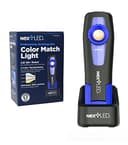
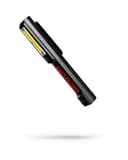
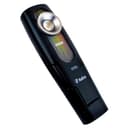
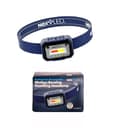
How we ranked these
Four criteria, in this order. They are deliberately not the criteria most roundups use.
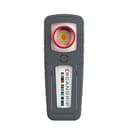
- Which job does the maker actually claim? Defect-finding and color-matching are different optical problems. A listing that claims both without publishing a CRI figure is claiming neither.
- Is CRI published as a number?“True color” and “high CRI” are adjectives. 97 is a number. A brand willing to print a figure can be held to it.
- Is color temperature published, and is it switchable? Two sources beat one, because a defect that survives a Kelvin change is real and one that vanishes was a lighting artifact.
- Form factor against your actual hands. Handheld for inspecting, headlamp for working, flood for a whole panel. Lumens is a tiebreaker, not a ranking.
CRI, and why a big CRI number is weaker than it looks
CRI — Color Rendering Index — scores how faithfully a light source shows colors against a reference, out of 100. Higher is better, and in this category anything marketed for color matching is claiming the mid-90s.
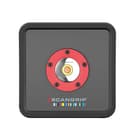
Here is the part the aisle does not advertise, and it comes from a maker rather than from us. SCANGRIP’s own CRI+ page states that the standard CRI value “is calculated as an average of the first 8 R-values out of 15”, and that “the R9 (red) value, which is important for correct colour recognition, is not taken into consideration for the CRI value”. The company defines CRI+ as “an average of all 15 R-values” and calls that “the only correct definition of the CRI value to be used for accurate and reliable colour recognition”.
Read that as a buyer and two things follow. A light advertising CRI 97 can be averaging its way around a weak red channel — and reds are a car color, which is why a red panel is the classic case where two lights disagree. But also: a brand claiming CRI+ without printing a figure has given you a stricter definition and no measurement, which is its own kind of unhelpful. Both of those tensions are live on this page, which is why our top pick is the one that publishes numbers and our SCANGRIP picks carry that gap as a stated con.
One more honest note on the arithmetic: no maker here publishes how it measured CRI, or to what standard. We have not converted any claim into a comparison it cannot support, and you should not either.
Color temperature: 2700 K, 4500 K, 6500 K
Color temperature in Kelvin describes the cast of the light, not its brightness. Low numbers are warm and yellow, high numbers are cool and blue-white. SCANGRIP’s fourth-generation announcement puts its own switchable range between 2500 K and 6500 K, which is roughly the band every multi-temperature light in this category works in.
Why it matters practically: paint and trim change appearance under different casts, and so do defects. A warm setting flatters a surface and can hide a faint haze; a cool, daylight- ish setting is less forgiving and is the one to judge a correction under. Nothing here is mysterious — it is the same reason a shirt looks different in a shop and in the car park.
If you buy a single-temperature light, you are accepting the brand’s choice for you. That is perfectly fine for defect-hunting. It is a real limitation for color work, which is why we rank switchable temperature as a criterion and not a luxury.
Lumens: why the brightest light is not the best light
Swirl marks are visible because of contrast. A fine scratch in clear coat scatters light in a different direction from the surface around it, and you see that difference as a bright line against a dark reflection. Flood the panel evenly and the dark reflection disappears — so does the line.
This is why a 170 lumen flashlight held at a low angle reveals marring that a 1,200 lumen flood held straight on will not, and it is why professional correction work uses both: a bright flood to see what you are doing, and a hard narrow beam to check what you have done. If you only buy one light and your question is “how bad is my paint”, buy the narrow one.
How to actually use one
A light is only as good as the angle you hold it at. Four habits do most of the work:
- Wash and dry the panel first.Dust scatters light and reads as defects. Everything below assumes clean, dry paint — see our two-bucket wash method.
- Rake the beam across the panel, not down at it. Stand so the light comes in low and you are looking from a different angle than the light is arriving from. Swirls appear in the reflection, not in the lit patch.
- Check your own work after every section. The point of a light during correction is to catch holograms and buffer trails while the pad and product are still in your hand, not after you have done the whole car.
- Confirm under a second source. Switch Kelvin settings, or walk the panel into daylight. A defect that survives both is a defect; one that does not was the lighting.
If what the light reveals is swirling across every horizontal surface, the fix is mechanical, not optical: read our how to remove swirl marks guide, then the full paint correction guide for the multi-stage version.
Before you buy a light, run the fingertip test
It is free and it changes what you should buy next. Wash and dry a panel, then run clean fingertips across the top surfaces. Meguiar’s own clay guidance describes what you are feeling for: if the paint “does feel rough”, that is “harmful environmental contaminants such as over-spray, fallout, brake dust, tree sap and more” bonded to the finish — what the company calls “micro speed bumps”.
Rough-feeling paint is a decontamination job, and no light will help. Glass-smooth paint that still looks dull or hazy under a beam is a correction job, and a light is exactly the tool that tells you how much of one. Our guide to whether you need to clay bar walks that decision properly, and the clay roundup covers what to buy if the answer is yes.
What a light will not tell you
Three honest limits worth setting before you spend money.
It cannot measure how much clear coat you have.A light shows a defect, not its depth. Deciding whether a scratch is safe to remove is a fingernail test and a judgment call — if a nail catches in it, abrasives are not the answer. A paint-depth gauge is the tool that measures clear coat, and none of these lights is one.
It cannot tell you whether a coating is still working. Beading and sheeting behavior does that, and water is free. Our page on maintaining a ceramic coating covers the actual tests.
It will not make you feel better about your car.Every single person who buys their first inspection light has the same evening: the paint they were happy with turns out to be covered in fine circular marks from years of washing. That is useful information and it is also a little bleak. If you are not planning to do anything about what you find, a light is an expensive way to be annoyed — and our guide to washing without scratching is the cheaper intervention.