How to choose a car wash soap
Once you’ve settled on pH-neutral, four things separate a good bucket soap from the wrong one for your routine: how far it dilutes, how slick it feels, how it suds, and whether it’s built for a bucket or a cannon.
pH-neutral, always
A neutral soap cleans without stripping. That’s the whole reason to buy a dedicated car shampoo instead of whatever’s under the sink — it protects the wax or coating you’ve already paid for. If you run a ceramic coating, pH-neutral washing is the maintenance that keeps its durability real; see our ceramic coating guide for why the wash step decides how long a coating actually lasts.
Dilution ratio is cost-per-wash
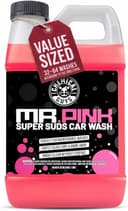
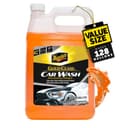
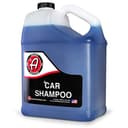
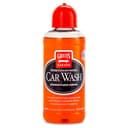
Read the dilution, not just the bottle size. Mr. Pink dilutes at roughly one to three ounces per five-gallon bucket; a super-concentrate like Griot’s needs only about an ounce per bucket, so a small bottle stretches astonishingly far. A gallon jug — Adam’s or Gold Class — wins on cost per ounce if you have the shelf space. The math is on the coverage table above — that’s the honest comparison the shelf price hides.
Suds versus lubricity
Suds look satisfying, but lubricity — the slippery glide of the mix across paint — is what actually protects your finish, because it lets trapped grit slide instead of grinding. Gold Class leans into lubricity with added conditioners; Mr. Pink leans into high suds and value. Both are safe; the choice is feel.
Bucket soap or dedicated foam
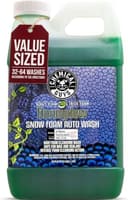
A standard bucket shampoo foams fine through a cannon, but a dedicated snow foam like Honeydew is built to make the thick, long-dwelling foam a foam cannonis for — ideal as a pre-wash before your contact wash. If you don’t run a cannon, any of the bucket soaps here is all you need.
Why cost-per-wash matters more than the sticker price
Here’s the differentiator we build every soap page around. Two bottles can look like the cheaper and the pricier option on the shelf and be completely reversed once you divide the price by how many washes each one delivers at its stated dilution. A concentrate that costs more up front but dilutes to dozens of washes routinely beats a cheap bottle you pour by the glug. That’s the arithmetic in the coverage table on this page — price divided by realistic washes per bottle — and it’s why our “best value” pick isn’t always the cheapest sticker. Whichever soap you land on, pair it with a proper two-bucket washso the money you save on soap isn’t spent putting swirls back into the paint.
If your car is ceramic coated, the criteria change: the coating already supplies the gloss and slickness a conditioner adds, so the soap only has to clean and leave. Our best car wash soap for a ceramic coating re-ranks these same soaps on pH and on what each one leaves behind.