Clay & Coat

Microfiber vs Foam vs Wool Cutting Pads

Three pad materials, one dual-action machine. Which one actually belongs on your polisher - and why the step past foam is microfiber, not wool.

By Stephen V.Last updated How we pick

How this is funded: we earn a commission if you buy through our links, at no extra cost to you. It never changes which product we recommend, and we’ll tell you when we’d skip one. Full disclosure.

The verdict

Foam first, microfiber when foam runs out of cut, wool almost never. If you own a dual-action polisher and you are buying pads for the first time, buy foam that covers a grade range and stop reading. This page is for the next purchase, not the first one.

The one line worth carrying away comes from 3M rather than from us. Its own Perfect-It wool compounding pad listing ends with “For industrial/occupational use only. Not for consumer sale or use”. When a manufacturer sells foam and microfiber to everybody and restricts its wool pad to occupational users, that is the clearest statement available about who wool is for — and it is not a hobbyist correcting their own car in a garage.

What the material actually changes

A correction removes clear coat. How much comes off per pass is set by four things: the abrasive in your liquid, the machine’s throw and speed, your pressure, and how hard the pad holds the abrasive against the paint. The pad material is that last variable, and it is the cheapest one to change.

Foam works through its cell structure. The walls flex, which spreads load and forgives an imperfect angle, and a foam pad finishes down more cleanly than anything else here. It is what a dual-action machine was designed around, and it is why every pad on our foam pad roundup is the right first purchase.

Microfiberreplaces the cell walls with thousands of stiff fibers. More abrasive is held against the paint, held more rigidly, and worked harder per rotation — so the same compound at the same speed removes more. The Lake Country HDO listing describes the result as “smoother cutting action and superior contact”, and attributes a lower operating temperature to fibers with “minimal overhang” that “mat down less quickly”. That last point is the real engineering problem with fiber: matted fibers stop cutting.

Woolis the aggressive end. Long fibers, a lot of them, and historically a rotary tool’s material. The jobs its listings name are different in kind rather than degree — Maxshine says “aggressive defect removal, oxidation correction, and paint leveling”, which is refinishing language, not maintenance language. 3M’s medium grade is explicitly for “mild to moderate defects that don’t require an aggressive-cutting pad”, which tells you how the wool range is scaled: even 3M’s middle wool pad is a shop tool.

Side by side, on what makers publish

Every row below is read from the stated source for each pad. Where a maker publishes nothing, the row says so rather than estimating.

 FoamMicrofiberWool
Stated jobCut through finish, depending on gradeLight to moderate scratches and swirlsOxidation, paint leveling, severe defects
Cut relative to foamBaselineMore, at the same liquid and speedMost
Finishes down cleanlyYes, with a finishing gradeUsually needs a foam polish stageAlways needs a foam polish stage
Numeric cut ratingNot published by any makerNot publishedNot published (3M states a grade, not a number)
Published speed limitNot publishedNot published5,200 rpm on the 3M pad; nothing on the Maxshine
Machine type statedDA and rotaryRandom orbitalDA and rotary (Maxshine); random orbital (3M)
Loads up with spent compoundSlowestFaster — clean it mid-panelFastest
Published lifespanNot publishedNot publishedNot published
Who the maker sells it toConsumersConsumers3M: “industrial/occupational use only”. Maxshine: body shops, mobile detailers and “advanced DIYers”

Why the step past foam is microfiber, not a bigger machine

This is the practical heart of the page. A correction that is not working has four variables, and people reliably change the most expensive one first.

The order that costs the least is: liquid, then pad material, then technique, then machine. A more aggressive compound is a bottle. A microfiber pad is less than the price of a tank of fuel. Technique is free. A long-throw machine is a few hundred dollars, and it changes coverage per pass more than it changes cut per pass — which we work through in 8 mm vs 15 mm polishers.

There is a second reason to reach for the pad before the machine. Throw scales how much ground you cover; pad material scales how hard the abrasive is held against the paint. If your foam pad is gliding over a defect, more coverage per pass does not help — you need more bite in the same contact patch, and that is what fiber is.

The trade you accept is twofold. A microfiber pad loads up with spent compound and paint residue faster than foam, so it needs cleaning during the job rather than after it — Griot’s own manual guidance is to clean the pad face with a conditioning brush as you work and to rinse and wring after polishing. And a microfiber cut usually wants a foam polishing stage behind it to refine the finish, so you are adding a step rather than replacing one.

Check your plate size before you order anything

Pads are sold slightly larger than the plate they mount on, so the plate edge never touches paint: 6.5 in pads for a 6 in plate, 5.5 in pads for a 5 in plate. The pad market splits roughly in half along that line and it is the most common ordering mistake in this category.

It matters here because the picks below do not all match. The Lake Country microfiber is 6.5 in for a 6 in plate — the plate a Griot’s G9ships with. The 3M wool pad is 6 in (150 mm) and 3M lists a 5 in version. The Maxshine wool is 5 in, for a 5 in plate. Griot’s lists optional 5 in and 6 in vented plates for its machines, so a plate swap is the cheap fix if you buy the wrong size.

Where this sits in the sequence

Pad material is a late decision, and it only pays off if the earlier ones were right. Griot’s own polishing guidance is the short version: machine polishing removes swirls, light scratches, water spots and oxidation, you work small sections, and you start with the least aggressive combination that works.

So, in order: wash the car, then decontaminate it, then diagnose the defect with a light you can trust, then pick the least-aggressive liquid and pad that fixes it, then test one section. Our paint correction guide covers the full sequence, and the swirl removal guide is the specific case most people are actually here for.

If you skip the decontamination step, none of this matters: you will be dragging bonded fallout across the clear coat with a pad that holds it rigidly against the paint, which is a fast way to add defects with an expensive pad.
One pad per material, and the order to buy them in

Ranked on published specs, coverage and buyer fit. Select a row to jump to the full write-up. We haven’t tested these in a lab — here is exactly what we do instead.

#ProductBest forPrice
1
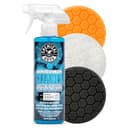
Chemical Guys Hex-Logic Buffing Pad Sampler Kit with Cleaner (6.5 in, 4-Piece)

Chemical Guys Hex-Logic Buffing Pad Sampler Kit with Cleaner (6.5 in, 4-Piece)

The sensible first pad purchase, because it is a sampler rather than a multi-pack of one grade: you get a spread of Hex-Logic pads plus a pad cleaner in the box, so you can find out which grade your paint actually needs before committing to a color.

Start here: foam
$42.99 · View on Amazon

Price as of November 12, 2026. #ad How we’re funded

2
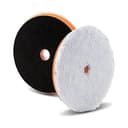
Lake Country 6.5" HDO Light Cutting Microfiber One-Step Pad (2-Pack)

Lake Country 6.5" HDO Light Cutting Microfiber One-Step Pad (2-Pack)

The honest first step past foam. Microfiber gives a random-orbital machine more bite at the same polish and the same speed, and this is the version sized for the 6 in plate a Griot's G9 ships with. Its own listing is careful about what it is for: a polish or a medium-cut compound on light to moderate defects, not a heavy-cut pad.

The step past foam: microfiber
$34.99 · View on Amazon

Price as of November 12, 2026. #ad How we’re funded

3
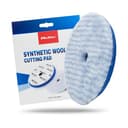
Maxshine 5" Universal Synthetic Wool Cutting Pad

Maxshine 5" Universal Synthetic Wool Cutting Pad

The only wool pad here a DIY buyer can actually buy for DIY use, and the listing is explicit that it fits DA as well as rotary machines on a 5 in plate. Treat it as a rescue pad for oxidation and severe defects on a panel you were going to repaint anyway, not as an upgrade to your normal correction pads.

The rescue pad: wool, if you must
$18.99 · View on Amazon

Price as of November 12, 2026. #ad How we’re funded

4
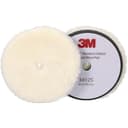
3M Perfect-It Random Orbital Medium Wool Compounding Pad (34125)

3M Perfect-It Random Orbital Medium Wool Compounding Pad (34125)

The professional reference point, and the clearest evidence on this page that wool is not a DIY upgrade: 3M's own listing ends with "For industrial/occupational use only. Not for consumer sale or use". It is the best-documented wool pad in the registry and the one we would reach for in a body shop - which is exactly who 3M says it is for.

The professional reference point
$47.81 · View on Amazon

Price as of November 12, 2026. #ad How we’re funded

#1Top pick — Start here: foam

Chemical Guys Hex-Logic Buffing Pad Sampler Kit with Cleaner (6.5 in, 4-Piece)

The sensible first pad purchase, because it is a sampler rather than a multi-pack of one grade: you get a spread of Hex-Logic pads plus a pad cleaner in the box, so you can find out which grade your paint actually needs before committing to a color.

Who it is for:everybody, first. Foam is the material a dual-action machine was designed around, it is the most forgiving of imperfect technique, and a sampler covers a grade range instead of one grade sold three times — which is the whole reason to buy a set rather than a pad.

Foam is also the only material here where a beginner can make a mistake and get away with it. If a foam cutting pad fixes the defect, you are done, and nothing on the rest of this page is an upgrade you need.

Honest cons: these are 6.5 in, so they fit a 6 in plate and not the 5 in plates on many current machines; and no pad maker on this site publishes a cut rating on any numeric scale, so the order you use them in comes from the color chart rather than from data.

Strengths

  • A grade spread in one box rather than four of the same pad
  • Includes a pad cleaner, which is the accessory people skip and then need
  • 6.5 in face suits the 6 in backing plates the common DA polishers ship with

Trade-offs

  • A sampler means only one pad of each grade - you will re-buy the grade you like
  • Chemical Guys publishes no cut rating, so the color order is the only guide
What it is4-piece Hex-Logic pad sampler with pad cleaner, 6.5 in
Size6.5 in
CoverageNot published
Face diameter6.5 in
Count4 pads + cleaner
Foam lineHex-Logic
Cut ratingNot published

Specs read from the product listing, on October 6, 2026. “Not published” means the brand does not state that figure.

#2The step past foam: microfiber

Lake Country 6.5" HDO Light Cutting Microfiber One-Step Pad (2-Pack)

The honest first step past foam. Microfiber gives a random-orbital machine more bite at the same polish and the same speed, and this is the version sized for the 6 in plate a Griot's G9 ships with. Its own listing is careful about what it is for: a polish or a medium-cut compound on light to moderate defects, not a heavy-cut pad.

Who it is for:the person whose foam cutting pad did not fully remove the defect. Microfiber gives a random-orbital machine more bite at the same compound and the same speed, which is a different lever from buying a bigger machine — and a much cheaper one.

The listing is careful about its own limits in a way we rate: it is for “a polish or medium cut compound to remove light to moderate scratches and swirls”, and it credits the construction — fibers with “minimal overhang” that “mat down less quickly” — with a lower operating temperature. 6.5 in for a 6 in plate, so it fits the plate a Griot’s G9 ships with, and it is sold as a 2-pack, which matches Griot’s own at-least-two-pads-per-process guidance.

Honest cons: Lake Country has no readable manufacturer product page for it, so every specification here comes from the retail listing rather than a maker spec sheet. It is a light-cutting pad despite being a fiber pad, so it is not the answer to deep defects. And fiber loads up faster than foam — expect to clean it mid-panel.

Strengths

  • Listing states the fibers have minimal overhang and mat down less quickly, which it credits with a lower operating temperature
  • 6.5 in face for a 6 in backing plate - the size the site's top-pick polisher actually ships with
  • Sold as a 2-pack, which matches Griot's own guidance of at least two pads per process

Trade-offs

  • Lake Country has no readable manufacturer product page for it - every specification here comes from the Amazon listing
  • Light cutting, so it is not the answer to deep defects despite being a fiber pad
  • Fiber pads load up with spent compound faster than foam and need cleaning mid-panel
What it is6.5 in light-cutting microfiber one-step pads, 2-pack, fits 6 in plate
Size6.5"
CoverageNot published
Face diameter6.5 in (fits 6 in backing plate)
MaterialMicrofiber face on orange foam interface
Count2
Stated cut levelLight cutting / one-step (no numeric rating)
Machine typeRandom orbital

Specs read from the product listing, on October 26, 2026. “Not published” means the brand does not state that figure.

#3The rescue pad: wool, if you must

Maxshine 5" Universal Synthetic Wool Cutting Pad

The only wool pad here a DIY buyer can actually buy for DIY use, and the listing is explicit that it fits DA as well as rotary machines on a 5 in plate. Treat it as a rescue pad for oxidation and severe defects on a panel you were going to repaint anyway, not as an upgrade to your normal correction pads.

Who it is for:oxidation, paint leveling, severe defects on a panel that is otherwise a repaint. Not a normal correction, and not an upgrade to your usual pads. This is the one wool pad in our registry a DIY buyer can buy for DIY use, and its listing is explicit that it fits DA as well as rotary machines on a 5 in plate — which most wool pads do not say.

It is also cheap enough that trying wool costs almost nothing, which is the main argument for it over the professional alternative below.

Honest cons: it is syntheticwool, and the listing publishes no fiber length, density or cut rating to compare it on. It is sold as a single pad, which is below the at-least-two-per-process guidance Griot’s publishes for its own machines. And a heavy-cut pad always leaves a finish that needs a second polishing stage, so it is never the last pad you use.

Strengths

  • Listing states it fits all DA and rotary polishers on a 5 in backing plate, which most wool pads do not say
  • Sold as a single pad, so trying wool costs very little
  • Listing names the jobs plainly: aggressive defect removal, oxidation correction and paint leveling

Trade-offs

  • Synthetic wool, not natural - and the listing publishes no fiber length, density or cut rating to compare it on
  • One pad is below the at-least-two-per-process guidance Griot's publishes for its own machines
  • A heavy-cut pad leaves a finish that needs a second polishing stage, so it is never the last pad you use
What it is5 in heavy-cut synthetic wool pad, single, DA or rotary
Size5"
CoverageNot published
Face diameter5 in (for a 5 in backing plate)
MaterialSynthetic wool
Count1
Stated cut levelHeavy cut (no numeric rating)
Machine typeDA or rotary

Specs read from the product listing, on October 26, 2026. “Not published” means the brand does not state that figure.

#4The professional reference point

3M Perfect-It Random Orbital Medium Wool Compounding Pad (34125)

The professional reference point, and the clearest evidence on this page that wool is not a DIY upgrade: 3M's own listing ends with "For industrial/occupational use only. Not for consumer sale or use". It is the best-documented wool pad in the registry and the one we would reach for in a body shop - which is exactly who 3M says it is for.

Who it is for:a refinish shop running 3M’s own Perfect-It random orbital system. It is here because it is the best-documented wool pad we could find and because of one line on its own listing, which is the single most useful fact on this page.

3M’s listing ends with “For industrial/occupational use only. Not for consumer sale or use.” That is 3M labeling its own wool pad, and it is the strongest available argument that wool is a professional tool rather than a DIY step up. Read it before you add it to a cart.

The rest of the data is genuinely good: 3M’s catalog publishes a 5,200 rpm maximum speedand a stated medium grade “designed to remove mild to moderate defects that don’t require an aggressive-cutting pad”, 6 in (150 mm), smooth face, single-sided Hookit, 2 pads per bag. It is the only pad in our registry with a published speed ceiling at all.

Honest cons beyond the labeling: it is the most expensive pad in the registry, it is engineered around 3M’s own machine and liquids, and the 5,200 rpm figure is a rotary ceiling — 3M publishes no orbit or throw guidance for a consumer random orbital.

Strengths

  • The only pad here that publishes a maximum speed (5,200 rpm, via 3M's catalog) alongside a stated grade
  • Listing claims no swirls, holograms or burn-through when paired with the matching 3M Perfect-It random orbital compound
  • Medium grade, which 3M describes as for mild to moderate defects rather than aggressive cutting

Trade-offs

  • 3M's own listing says "For industrial/occupational use only. Not for consumer sale or use" - read that before you add it to a cart
  • Most expensive pad in the registry, and it is designed around 3M's own machine and liquids rather than a consumer DA
  • The published 5,200 rpm ceiling is a rotary figure; 3M publishes no orbit or throw guidance for a consumer random orbital
What it is6 in medium-grade wool compounding pads, 2-pack, Hookit single-sided
Size6" (150 mm)
CoverageNot published
Face diameter6 in (150 mm)
MaterialWool
Count2
Stated cut levelMedium grade (mild to moderate defects)
Maximum speed5,200 rpm (3M catalog)
Attachment3M Hookit, single-sided

Specs read from the product listing, on October 26, 2026. “Not published” means the brand does not state that figure.

What nobody publishes, and what that costs you

This is the quietest category on the site for published data, and the gaps are the same across every brand:

  • No cut rating on any shared scale.“Light cutting”, “medium” and “heavy cut” are each brand’s own words. There is no number, so you cannot line up a Lake Country light-cut against a 3M medium or a Maxshine heavy cut and know what the step between them is.
  • No pad lifespan and no replacement interval. Not one maker publishes how many panels, hours or cars a pad lasts. The practical rule is the only rule available: replace it when the face stops recovering after a wash, or when fibers mat permanently.
  • No density or fiber-length figures. For fiber pads this is the specification that decides how much they cut, and nobody states it.
  • No speed guidance for a consumer DA, from anyone.3M publishes a 5,200 rpm ceiling for a rotary. Lake Country and Maxshine publish nothing. Griot’s publishes six speed settings on the machine and no pad-specific recommendation to go with them.
  • No maker product page for Lake Country. A live search returned only retailer and reseller listings, which are not maker sources and are therefore not cited as one. Every Lake Country figure on this page is from the Amazon listing text, read verbatim.

Because of all that, there is no cost-per-use row for any pad on this site and no cross-brand aggressiveness ranking. We are not going to invent a scale that the industry has declined to publish.

Pad color is not a scale

Worth stating because it causes real mistakes. Pad colors mean different things per brand — one maker’s orange is a cutting pad and another’s is a polish. The 3M wool pad is white and it is a compounding pad. The Lake Country microfiber has an orange foam interface and is a light-cut one-step. Never transfer a color convention from one brand to another; read the stated grade.

Which to buy, in one line each

  • First polisher, first correction: a foam set covering a grade range. Nothing else.
  • Foam did not fully remove the defect: a microfiber pad in your plate size, before you consider a stronger compound or a bigger machine.
  • Oxidation, or paint you were going to repaint: a synthetic wool pad, followed by a foam polishing stage.
  • You run a body shop on 3M’s system: the 3M wool pad, which is who it is labeled for.
  • You own a 5 in plate: check every pad diameter before you order. Two of the four picks here are 6 in.

A note on safety. Everything on this page increases how much clear coat you remove per pass, and clear coat does not grow back. Work the least aggressive pad and liquid that fixes the defect, test a small section first, and keep the pad flat and moving — a fiber pad on an edge or a body line concentrates cut exactly where the clear coat is thinnest. Fiber pads also load with spent compound faster than foam, and a packed pad stops cutting and generates friction heat instead, which is the failure mode that actually damages paint on a dual-action machine. Clean the pad face during work, not after. Never run any of these on paint that has not been washed and decontaminated.

Frequently asked questions

Do microfiber pads cut more than foam?

Yes, at the same compound and the same machine speed - that is the entire reason they exist. The fibers are stiffer and more numerous than foam cell walls, so more abrasive is held against the paint and worked harder per rotation. The Lake Country HDO listing describes the practical effect as 'smoother cutting action and superior contact'. What no maker publishes is how much more, on any scale, so there is no number to put on the step. Treat microfiber as the lever you pull when a foam cutting pad plus a compound did not fully remove the defect, and pull it before you consider a more aggressive liquid or a bigger machine.

Can you use a wool pad on a dual-action polisher?

Sometimes, and you have to check the pad. The Maxshine synthetic wool pad's listing states it 'fits all DA and rotary polishers using a 5 inch backing plate', which is an explicit DA rating. The 3M Perfect-It wool pad is sold as a 'Random Orbital' pad and publishes a 5,200 rpm maximum speed - a rotary-style figure, with no orbit or throw guidance for a consumer random orbital. Many wool pads are rotary-only and say nothing either way. The deeper point is that wool is the most aggressive material here and a DA's forgiveness comes from the pad being free to stop rotating; wool plus heavy pressure on an edge removes clear coat quickly. If you are asking whether you can, the answer you probably want is microfiber.

Is wool better than microfiber for paint correction?

It is more aggressive, which is not the same as better. Wool is for oxidation, paint leveling and severe defects - the jobs the Maxshine listing names. Microfiber is for light to moderate scratches and swirls, which is what almost every car in a driveway actually has. The honest tiebreaker is 3M's own labeling on its wool pad: 'For industrial/occupational use only. Not for consumer sale or use.' When a manufacturer restricts its wool pad to occupational users and sells microfiber and foam to everybody, that is a statement about who each material is for. Wool also always needs a second polishing stage afterwards to refine the finish it leaves, so it is never a time-saver.

What size pad do I need for a 6 inch backing plate?

6.5 in. Pads are sold slightly larger than the plate so the plate edge never contacts paint - a 6.5 in pad for a 6 in plate, a 5.5 in pad for a 5 in plate. This matters more than buyers expect, because the two common plate sizes split the pad market roughly in half. The Griot's G9 ships with a 6 in vented plate, so it wants 6.5 in pads, and Griot's lists optional 5 in and 6 in vented plates if you want to run the smaller size. Of the pads on this page, the Lake Country microfiber and the 3M wool are 6 in class and the Maxshine wool is 5 in class.

How many pads do I need for one car?

More than one per material, and no maker publishes a per-car total. The only published guidance comes from Griot's own manuals: a fresh pad for each step, at least two pads per process when detailing a vehicle, a separate pad for each polish, wax or sealant, and three to four per process on the BOSS Hybrid Micro manual. Multiply that across a two-stage correction and you land at roughly 6-8, which is how our pad-count guide derives its figure - from the maker's per-process numbers, not from a figure anyone published. Running out of clean pads mid-car is the thing that actually ends a correction session.

How do you clean a microfiber or wool pad?

During the job, not after it. Griot's guidance across its polisher manuals is to clean the pad face while you work with a conditioning brush, and to rinse and wring a pad after polishing. That matters more on fiber than on foam because fiber loads with spent compound faster, and a packed pad stops cutting and generates friction heat instead - the actual damage mechanism on a dual-action machine. For laundering, treat them like any detailing microfiber: no fabric softener and no high dryer heat, both of which permanently ruin the fiber. Nobody publishes a pad lifespan, so replace one when the face stops recovering after a wash.

Why doesn't your polishing pad roundup include microfiber or wool?

Deliberately. Our best polishing pads page ranks foam sets, because foam is the right first purchase for a dual-action machine and a roundup that mixed materials would imply they are alternatives at the same stage. They are not - they are a sequence. This page exists to cover the step after foam, which is why microfiber and wool live here instead. If you have not bought pads yet, read the foam roundup; if your foam pad ran out of cut, you are in the right place.

Does a better pad matter more than a better polisher?

For most people, yes - and that is an uncomfortable thing for an affiliate site to say about the cheaper product. The machine sets how fast you cover a panel and how smooth the tool feels; the pad and the liquid set how much clear coat actually comes off per pass. If a correction is not working, the order to change things is liquid, then pad material, then technique, then machine - because the first three are tens of dollars and the last one is a few hundred. Our G9 review makes the same point from the machine's side.

Sources

  • 3M — Perfect-It Random Orbital Wool Compounding Pad 34125 (Medium, 6 in) — Maker catalog entry, read via a live search of 3m.com because the domain returned HTTP 403 to a direct automated fetch — so the figures here are 3M's own published catalog values as surfaced by that search, not a page we rendered. Published: "3M Perfect-It Random Orbital Wool Compounding Pad 34125, Medium, White, 6 in (150 mm), 2 Pads/Bag, 6 Bags/Case"; Maximum Speed 5,200 rpm; Face Style Smooth; Material Wool; single-sided with 3M Hookit attachment; "designed to remove mild to moderate defects that don't require an aggressive-cutting pad"; part number 34125, 3M ID 7100276850; available in 5 in and 6 in diameters to fit the 3M Perfect-It Random Orbital Polisher. Publishes NO cut rating on a shared scale, NO density or fiber-length figure, NO pad lifespan or replacement interval, and NO orbit/throw guidance for a consumer random orbital. The Amazon listing for the same part adds the claims "no more swirls, holograms, or burn through" when paired with the matching 3M compound and the restriction "For industrial/occupational use only. Not for consumer sale or use" (accessed October 26, 2026)
  • Griot's Garage — G9 6" Random Orbital Polisher user manual (item 10901) — Manual PDF, located via live search of griotsgarage.com. The readable maker guidance across the Griot's polisher manuals is to use a fresh pad for each step and at least two pads per process when detailing a vehicle, to use a separate pad for each machine polish, wax or sealant so products do not contaminate one another, and to rinse and wring a pad after polishing and clean the pad face during work with a conditioning brush. The BOSS Hybrid Micro Polisher manual raises that to 3-4 pads per process. NO per-car pad total, NO pad lifespan in hours and NO replacement interval is published; the PDF's body text would not extract cleanly on this read, so only the figures confirmed by the live search result are recorded here (accessed October 17, 2026)
  • Griot's Garage — How-To: Polish — Machine polishing removes swirls, light scratches, water spots and oxidation; work small sections and start least-aggressive (accessed July 18, 2026)
  • Griot's Garage — G9 Random Orbital Polisher (item 10901) — Maker specs: 1,000 watt motor, 8.5 amperes, 9 mm throw; speed dial with 6 settings from 2,000-6,400 OPM free speed; Constant Speed Control circuitry 'ensures consistent speed regardless of downward pressure'; fan-cooled counterbalance to reduce tool heat, vibration and hand fatigue; 6 in vented orbital backing plate; 10 ft quick-connect power cord; 5.0 lb / 2.27 kg without cord; Safety Class II; optional 5 in and 6 in vented backing plates (accessed October 5, 2026)
  • Chemical Guys — How To Wash Microfiber Towels — Never use fabric softener or high dryer heat on microfiber, and separate paint-safe from wheel towels (accessed July 18, 2026)

Keep reading