Start with the format, not the word graphene
Graphene products fall into four groups, and the group decides how long the protection lasts far more than the graphene does.
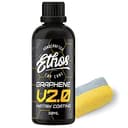
- Liquid coatings (the Ethos Graphene Matrix, and the 12H kit we tell you to skip). You take the paint back to bare, clean clear coat, wipe the coating on, level it, and keep it dry while it cures. Durability claims run in years, and mistakes are expensive: a high spot left to cure has to be polished off.
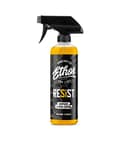
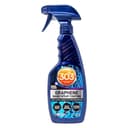
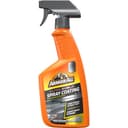
- Spray coatings (Ethos RESIST, 303, Armor All). Spray, spread, buff. Claims run from about six months to about a year, and you re-apply whenever the beading fades. This is where most people should start.
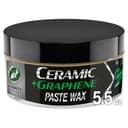
- Graphene wax(Turtle Wax). A paste wax with SiO2 and graphene blended in — familiar to apply, and upfront about lasting months rather than years.
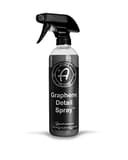
- Toppers and detail sprays(Adam’s Graphene Detail Spray). Maintenance for protection you already have, not protection on its own.
If you are torn between a coating and a spray, the tiebreaker is time. A coating repays a full weekend of washing, decontamination and polishing. A spray fits into an ordinary wash day. And if it turns out graphene is not what matters to you, our ceramic coating spray roundup covers the SiO2 sprays.
Five checks to run on any graphene label
1. Does it say which kind of graphene?
When a maker gets specific, it names a graphene derivative rather than pristine graphene. Graphene oxide is made by oxidizing graphite. Reduced graphene oxide(rGO) is made by chemically or thermally reducing graphene oxide, and depending on the method its properties still fall short of pristine graphene’s theoretical potential. A maker that names one of these is telling you something specific. Ethos names rGO on both of its picks, and 303 and Adam’s name graphene oxide. Armor All’s spray and the budget 12H kit do not say, and Turtle Wax gets no more specific than “graphene polymers.” None of them publishes how much graphene is in the bottle, so read a named form as a sign the maker is being straight with you — not as a performance guarantee.
2. Does the durability claim agree with itself?
Read the same product’s claim in more than one place. The Ethos RESIST listing puts “12+ months” in a bullet headline and “6+ months” in the sentence under it; Ethos’s own product page settles on 6-12 months from a single application. 303’s page gives both “1+ year” and “up to 12 months.” Neither is a scandal, but when a claim points two ways, plan around the lower figure. The Ethos Graphene Matrix coating is the tidy exception: 5+ years on the listing, and 5+ years on the maker’s page.
3. What is the durability measured in?
Armor All’s spray says it “fights dullness for over a year,” and the footnote gives the basis: the US average number of automatic car washes per year. That is a count of washes, not a promise of twelve months of protection on a car that lives outside and gets washed more often than average. It is a legitimate way to state a claim, as long as you read the footnote. Whenever a durability figure carries an asterisk, find it before you compare that figure with anything else.
4. Does the hardness number mean anything?
Hardness claims on coatings come from the pencil hardness test, which pushes graded pencils across a cured, coated panel to find which grade marks it. It is a comparative surface test, and 9H is the hardest standard lead pencil made — a 10H result needs specialized industrial leads from outside the standard set. Even a genuine 9H rating is about resisting wash marks and fine swirls, not rock chips or deep scratches.
So a listing that prints 12H or 20H without naming the test, the lab or the panel it was measured on is giving you a number you cannot check. The budget kit we list as a skip claims 12H, and the same seller lists a near-identical kit as 20H. Adam’s Advanced Graphene coating prints 10H. Ethos prints no hardness figure on either of its picks, which on this page counts in its favor.
5. Does the maker say how many cars a bottle covers?
Coverage is what turns a price into a cost per car, and graphene makers mostly will not publish it. Of the seven picks, only Ethos publishes coverage for RESIST — 3-4 average vehicles per bottle — so it is the only row in the cost-per-use table above, worked out at the conservative end of that range. Ethos does not publish coverage for the Matrix coating, and neither do 303, Armor All, Turtle Wax, Adam’s or the budget kit. One honest cost per car beats seven invented ones.
Where are Adam’s graphene coatings?
Adam’s Advanced Graphene Ceramic Coating is deliberately not ranked here. It is already the top pick in our best ceramic coating roundup, and Adam’s Graphene Ceramic Spray Coating ranks in the ceramic spray picks. Repeating them here would just give you the same advice twice.
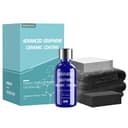
If you are cross-shopping the Adam’s coating against the Ethos Matrix, run the five checks on its listing yourself. It says the formula adds silicate resin alongside the graphene; its title promises 9+ years of protection while its first bullet says more than 7; and it prints a 10H hardness figure. It is still a strong DIY coating, for the reasons set out on that page — by this page’s label test, the Ethos is simply the tidier read. Ethos’s own pricier Graphene Coating PRO V2.0 lost to the Matrix on the same test: its listing claims up to 10 years “backed by ASTM lab testing” without saying which test.
Applying graphene: what changes and what does not
The prep does not change. A coating or spray bonds best to bare, clean clear coat, so wash the car, remove bonded contamination with an iron remover and a clay bar, and polish out any defects you do not want sealed in — the paint correction guide sets out the order. Ethos’s own directions for the Matrix coating call for that same sequence before any coating goes on.
What does change is the cure. Ethos says the Matrix coating flashes in roughly 1-3 minutes, needs at least an hour between layers, must stay dry for 48 hours and keeps curing for about five days, and it wants 65-75°F to work in. The sprays are far more relaxed: 303 and Armor All both say no cure time is needed, and the Armor All goes on wet or dry. If this is your first full coating, read how to apply a ceramic coating first — a graphene coating uses the same wipe, flash and level technique.
Afterward, protect the work the unglamorous way: pH-neutral washing, no brushed automatic washes, and a topper now and then. That last job is what the Adam’s Graphene Detail Spray is for, and our coating maintenance guide covers the rest of the routine.
Who should skip graphene altogether
Reduced water spotting is the graphene claim with the most substance behind it, and it matters most on dark paint and in hot or hard-water climates. On a white or silver car in a mild climate, much of what you pay extra for is the label. If that is your car, a well-prepped SiO2 spray or a paint sealant gets you most of the result, and if you enjoy the ritual more than the durability, a traditional car wax is still a perfectly good answer.