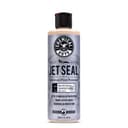
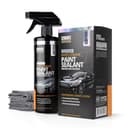
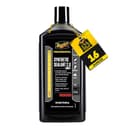
Sealant, wax or coating?
These three are not competing versions of the same thing — they occupy different points on a durability-versus-effort curve.
A wax is natural carnauba, gives the warmest look, and lasts weeks to a couple of months. A sealant is engineered synthetic polymer, bonds harder, and lasts months. A coating is a semi-permanent SiO2 layer that lasts years but demands full decontamination, paint correction, a panel wipe and a careful cure. Our wax vs sealant comparison covers the first two in more detail, and ceramic coating vs wax covers the span.
The honest recommendation for most people with a daily-driven car: a sealant twice a year, topped with a spray coating after washes. That gets you most of the protection of a coating for a fraction of the effort, and you can always step up later.
How to choose a sealant
Liquid, paste or spray
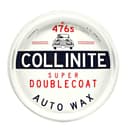
Liquidsspread easily and suit machine or hand application — the default. Pastes are the durability champions and the most work; a paste like Collinite is what people reach for before a salted winter. Rapid spray sealants trade some depth for a whole-car application in under half an hour.
Durability claims and what brands actually publish
Worth noting plainly: almost none of these brands publish a rated durability figure on the listing, which is why that row is empty across the table above. Marketing copy says “long-lasting”; the spec sheet says nothing. Treat any specific month figure you see quoted elsewhere as an estimate rather than a manufacturer commitment, and judge durability by beading behavior on your own car.
Layering
Sealants bond chemically to paint, so a second coat over a first often does less than people hope — wait for the first to cure fully, usually 12 to 24 hours, before adding another. What genuinely works is a sealant base with a carnauba wax on top: durability underneath, warmth on the surface.
Applying it properly
Prep is simpler than for a coating but not optional. Wash, then chemically decontaminate with an iron remover, then clay if the paint still feels rough through a plastic bag. Sealant over bonded contamination locks the contamination in.
Apply thin. This is the single most repeated piece of advice in detailing and the most ignored: a thick layer does not protect better, it just makes removal miserable and increases the chance of streaking. Use a foam applicator, work one panel at a time in straight overlapping passes, and use only enough product to leave a faint haze.
Then let it cure before you buff — check the label, but typically several minutes until it hazes. Buff off with a clean plush microfiber, turning to a fresh face regularly. Keep the car dry for as long as the brand specifies, ideally overnight, so the polymer can finish cross-linking.
There is one time of year when a sealant stops being a cosmetic purchase. A durable layer applied in autumn is the highest-value winter preparation available, because a slick hydrophobic surface stops road salt and slush bonding to the paint in the first place — and salt plus moisture is the mechanism behind almost all winter corrosion. How to wash your car in winter covers what to put on, when, and the weekly routine that keeps it working.