Clay & Coat

Griot's G9 vs Chemical Guys TORQX

Everybody compares these two on throw. They publish the same throw. Here is what actually separates them - 1,000 watts against 800, six measured speeds against no published speed range at all, and a kit price that has quietly drifted above the bare machine.

By Stephen V.Last updated How we pick

How this is funded: we earn a commission if you buy through our links, at no extra cost to you. It never changes which product we recommend, and we’ll tell you when we’d skip one. Full disclosure.

The verdict

Buy the G9 if you are buying a machine. Buy the TORQX kit if you are buying a starting point. Those are genuinely different purchases, and the mistake almost everyone makes is treating them as the same one and then deciding on throw — which, as of a live read of both makers’ pages, is identical at 9 mm.

The G9 publishes more of everything that describes a polisher: 200 more watts, a real speed range instead of the word “variable”, and a larger backing plate in the box. The TORQX publishes less and includes more — three pads and four liquids, which is the entire reason it has been the standard beginner recommendation for a decade.

The specification that stopped being a difference

If you have read anything about these two machines, you have read that the G9 is 9 mm and the TORQX is 8 mm. We published that too, until this page.

On a live read of chemicalguys.com, the TORQX product page states a “9mm dual-action throw”and a “Powerful 800-watt motor”. The Amazon listing for the kit states “9mm Orbit Technology”and a “Powerful 800W Motor”. Maker and retailer agree with each other, and both disagree with the 8 mm figure that circulates everywhere — which appears alongside a 680 W motor rating on older Chemical Guys material. The most reasonable reading is that the older pair of figures was superseded and the internet never caught up.

We have corrected our own product data to match the current maker figure, and said so here rather than quietly. The consequence for a buyer is not small: throw cannot settle this comparison, because these two machines publish the same throw. If you came here to choose a 9 mm machine over an 8 mm one, both of these are the 9 mm machine.

The published figures, side by side

Every figure below comes from Griot’s and Chemical Guys’ own pages or from the Amazon listing each product is sold on, read on the dates in the sources. Where a column says “Not published”, we looked and the company does not state it.

 Griot’s Garage G9Chemical Guys TORQX kit
Orbit / throw9 mm9 mm (current figure; older pages said 8 mm)
Motor1,000 W800 W
Speed range6 settings, 2,000–6,400 OPM“Variable” — no range, no setting count published
Backing plate included6 in ventedA “TORQ backing plate” — diameter not published
Plate optionsConvertible to 5 in with an optional plate (per the listing)Compatible with 3 in, 5 in and 6 in plates
Tool weight5.0 lb / 2.27 kg without cord (2026-10-02 read; absent on a current read)4.7 lb (listing)
Cord10 ft quick-connectNot published
In the boxMachine and plate; no pads, no liquids9 items: machine, plate, 3 pads, 4 liquids
Warranty / guarantee“100% Satisfaction Guarantee”, terms behind a link; no term publishedNo warranty term published (“30-Day Easy Returns” is a return window)

The row that actually decides it

Not the wattage row. The speed row.

Griot’s publishes “Speed dial with 6 settings ranging from 2000 - 6400 OPM”on the G9’s product page and repeats it on the listing, which adds that the dial is reachable for right- and left-handed users. Chemical Guys publishes “Variable-speed control for correction and finishing” and stops. No range. No setting count. Not on the polisher page, not on the kit page, not on the Amazon listing.

Speed is the main thing you adjust on a dual-action polisher, and the two ends of the range are the two jobs. A low setting is for spreading a liquid before you start working it and for applying a wax or sealant; a high setting is for cutting. The G9’s 2,000 OPM floor is genuinely low enough to spread, and its 6,400 ceiling is high enough to compound. With the TORQX you get a dial with no published numbers on either end, which means you cannot compare it to anything, you cannot follow a guide that specifies a speed, and you cannot know whether its low end goes as low as you need.

That is a transparency gap more than a performance gap — the TORQX is a well-liked machine and a dial without printed numbers still turns. But this site rates what a brand will put in writing, and on the single most important adjustable on the tool, one company publishes a range and the other publishes an adjective. See how to use a dual-action polisher for why the numbers matter in practice.

The price argument has inverted

For most of the last decade the recommendation went: the G9 is the better machine, the TORQX kit is the cheaper start, buy according to budget. That advice is now at least suspect.

On our read of live retail prices, the 9-item TORQX kit sat above the bare G9. Live prices for both are shown on this page and they move constantly, which is exactly why we do not print numbers in prose anywhere on this site. But the direction of the change is the point: if the kit no longer undercuts the better machine, then the kit’s case rests entirely on convenience and completeness, not on price.

That is still a real case. Three pads and four liquids is a cut-to-finish set, and the single biggest reason first correction attempts go badly is buying a polisher and then discovering you needed five more things. But it changes the question from “can I afford the good machine” to “would I have chosen these specific pads and liquids anyway”. If the answer is no, buy the G9 and pick your own pads.

What the box actually saves you

Worth being concrete, because “everything in one box” is doing a lot of work in the TORQX’s favor and it deserves to be examined rather than repeated.

The kit includes three Hex-Logic pads — orange for medium-heavy cutting, white for light-medium polishing, black for finishing — and four V-Line liquids, V32, V34, V36 and V38. That covers the compound step, the polish step and a finishing step, which is the full sequence described in our paint correction guide. It is not a token inclusion.

What it does not save you is pads later. Pads are consumables: they load up with spent abrasive and removed clear coat, and a loaded pad stops cutting and starts smearing. One car typically needs more pads than one kit contains — how many polishing pads do you need works through the arithmetic by stage. So the kit removes the first shopping list, not all of them.

Where Griot’s own marketing draws the line

One more piece of evidence, and it comes from Griot’s rather than from us. Its education page on buffers positions the G9 for “Versatile, light to moderate paint correction and wax application”, and reserves “Professional-level, light to severe paint correction and paint finishing” for the longer-throw BOSS G15 and G21.

So even the maker does not sell the G9 as its heavy-correction tool — which puts the TORQX, a machine with the same throw and 200 fewer watts, firmly in the light-to-moderate bracket as well. Neither of these is the machine for sanding marks or severe oxidation. Both are the machine for swirls, light scratches, oxidation and applying protection on a car that gets driven. If your paint needs more than that, the comparison you want is G9 vs G15, not this one.

What neither company publishes

  • No warranty term for either machine.Griot’s publishes a “100% Satisfaction Guarantee” with the terms behind a link; Chemical Guys publishes a 30-day return window, which is not a warranty. Neither states a length of cover against defects on the pages we read.
  • No amperage, duty cycle or run-time limitfrom either company — so there is no published answer to how long you can run either tool continuously.
  • No OPM range at all for the TORQX, and no number of speed settings.
  • No backing-plate diameter for the TORQX kit. The polisher page lists 3 in, 5 in and 6 in compatibility; neither page says which plate is in the box.
  • No box contents for the G9.Griot’s product information tab was empty on a current read, so the contents above are inferred from the plate and cord the page itself describes.
  • No noise or vibration figure, and no country of manufacture, from either.

That is a thin disclosure record for two tools in the most expensive bracket a home detailer buys into, and it is the main reason this page leans on the handful of figures that arepublished. Where a company tells you a number, it can be held to it. Where it tells you “powerful”, it cannot.
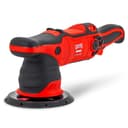
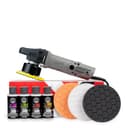
The two machines, plus what the bare one still needs

Ranked on published specs, coverage and buyer fit. Select a row to jump to the full write-up. We haven’t tested these in a lab — here is exactly what we do instead.

#ProductBest forPrice
1
Griot's Garage G9 Random Orbital Polisher

Griot's Garage G9 Random Orbital Polisher

A powerful, smooth random-orbital that's still beginner-safe — the random orbit makes it very hard to burn paint. The 9 mm throw and Griot's satisfaction guarantee are the tie-breakers over similar tools.

Buy this one if you are buying a machine
$179.99 · View on Amazon

Price as of November 12, 2026. #ad How we’re funded

2
Chemical Guys TORQX Random Orbital Polisher Kit

Chemical Guys TORQX Random Orbital Polisher Kit

The beginner buy that is a kit rather than a machine: polisher, three pads and four liquids in one box, so you start correcting the day it arrives instead of ordering five more things. It is no longer the cheap option — check the live price against the bare G9 before you decide, because the kit has drifted above it.

Buy this one if you are buying a starting point
$214.99 · View on Amazon

Price as of November 12, 2026. #ad How we’re funded

3
Chemical Guys Hex-Logic Buffing Pad Sampler Kit with Cleaner (6.5 in, 4-Piece)

Chemical Guys Hex-Logic Buffing Pad Sampler Kit with Cleaner (6.5 in, 4-Piece)

The sensible first pad purchase, because it is a sampler rather than a multi-pack of one grade: you get a spread of Hex-Logic pads plus a pad cleaner in the box, so you can find out which grade your paint actually needs before committing to a color.

Buy this with the G9 to close the gap
$42.99 · View on Amazon

Price as of November 12, 2026. #ad How we’re funded

#1Top pick — Buy this one if you are buying a machine

Griot's Garage G9 Random Orbital Polisher

A powerful, smooth random-orbital that's still beginner-safe — the random orbit makes it very hard to burn paint. The 9 mm throw and Griot's satisfaction guarantee are the tie-breakers over similar tools.

Who it is for:anyone who intends to correct paint more than once, and anyone who already owns pads and liquids. The G9 is the better tool on every figure both companies publish, and on this site’s read of current prices it is no longer the dearer purchase.

The published figures: a 1,000 W motor, a 9 mm throw, a speed dial with 6 settings from 2,000 to 6,400 OPM, a 6 in vented orbital backing plate, a 10 ft quick-connect cord, and — from the Amazon listing rather than the maker page — convertibility to a 5 in pad system with an optional plate and “constant speed control” that “prevents bogging down under pressure”.

Honest cons. It arrives as a bare machine: no pads, no compound, no polish, and Griot’s product page recommends none, so a true beginner has three more decisions to make before anything gets corrected. Griot’s publishes no warranty term for it, only a “100% Satisfaction Guarantee” whose terms sit behind a link. On our read the listing was orderable with a ship date and a maximum order quantity of one rather than plain “In Stock”, so check availability before you plan a weekend around it. Our full G9 review goes through all of it.

Strengths

  • Random-orbital action is forgiving — very hard to damage paint
  • Strong, smooth motor that pulls through a cut without bogging
  • Covered by Griot's 100% Satisfaction Guarantee (the product page links the terms rather than stating them)

Trade-offs

  • Priced above the bare-bones beginner tools
  • Pads and polishes are extra unless you buy a kit
What it is1000 W random-orbital DA polisher, 9 mm throw
Size9 mm orbit
CoverageNot published
ActionRandom orbital (dual action)
Orbit / throw9 mm
Motor1000 W
Speed6 settings, 2,000-6,400 OPM
Backing plate6 in vented

Specs read from the product listing, on September 7, 2026. “Not published” means the brand does not state that figure.

#2Buy this one if you are buying a starting point

Chemical Guys TORQX Random Orbital Polisher Kit

The beginner buy that is a kit rather than a machine: polisher, three pads and four liquids in one box, so you start correcting the day it arrives instead of ordering five more things. It is no longer the cheap option — check the live price against the bare G9 before you decide, because the kit has drifted above it.

Who it is for: somebody who has never corrected paint, does not want to research pads and liquids, and would rather open one box. That is a real and legitimate reason to buy a worse machine, and it is the only reason we would still recommend this one.

The published figures: an 800 W motor and a 9 mm dual-action throw — both now stated by Chemical Guys and by the listing — “variable-speed control for correction and finishing”, compatibility with 3 in, 5 in and 6 in backing plates, and a 4.7 lb tool weight that the listing publishes and the maker page does not. The 9-item kit is the polisher, a backing plate, three Hex-Logic pads (orange cutting, white polishing, black finishing) and four V-Line liquids (V32, V34, V36, V38).

Honest cons, and there are four. It has 200 fewer watts than the G9 for the same published throw. Chemical Guys publishes no OPM range and no speed-setting count for it at all— just the words “variable speed” — which is a startling omission on a tool whose entire job is controlled speed. The included pads and liquids are entry-grade and you will replace them. And the kit price has drifted above the bare G9, so the “cheapest way in” argument that used to carry it needs checking against the live prices on this page rather than assuming.

Strengths

  • Ships with three Hex-Logic pads and four V-Line liquids - no separate shopping list
  • Forgiving random-orbital action
  • Chemical Guys and the listing now both publish a 9 mm throw, the same figure Griot's publishes for the G9

Trade-offs

  • 800 W against the G9's 1,000 W - less motor for the same published throw
  • Chemical Guys publishes no OPM range and no speed-setting count for it at all
  • Included pads are basic - you'll upgrade eventually
  • Often prices above the bare G9, which undercuts the 'cheapest way in' case for it
What it is800 W random-orbital DA polisher kit, 9 mm throw
Size9 mm orbit
CoverageNot published
ActionRandom orbital (dual action)
Orbit / throw9 mm
Motor800 W
SpeedVariable - no OPM range published
Weight4.7 lb (listing)
Includes3 Hex-Logic pads + 4 V-Line liquids

Specs read from the product listing, on November 2, 2026. “Not published” means the brand does not state that figure.

#3Buy this with the G9 to close the gap

Chemical Guys Hex-Logic Buffing Pad Sampler Kit with Cleaner (6.5 in, 4-Piece)

The sensible first pad purchase, because it is a sampler rather than a multi-pack of one grade: you get a spread of Hex-Logic pads plus a pad cleaner in the box, so you can find out which grade your paint actually needs before committing to a color.

Who it is for: anyone choosing the G9 who is only choosing the TORQX kit because of what is in the box. This is the honest answer to that: buy the better machine and buy the pads separately.

A Hex-Logic sampler covers the same cut-to-finish range the TORQX kit includes, in the same pad line, and it fits the G9’s plate. Add one compound and one polish — our compound picks and compound vs polishexplain which does what — and you have assembled the kit yourself around a 1,000 W machine with a published speed range.

Honest cons: it is more decisions and probably more money than one box, and the pads are consumables rather than a one-time purchase — see how many polishing pads you need for the arithmetic. If three extra decisions sound like friction rather than fun, the kit is genuinely the better buy for you, and that is fine.

Strengths

  • A grade spread in one box rather than four of the same pad
  • Includes a pad cleaner, which is the accessory people skip and then need
  • 6.5 in face suits the 6 in backing plates the common DA polishers ship with

Trade-offs

  • A sampler means only one pad of each grade - you will re-buy the grade you like
  • Chemical Guys publishes no cut rating, so the color order is the only guide
What it is4-piece Hex-Logic pad sampler with pad cleaner, 6.5 in
Size6.5 in
CoverageNot published
Face diameter6.5 in
Count4 pads + cleaner
Foam lineHex-Logic
Cut ratingNot published

Specs read from the product listing, on October 6, 2026. “Not published” means the brand does not state that figure.

Which one, in one line each

  • You already own pads and compound: the G9. There is nothing in the kit box you need.
  • You own nothing and want to start this weekend: the TORQX kit, and accept 200 fewer watts.
  • You want the most machine for the money: the G9, which currently undercuts the kit while publishing more of everything.
  • You care about controlling speed precisely: the G9, the only one of the two with a published OPM range.
  • You want one machine you will not outgrow: the G9.
  • You are buying a gift for someone who has never polished a car:the TORQX kit. One box beats a shopping list when the recipient did not choose the hobby yet — see our detailing gift picks.

Neither of these is a rotary, and that matters

Both machines are random orbitals, which is the category a first-timer should be in. The pad orbits and is free to stop rotating when you load it, so heat does not build in one spot the way it does under a rotary. That is the single reason DIY paint correction is accessible at all, and it applies equally to both products here — polisher vs buffer sets out the difference properly.

It also means neither machine is the limiting factor in your results. Pad choice, liquid choice, and the discipline of working a small section at a time matter more than 200 watts. If you are trying to decide between these two in order to get better results, read the paint correction guidefirst — the method is worth more than the machine.

A note on safety. Both of these are random orbital machines, which is the forgiving category — the pad is free to stop rotating under load, so burning through clear coat is hard rather than easy. That is not the same as impossible. Keep the pad flat, keep the machine moving, never run a dry pad, and never stop in one place with the machine running. Work in shade on cool paint. Wear eye protection: compound spatters. And correct a test section first, in good light, before you commit to a whole panel — clear coat is finite and does not grow back.

Frequently asked questions

Is the Griot's G9 better than the Chemical Guys TORQX?

As a machine, yes, on every figure both companies publish: 1,000 W against 800 W, a published speed dial with six settings from 2,000 to 6,400 OPM against 'variable speed' with no range stated, and a 6 in vented backing plate in the box against a plate size the kit page does not specify. Both now publish a 9 mm throw, so throw is not the differentiator people assume it is. As a purchase, the TORQX can still be the right call for one reason - it is a nine-item kit with three pads and four liquids, so a complete beginner starts correcting the day it arrives instead of placing three more orders.

What is the TORQX's orbit - 8 mm or 9 mm?

9 mm, on everything Chemical Guys publishes today. Its own product page states a '9mm dual-action throw' and the Amazon listing for the kit states '9mm Orbit Technology'. The 8 mm figure is widely repeated and came from older Chemical Guys material that also listed a 680 W motor rather than the current 800 W. This site carried 8 mm until this page was written, and the figure has now been corrected to match what the maker publishes. The practical consequence is that the G9 and the TORQX are the same throw, so anyone choosing between them on orbit size is choosing on a difference that no longer exists.

Is the TORQX kit cheaper than the G9?

Not reliably, and that is a change worth knowing about. The TORQX kit was for years the cheap way into paint correction, and plenty of advice online still assumes it. On our price read the kit sat above the bare G9. Live prices for both are on this page and they move, so check them rather than trusting a number in anyone's prose - including ours. The honest framing is that you are no longer paying less for the kit, you are paying for the pads and liquids inside it. Whether that is good value depends on whether you would have bought those exact pads and liquids anyway.

What comes in the Chemical Guys TORQX kit?

Nine items: the TORQX polisher, a TORQ backing plate, three Hex-Logic pads (orange for medium-heavy cutting, white for light-medium polishing, black for finishing) and four V-Line liquids (V32, V34, V36 and V38). That is a genuine cut-to-finish set rather than a token inclusion, and it is the kit's whole case. What the listing does not do is itemize the count, and what neither source publishes is the backing plate's diameter - the polisher page says the tool is compatible with 3 in, 5 in and 6 in plates but does not say which one ships in the box.

Does the G9 come with pads and polish?

No. The G9 is a bare machine: polisher, 6 in vented backing plate and a 10 ft cord. Griot's product page publishes no box contents at all on a current read - the Product information tab is empty - and recommends no pads or liquids either, so you are choosing those yourself. Budget for a pad set plus at least one compound and one polish. That is the real price difference between these two options, and it is why the TORQX kit remains a defensible buy even though it is the weaker tool.

How many speeds does the TORQX have?

Chemical Guys does not say. Its product page and its kit page both describe 'variable-speed control for correction and finishing' and neither publishes an OPM range or a number of settings. We looked for one on both pages and on the Amazon listing and found none. By contrast Griot's publishes 'Speed dial with 6 settings ranging from 2000 - 6400 OPM' for the G9 and repeats it on the listing. On a machine where speed is the main thing you adjust, that silence is a real difference between the two products, not a formatting quirk.

Is 200 watts a big difference between polishers?

It is the difference between the two machines, but it is not the difference between good and bad results. Wattage on a random orbital mostly determines how well the machine holds speed when you lean on it - Griot's describes 'constant speed control' that 'prevents bogging down under pressure' and Chemical Guys publishes nothing equivalent. In practice both machines will remove swirls from a daily driver with the right pad and liquid. The 1,000 W motor matters most on a large vehicle, on hard clear coat, or during a long session where bogging becomes tiring rather than just slow.

Which should I buy as a first polisher in 2026?

If you enjoy researching gear: the G9 plus a pad sampler and two liquids. You end up with the better machine, pads you chose, and no wasted inclusions. If the research is the obstacle rather than the fun part: the TORQX kit, because the machine you actually use beats the better machine still in its box while you read pad reviews. What we would not do is choose between them on throw, which is identical, or on price alone, which has inverted from what most online advice assumes.

Sources

  • Griot's Garage — G9 Random Orbital Polisher (item 10901), re-read 2026-10-26 — Maker page on a FRESH read, recorded separately from the 2026-10-02 read because the page publishes LESS today. Published on this read: "Powerful 1,000-watt motor and 9mm throw for quick defect removal"; "Speed dial with 6 settings ranging from 2000 - 6400 OPM"; "6\" Vented Orbital Backing Plate dissipates heat and extends pad life"; "10' Quick-Connect Power Cord compatible with all our polishers"; "Ergonomic double-shot rubber grips for added control and comfort"; "Fan-cooled counterbalance reduces tool heat, vibration, and hand fatigue"; positioned as a "beginner-friendly dual-action car polisher" promising "professional-level results, no experience required"; item 10901; a "100% Satisfaction Guarantee" whose terms sit behind a link rather than on the page. NOT published on this read: amperage, weight, safety class, any description of Constant Speed Control, country of manufacture, warranty length, what is in the box (the Product information, Shipping, Reviews and Regulatory tabs were all empty), recommended pads or polish, a decibel or vibration figure, and any duty-cycle or run-time limit. The amperage, weight, safety-class and Constant Speed Control wording quoted on our page therefore come from the 2026-10-02 read of this same URL, recorded under h3GriotsG9, and are labeled as such (accessed October 26, 2026)
  • Griot's Garage — G9 Random Orbital Polisher (item 10901) — Maker specs: 1,000 watt motor, 8.5 amperes, 9 mm throw; speed dial with 6 settings from 2,000-6,400 OPM free speed; Constant Speed Control circuitry 'ensures consistent speed regardless of downward pressure'; fan-cooled counterbalance to reduce tool heat, vibration and hand fatigue; 6 in vented orbital backing plate; 10 ft quick-connect power cord; 5.0 lb / 2.27 kg without cord; Safety Class II; optional 5 in and 6 in vented backing plates (accessed October 5, 2026)
  • Amazon listing — Griot's Garage G9 Random Orbital Polisher (B089JFDKRZ) — Retail listing, read verbatim via the Amazon Creators API on this read so the G9 and G15 listings could be compared on the same day. Listing text: "The G9 Random car orbital polisher features a robust 1000-watt motor, 9mm orbit throw, and a 6" vented backing plate"; "Equipped with a fan-cooled counterbalance and premium bearing construction... constant speed control prevents bogging down under pressure"; "6 variable speed settings (2000-6400 OPM) allow you to adjust the speed for different applications and materials; the speed dial is accessible for both right- and left-hand users"; "This dual action polisher for car detailing can be converted to a 5" pad system with an optional 5" backing plate; built with a 10-foot quick-connect power cord and rest pads for stable placement". Model reads 10901. The listing returned a live price and won the buy box, with an availability type of AVAILABLE_DATE and a maximum order quantity of 1 rather than a plain "In Stock" string — i.e. orderable on this read, but on a ship date and in limited quantity. It publishes NO box contents, NO weight, NO amperage and NO warranty term. The 5 in conversion-plate option it describes is the detail that makes the G9 and G15 plate sizes comparable, and it is published on the listing, NOT on the maker page (accessed November 2, 2026)
  • Chemical Guys — TORQX Random Orbital Polisher (BUF503) — Maker page, fetched directly on this read. Published: "Powerful 800-watt motor delivers consistent performance"; "9mm dual-action throw helps polish safely and evenly"; "Variable-speed control for correction and finishing"; compatibility with 3", 5" and 6" backing plates (stated in an infographic caption rather than the specifications table); SKU TORQX; applicable finishes "Paintwork"; "30-Day Easy Returns". Publishes NO OPM or RPM range and NO number of speed settings, NO amperage, NO voltage, NO weight, NO cord length or type, NO warranty term (the 30-day figure is a return window, not a warranty), and the "How to Use" section is empty. IMPORTANT for anyone re-reading this: 9 mm and 800 W are what Chemical Guys publishes TODAY. Older Chemical Guys pages and third-party syndications of them carry 8 mm and 680 W for the same tool, which is where this site's previous 8 mm figure came from. We now use the current maker figure and say that the older one existed (accessed November 2, 2026)
  • Amazon listing — Chemical Guys TORQX Random Orbital Polisher Kit, 9-Piece (B01BKT63XM) — Retail listing, read verbatim via the Amazon Creators API — not a maker source. Listing text: "Powerful 800W Motor - This orbital polisher buffer for cars delivers balanced performance, consistent power and torque for polishing, waxing, and correcting paint; lightweight 4.7 lb design makes extended auto detailing more comfortable"; "9mm Orbit Technology - Optimized orbital throw on this buffer polisher for car detailing ensures efficient defect removal while maintaining control"; "Random orbital design of this orbital buffer polisher minimizes the risk of burns and holograms, safe for beginners and powerful enough for pros"; "A car buffer polisher that works with polishing, compounding, and finishing pads". Part number and model both read BUF503X; size "9 ITEM KIT"; number of items 9; release date 2016-01-28; warranty field reads "30 days through Amazon"; availability "In Stock" with a live price returned on this read. The listing CONFIRMS the maker's current 9 mm and 800 W figures and adds a 4.7 lb tool weight the maker page does not publish. It publishes NO OPM range, NO number of speed settings, NO backing-plate size for the kit, and does NOT itemize which four liquids and which three pads are in the 9-item count (accessed November 2, 2026)
  • Chemical Guys — TORQX Random Orbital Polisher Kit (BUF503X), kit contents — Maker kit page. A direct automated fetch returned HTTP 429 (rate limited) on this read, so this entry was located and read via a live search of chemicalguys.com — which is why it is recorded separately from the polisher page above rather than merged into it. Published on the kit page as surfaced by that search: an 800 W motor and a 9 mm dual-action throw, matching the polisher page; a "What's in Your Kit" list of 9 items comprising the TORQX polisher, a TORQ backing plate, three Hex-Logic pads (orange medium-heavy cutting, white light-medium polishing, black finishing) and four V-Line liquids (V32, V34, V36, V38). Publishes NO OPM range and NO speed-setting count for the kit either. Because this was read through search rather than rendered, no figure from it is used on our pages that is not also published on the polisher page or the Amazon listing (accessed November 2, 2026)
  • Griot's Garage — Education: Buffers — Maker's own machine positioning: the G9 is for 'Versatile, light to moderate paint correction and wax application'; the BOSS G21 and G15 are 'Professional-level, light to severe paint correction and paint finishing'; the GR3 Mini Rotary is an 'Innovative solution for spot repair, removal of isolated severe paint defects'; the G8 Mini is for tight spaces; orbit sizes are listed per model but the page does not explain what throw size means (accessed October 5, 2026)

Keep reading