Clay & Coat

Meguiar's Ultimate Compound vs Ultimate Polish: Which One Do You Need?

Two cheap bottles with almost the same name that do opposite jobs. Which one removes defects, which one adds gloss, and why most people need both - in that order.

By Stephen V.Last updated How we pick

How this is funded: we earn a commission if you buy through our links, at no extra cost to you. It never changes which product we recommend, and we’ll tell you when we’d skip one. Full disclosure.

Buy Ultimate Compound first. It is the bottle that removes defects; Ultimate Polish only adds gloss and, by Meguiar’s own specification, has no meaningful cut. If your paint has visible swirl marks, scuffs or etching, the compound is the product that changes them and the polish will do nothing you can see. If your paint is already defect-free and you want the last increment of wet-look gloss before you seal it, the polish is the one you want. Most people correcting their own car properly should own both and use them in that order — together they cost less than a single bottle of most professional compounds.

The confusion is Meguiar’s fault, honestly. Two bottles, the same word at the front of both names, side by side on the same shelf, at nearly the same price — and they do opposite jobs. One is an abrasive that removes a microscopic layer of clear coat to level out the scratches in it. The other is a finishing product with almost no abrasive at all, whose entire purpose is to clean up after the first one.

Published specs, side by side

Everything in this table is read from each product’s own listing, on a dated visit. The empty cells are findings, not gaps in our research — Meguiar’s does not publish a cut grade for Ultimate Compound, and no coverage figure for either.

Ultimate CompoundUltimate Polish
What it isDiminishing-abrasive compoundFine finishing polish
Abrasive typeDiminishing — breaks down as workedFine finishing
Cut gradeNot publishedFinishing (no meaningful cut)
ApplicationHand or machineHand or machine
Size15.2 oz16 oz
Removes defects?Yes — that is its jobNo
Leaves protection?NoNo
Where it sits in the processCorrection step, after decontaminationRefinement step, after compounding

What “diminishing abrasives” buys you

This is the one spec on the table that genuinely explains the price. A traditional rubbing compound uses abrasives that stay the same size for as long as you work them: it cuts at a constant aggressiveness and leaves behind a haze proportional to that aggressiveness, which then needs a separate finishing product to clean up.

Diminishing abrasives break down under heat and pressure as you work the product, so the same application starts aggressive and ends fine. Practically, that means one bottle performs the cut and a good part of the refinement, and it is why Ultimate Compound is the standard answer for a first correction rather than a pro-grade compound with twice the cut. Work it until the residue goes clear and stops hazing — stopping early is leaving the refinement half of the product unused, which is the most common technique error with it.

The flip side is a ceiling. Diminishing abrasives give up cut as they refine, so on genuinely deep defects — heavy oxidation on a neglected single-stage paint, deep random scratches — the product will run out of cut before it runs out of working time. That is where a dedicated cutting compound on a correcting pad earns its money, and where this bottle honestly does not.

What to buy, and in what order

Ranked on published specs, coverage and buyer fit. Select a row to jump to the full write-up. We haven’t tested these in a lab — here is exactly what we do instead.

#ProductBest forPrice
1
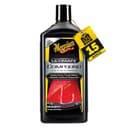
Meguiar's Ultimate Compound

Meguiar's Ultimate Compound

The default answer, and the one to buy if you are buying one. It uses diminishing abrasives that break down as you work them, so it cuts hard at first and finishes down to near-polish clarity - which is exactly what a beginner needs from a single bottle.

Buy this first — it is the one that fixes things
$13.97 · View on Amazon

Price as of October 15, 2026. #ad How we’re funded

2
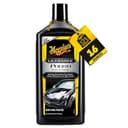
Meguiar's Ultimate Polish

Meguiar's Ultimate Polish

Not a compound at all - the finishing step that goes after one. It removes the fine haze a cutting compound leaves and brings the gloss back up before you protect the paint, and skipping it is why some DIY corrections look flat.

Buy this second — it is the one that makes it look expensive
$9.67 · View on Amazon

$12.9926% off

Price as of October 15, 2026. #ad How we’re funded

3
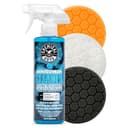
Chemical Guys Hex-Logic Buffing Pad Sampler Kit with Cleaner (6.5 in, 4-Piece)

Chemical Guys Hex-Logic Buffing Pad Sampler Kit with Cleaner (6.5 in, 4-Piece)

The sensible first pad purchase, because it is a sampler rather than a multi-pack of one grade: you get a spread of Hex-Logic pads plus a pad cleaner in the box, so you can find out which grade your paint actually needs before committing to a colour.

What you are missing if you plan to use a machine
$39.99 · View on Amazon

Price as of October 15, 2026. #ad How we’re funded

#1Top pick — Buy this first — it is the one that fixes things

Meguiar's Ultimate Compound

The default answer, and the one to buy if you are buying one. It uses diminishing abrasives that break down as you work them, so it cuts hard at first and finishes down to near-polish clarity - which is exactly what a beginner needs from a single bottle.

If you are buying one bottle, buy this one, because it is the only one of the two that changes the condition of your paint. Ultimate Compound uses diminishing abrasives— they break down as you work them, so the product cuts hard in the first passes and then refines itself toward a polish as the abrasive reduces. That is why one bottle can do two jobs, and it is exactly what someone correcting their own car for the first time needs.

Meguiar’s publishes “hand or machine”as the application method on the listing, which is genuinely uncommon in a true compound — most cutting products need the heat and motion of a machine to break down properly. What it does not publish is a cut grade or any abrasive specification, so nobody can tell you how it compares numerically to a professional compound. Expect less outright cut than a dedicated pro product on deep defects, and expect it to be stocked in every parts store in the country, which has its own value on a Saturday afternoon.

Strengths

  • Diminishing abrasives cut then refine, so one product does two jobs
  • Works by hand or by machine, which is rare in a true compound
  • Cheap and stocked in every parts store

Trade-offs

  • Less outright cut than a dedicated professional compound on deep defects
  • Meguiar's does not publish a cut grade or abrasive spec
What it isDiminishing-abrasive compound, hand or machine, 15.2 oz
Size15.2 oz
CoverageNot published
Abrasive typeDiminishing
ApplicationHand or machine
Cut gradeNot published

Specs read from the product listing, on August 18, 2026. “Not published” means the brand does not state that figure.

#2Buy this second — it is the one that makes it look expensive

Meguiar's Ultimate Polish

Not a compound at all - the finishing step that goes after one. It removes the fine haze a cutting compound leaves and brings the gloss back up before you protect the paint, and skipping it is why some DIY corrections look flat.

Not a compound at all, despite the shelf position. Ultimate Polish is a fine finishing product with, by Meguiar’s own spec, no meaningful cut. Its job is to remove the faint haze a cutting compound leaves behind and bring the gloss back up before you protect the paint. Skipping it is the single most common reason a DIY correction looks flat instead of wet in photographs.

Two points of honesty. It will not remove swirl marks on its own — if you buy only this and your paint is swirled, nothing will visibly change, and that is the most common disappointment with this bottle. And it is an extra pass over the whole car, which on a full-size vehicle is a real afternoon. Where it pays off hardest is dark paint, where compound haze is most visible; on a light color you may genuinely not see the difference.

Strengths

  • Cheapest way to add the finishing step most DIY corrections skip
  • Safe on dark paint where compound haze shows most
  • Works by hand or machine

Trade-offs

  • Has almost no cut - it will not remove swirls on its own
  • An extra step and an extra pass over the whole car
What it isFinishing polish for after compounding, 16 oz
Size16 oz
CoverageNot published
Abrasive typeFine finishing
ApplicationHand or machine
Cut gradeFinishing (no meaningful cut)

Specs read from the product listing, on August 18, 2026. “Not published” means the brand does not state that figure.

#3What you are missing if you plan to use a machine

Chemical Guys Hex-Logic Buffing Pad Sampler Kit with Cleaner (6.5 in, 4-Piece)

The sensible first pad purchase, because it is a sampler rather than a multi-pack of one grade: you get a spread of Hex-Logic pads plus a pad cleaner in the box, so you can find out which grade your paint actually needs before committing to a colour.

Worth saying out loud because the two headline bottles hide a cost. A compound and a polish are only half of a correction system — the pad is the other half, and the pad decides how aggressive the combination actually is. Running a finishing polish on a cutting pad and a compound on a soft finishing pad gets you two results that are nothing like what the bottles promise.

A sampler set is the honest first purchase here because it covers a range of grades rather than selling you one grade four times, and it includes a pad cleaner, which matters more than people expect: a loaded pad stops cutting and starts smearing. Check the diameter against your machine’s backing plate before you buy — our polishing pad picks carry a fitment table for every polisher on this site. If you are working by hand, skip this and buy a bag of plush microfiber instead.

Strengths

  • A grade spread in one box rather than four of the same pad
  • Includes a pad cleaner, which is the accessory people skip and then need
  • 6.5 in face suits the 6 in backing plates the common DA polishers ship with

Trade-offs

  • A sampler means only one pad of each grade - you will re-buy the grade you like
  • Chemical Guys publishes no cut rating, so the colour order is the only guide
What it is4-piece Hex-Logic pad sampler with pad cleaner, 6.5 in
Size6.5 in
CoverageNot published
Face diameter6.5 in
Count4 pads + cleaner
Foam lineHex-Logic
Cut ratingNot published

Specs read from the product listing, on October 6, 2026. “Not published” means the brand does not state that figure.

How to tell which one your car needs

You do not need to guess, and you do not need a light meter. Two tests, both free, both done in five minutes.

Test one — the sun test. Push the car into direct sunlight, or shine a phone torch across a clean panel at a low angle. If you see fine circular scratches that look like a cobweb when the light moves, those are swirl marks and you need the compound. If the paint looks clear and deep but slightly lifeless, you need the polish.

Test two — the fingertip test.Wash and dry the car, then run a clean fingertip across the paint. If it feels gritty rather than glassy, stop — you do not have a polishing problem, you have a decontamination problem. Compounding over bonded fallout drags those particles across the clear coat and makes things worse. Clay first, then come back.

If both tests come back clean — smooth paint, no visible swirls, just a bit dull — the honest answer is that neither bottle will change much and you should spend the money on a wax or a sealant instead. A correction you cannot see is a thickness of clear coat you cannot get back.

Does either one work by hand?

Meguiar’s publishes “hand or machine” for both products, which is the honest starting point, and then reality adds some conditions.

Ultimate Polish by hand is genuinely effective. There is almost no cut to develop, the job is to spread a fine abrasive and work it until it goes clear, and an applicator pad does that perfectly well. If you only ever do one of these two by hand, make it this one.

Ultimate Compound by hand works, with a much shorter reach.You can absolutely remove a scuff, a run of light swirls on a door, or bird-dropping etching by hand — and for a spot repair, hand application is the sensible method, because you are not setting up a machine for a patch the size of a phone. What you will not do by hand is correct a whole car to a uniform standard, because the pressure, speed and consistency that a machine supplies for hours are the things an arm cannot supply for hours. Griot’s own polishing guidance assumes a machine when it talks about removing swirls, light scratches, water spots and oxidation, and works small sections starting least-aggressive. We go into the trade-off in full in can you polish a car by hand?

The order that actually matters

The sequence is the whole value of owning both bottles, and it is the thing people get wrong most often: they buy the polish first because the name sounds gentler and safer, and then conclude that paint correction does not work.

  1. Wash. A two-bucket wash with a clean mitt.
  2. Decontaminate. Clay the paint if it feels gritty, and use an iron remover on the lower panels.
  3. Compound. Ultimate Compound, worked until the abrasive breaks down and the residue goes clear. This is where the defects go.
  4. Polish. Ultimate Polish, one pass, to remove compound haze and lift the gloss. This is where the look comes from.
  5. Protect. A sealant, wax or ceramic coating. Freshly corrected paint is bare paint — leaving it that way wastes the work.

Step 5 is not optional. Neither of these products leaves protection behind; an abrasive removes material, and whatever wax was there went with it. A car that has been compounded and polished and then parked is less protected than it was before you started.

What about the rest of the Meguiar’s lineup?

The naming genuinely is confusing, and it is worth setting out the shape of it. These two sit in the consumer “Ultimate” line, designed to be usable by hand or machine and sold in parts stores. Meguiar’s also sells a professional line aimed at machine use, where cut and finish are separated more sharply across more products.

We are not going to publish a cross-line aggressiveness ranking, because Meguiar’s does not publish a cut grade for Ultimate Compound and we will not invent a scale to put it on. If you want a genuinely more aggressive cut than Ultimate Compound provides, our polishing compound roundup includes products positioned for the cutting stage of a two-step correction, and compound vs polish explains the general distinction these two bottles happen to illustrate perfectly.

Who should buy which

Buy the compound only if you have visible swirls or scuffs and a limited budget, or if you are working by hand on a specific area. It is the bottle that changes something.

Buy the polish onlyif your paint is already defect-free — recently corrected, or a well-kept garage car — and you want a gloss step before sealing. This is a narrow case, and buying the polish alone is the most common way to be disappointed by both products.

Buy both if you intend to correct the car properly. Together they cost less than most single bottles of professional compound and cover the cut-then-refine sequence that a real correction needs. Pair them with a dual-action polisher and a pad set and you have a genuine paint-correction setup for the price of a dealer detail.

Buy neither if the fingertip test came back gritty. Decontaminate first. Nothing on this page helps a car whose paint is still contaminated, and compounding over bonded particles actively does damage.
A note on safety. Both of these products are abrasive — they work by removing a microscopically thin layer of clear coat, and there is no undo. By hand the risk is low. On a machine, work at the lowest speed that does the job, keep the pad flat and moving, never let the machine sit still on a panel, and stay off edges and body lines where the clear coat is thinnest. If you have never corrected paint before, read our paint correction guide and test on an inconspicuous panel first.

Frequently asked questions

What is the difference between Meguiar's Ultimate Compound and Ultimate Polish?

Ultimate Compound is abrasive and removes defects: it uses diminishing abrasives that break down as you work them, so it cuts first and refines afterwards, and it is the bottle that gets rid of swirl marks, oxidation and etching. Ultimate Polish has, by Meguiar's own specification, no meaningful cut — it is a fine finishing product whose job is to remove the haze a compound leaves and lift the gloss before you wax or seal. The compound changes the condition of the paint; the polish changes how it looks.

Which should I buy first, Ultimate Compound or Ultimate Polish?

Ultimate Compound, almost always. It is the only one of the two that fixes anything, and because its abrasives diminish as you work them it finishes down to near-polish clarity on its own, so a single bottle gets you most of the way. Buying the polish first is the most common mistake here — people assume the gentler-sounding name is the safer starting point, see no change in their swirled paint, and conclude paint correction does not work.

Can you use Meguiar's Ultimate Compound by hand?

Yes — Meguiar's publishes 'hand or machine' as the application method, which is unusual for a true compound. By hand it is genuinely useful for a spot repair: a scuff, a run of light swirls on one door, bird-dropping etching. What it will not do by hand is correct a whole car to a uniform standard, because the consistent pressure and speed a machine supplies for hours is what uniformity depends on. For a patch, hand application is the sensible method; for a car, use a dual-action polisher.

Will Ultimate Polish remove swirl marks?

No. Meguiar's lists its cut grade as finishing with no meaningful cut, and its own registry specification says the same. It removes the fine haze left behind by a cutting compound and increases gloss — that is the whole job. If your paint has visible swirls in direct sunlight, you need the compound (or something stronger) first, and the polish afterwards. Buying the polish to fix swirls is the single most common disappointment with this product.

Do I need both, or is Ultimate Compound enough?

Ultimate Compound is enough for most people, because its diminishing abrasives refine as they break down and leave a finish much closer to polished than a traditional compound would. You add the polish when you want the last increment of gloss, and it pays off most on dark paint, where compound haze is most visible. On a light-colored car you may genuinely not see the difference. Both bottles together still cost less than most single bottles of professional compound.

Do I need to wax after using either product?

Yes, and this is not optional. Both products are abrasive — they remove a thin layer of material, and any wax or sealant that was on the paint goes with it. A car that has been compounded and polished and then parked is less protected than it was before you started. Follow with a wax, a paint sealant or a ceramic coating in the same session if you can.

Can I use Ultimate Compound on a ceramic-coated car?

Not without removing the coating, which is what will happen. A coating is a sacrificial layer bonded to the clear coat, and an abrasive compound will cut through it. If a coated car has developed swirls or etching, the honest sequence is to correct the paint — which removes the coating in the corrected area — and then re-coat. For light water spotting on a coating, try a dedicated water spot remover and a maintenance wash before reaching for an abrasive.

What pad should I use with Ultimate Compound on a dual-action polisher?

A cutting or correcting grade pad for the compound, and a softer finishing pad for the polish — the pad decides how aggressive the combination actually is, and mismatching them gets you results nothing like what the bottles promise. Match the pad diameter to your machine's backing plate (a pad face roughly half an inch larger than the plate is the usual rule), and keep the pad clean: a loaded pad stops cutting and starts smearing.

Sources

  • Griot's Garage — How-To: Polish — Machine polishing removes swirls, light scratches, water spots and oxidation; work small sections and start least-aggressive (accessed July 18, 2026)
  • Chemical Guys — What Causes Swirl Marks on Car Paint and How to Prevent Them — Manufacturer guide: friction is the root cause - a dirty towel, gritty wash mitt or automatic car wash brush moving in a circular motion leaves tiny scratches; swirl marks show up most noticeably on dark colors such as black and navy blue because of the contrast against light reflection; prevent with the two-bucket method and a microfiber mitt, and dry by blotting with a plush microfiber towel or with a blower rather than wiping; wax can temporarily fill light swirl marks and make them less visible but does not remove the underlying scratches (accessed September 29, 2026)
  • Chemical Guys — How To Clay Bar Your Car — Clay removes bonded contaminants (brake dust, rail dust, fallout, overspray, tar, sap) that washing can't; lubricant prevents marring (accessed July 18, 2026)

Keep reading