Clay & Coat

Best Car Wax for White Cars

Waxes and sealants for white paint, ranked on what white actually punishes - embedded contamination, staining and dulling - not on the swirl-hiding that white does for free.

By Stephen V.Last updated How we pick

The verdict

Buy Collinite No. 845 Insulator Wax. White paint’s real enemy is time spent dirty — fallout specks, tar flecks, tree sap and water spots that key into an unprotected surface and show as gray or brown shadows on a light color — so the wax that keeps the surface slick for the most months per application wins, and 845 is the longest-lasting genuine wax here. If you want the easiest first bottle instead, take Meguiar’s Gold Class Carnauba Plus; if the white has already gone dull and blotchy, start with Chemical Guys Butter Wet Wax after a clay session, because the surface needs cleaning more than it needs protection.

Almost every “best wax” roundup is secretly written for a dark car. The criteria — hides swirls, buffs off without marring, no white residue in the trim — are all answers to problems dark paint has. White paint has the opposite problem list, and ranking a wax for white on dark-car criteria gets you the wrong bottle.

Chemical Guys makes the point itself, from the other direction: black is “notoriously unforgiving, revealing every swirl mark, scratch, and imperfection that lighter colors easily hide.” Read that sentence as a white-car owner and three things follow. Swirl-hiding is free— you are not paying for a gloss wax to fill marks you cannot see anyway. White residue is free — the thing that forces thin coats and careful taping on a black car is invisible on a white one, so a thicker, more durable product is no longer a risk. What is left is contamination: every bonded speck that washing cannot remove reads as a dark dot or a gray film against a pale background, which is why white cars look “tired” rather than “swirled” when they are neglected.

So the picks below are ranked on durability first, cleaning ability second, and gloss last. We own none of these products and ran no lab test — we compared what each maker publishes about its own formula and format against those criteria, and we say plainly where a brand publishes nothing. Prices are live and dated. One honest note before you read on: several brands sell white-pigmented waxes aimed at light paint, and we have no verified listing for one, so no white-pigmented product is ranked here and we make no claim about whether the pigment does anything.

How this is funded: we earn a commission if you buy through our links, at no extra cost to you. It never changes which product we recommend, and we’ll tell you when we’d skip one. Full disclosure.

Quick picks

Ranked on published specs, coverage and buyer fit. Select a row to jump to the full write-up. We haven’t tested these in a lab — here is exactly what we do instead.

#ProductKey specsBest forPrice
1
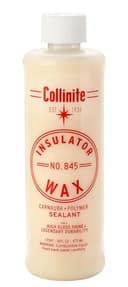
Collinite No. 845 Insulator Wax

Collinite No. 845 Insulator Wax

The longevity pick. This carnauba-and-polymer liquid is the one enthusiasts reach for when they want a wax to survive months and seasons rather than weeks. It trades a little of the warm carnauba glow and some application ease for genuinely long-lasting beading.

What it is
Carnauba + polymer wax-sealant, long durability
Size
16 fl oz
Type
Carnauba + polymer (wax/sealant hybrid)
Best overall for white paint
$20.95 · View on Amazon

Price as of October 15, 2026. #ad How we’re funded

2
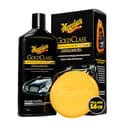
Meguiar's Gold Class Carnauba Plus Premium Liquid Wax

Meguiar's Gold Class Carnauba Plus Premium Liquid Wax

The easiest route to a warm, glossy wax finish. This carnauba-and-polymer liquid wipes on and buffs off without drama, ships with an applicator pad, and costs little — so it's the wax to start with if you just want a good shine you can't easily botch.

What it is
Carnauba + polymer liquid wax, includes an applicator
Size
16 fl oz
Type
Carnauba blend + polymers
Best first bottle
$14.48 · View on Amazon

$16.9915% off

Price as of October 15, 2026. #ad How we’re funded

3
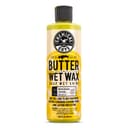
Chemical Guys Butter Wet Wax

Chemical Guys Butter Wet Wax

The most beginner-proof wax here. A carnauba-blend liquid that goes on wet and buffs off almost effortlessly — even when it's warm out — leaving a deep, wet-look gloss. Just know it's a shine wax: the look is the point, the protection is short-lived.

What it is
Carnauba-blend 'wet' liquid wax, very easy to apply
Size
16 fl oz
Type
Carnauba blend (natural wax)
Best for dull, neglected white paint
$19.97 · View on Amazon

Price as of October 15, 2026. #ad How we’re funded

4
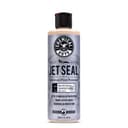
Chemical Guys JetSeal Anti-Corrosion Paint Sealant

Chemical Guys JetSeal Anti-Corrosion Paint Sealant

The sealant most people mean when they say sealant. It is marketed on corrosion resistance as much as gloss, and it goes on and comes off with the ease of a wax - the durability of a synthetic with none of the difficulty of a coating.

What it is
Synthetic anti-corrosion paint sealant, 16 oz
Size
16 oz
Type
Synthetic polymer sealant
Best protection per application
$39.99 · View on Amazon

Price as of October 15, 2026. #ad How we’re funded

5
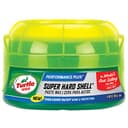
Turtle Wax Super Hard Shell Paste Wax (14 oz, 6-Pack)

Turtle Wax Super Hard Shell Paste Wax (14 oz, 6-Pack)

The cheap classic that still works. A hard paste wax that protects and shines a car perfectly well and has been the default garage tin for generations. The single tin is currently unavailable on Amazon, so the live Amazon-sold listing is a six-pack: per tin it is still the cheapest wax here by a wide margin, and a tin lasts for years, so the box is a lifetime supply — the honest answer when you want a real wax for the least money per coat and can live with the upfront cost.

What it is
Hard paste wax, the budget classic, 14 oz x 6
Size
14 oz, 6-pack
Type
Paste wax
Rated durability
Up to 12 months (per listing)
Cheapest real wax per tin
$52.39 · View on Amazon

Price as of October 15, 2026. #ad How we’re funded

6
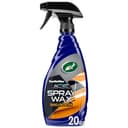
Turtle Wax ICE Spray Wax

Turtle Wax ICE Spray Wax

Skip this as your only wax. It's a genuinely handy spray-on shine for topping up between real waxes, but it's a maintenance topper, not protection — it lays down far less than any paste or liquid here and lasts a fraction as long. Buy it to maintain a wax, not to replace one.

What it is
Spray-on wax — a shine topper, not durable protection
Size
20 fl oz
Type
Spray wax (synthetic)
Skip this as your only protection
$12.99 · View on Amazon

Price as of October 15, 2026. #ad How we’re funded

Specs as published on each product’s own listing, read between July 23, 2026 and September 18, 2026. Prices are live, as of October 15, 2026. A figure a brand does not publish is left out of this table and shown as “Not published” in that product’s full write-up below.

The picks in full

#1Top pick — Best overall for white paint

Collinite No. 845 Insulator Wax

The longevity pick. This carnauba-and-polymer liquid is the one enthusiasts reach for when they want a wax to survive months and seasons rather than weeks. It trades a little of the warm carnauba glow and some application ease for genuinely long-lasting beading.

The longest-lasting genuine wax on this page, and on white that is the criterion that matters most. Protection measured in seasons rather than weeks means fewer months where fallout, tar and sap can key into bare clear coat — and those are the defects that show on a light color. A carnauba-and-polymer liquid gives you wax behavior with sealant-ish staying power.

Here is the part that makes it a better fit for white than for black. 845 is a thin liquid that has to go on in a very even coat or removal becomes a chore, and on dark paint that extra buffing is exactly how swirls are made. On white, extra buffing is just extra work — the marks it might leave are the ones a light color hides. You get the durability without inheriting the risk. Collinite publishes no rated durability figure on the listing, so we cite the format, not a month count.

Strengths

  • A reputation for real durability — well past a typical carnauba's few weeks
  • Strong water beading and sheeting
  • A 16 oz bottle waxes many cars, so the cost-per-coat is tiny

Trade-offs

  • The thin liquid must be applied in a very thin, even coat to buff off cleanly
  • Less of the deep warm 'glow' than a dedicated show wax
What it isCarnauba + polymer wax-sealant, long durability
Size16 fl oz
CoverageNot published
TypeCarnauba + polymer (wax/sealant hybrid)
FormLiquid
Rated durabilityNot published

Specs read from the product listing, on July 23, 2026. “Not published” means the brand does not state that figure.

#2Best first bottle

Meguiar's Gold Class Carnauba Plus Premium Liquid Wax

The easiest route to a warm, glossy wax finish. This carnauba-and-polymer liquid wipes on and buffs off without drama, ships with an applicator pad, and costs little — so it's the wax to start with if you just want a good shine you can't easily botch.

The easiest product here to be happy with, and the sensible answer if this is your first wax on a white car. It is a carnauba-and-polymer liquid rather than a straight natural wax, so it holds on a little longer than a show wax, and it ships with a foam applicator so there is nothing else to buy.

It is not the most durable and not the deepest shine. What it is, on white, is forgiving: the streaking failure mode that makes a thick coat obvious on black paint is far harder to see here, so a slightly heavy pass in slightly too much sun does not ruin the afternoon. Thin coat and shade are still the right method — they are just no longer the difference between a good result and a visible one.

Strengths

  • Liquid is forgiving to spread and buff — no chalky paste to work
  • Carnauba warmth plus added polymers for a bit more staying power
  • Comes with a foam applicator pad and is cheap and everywhere

Trade-offs

  • Weeks of protection, not months — that's true of any wax
  • Apply it too thick or in the sun and it can streak or sling
What it isCarnauba + polymer liquid wax, includes an applicator
Size16 fl oz
CoverageNot published
TypeCarnauba blend + polymers
FormLiquid
Rated durabilityNot published

Specs read from the product listing, on July 23, 2026. “Not published” means the brand does not state that figure.

#3Best for dull, neglected white paint

Chemical Guys Butter Wet Wax

The most beginner-proof wax here. A carnauba-blend liquid that goes on wet and buffs off almost effortlessly — even when it's warm out — leaving a deep, wet-look gloss. Just know it's a shine wax: the look is the point, the protection is short-lived.

Pick this one when the white has stopped looking white — flat, slightly gray, blotchy in the sun. A gloss-first wax that spreads wet and comes off with almost no pressure is the lowest-effort way to get a lot of surface handling done in one session, and surface handling is what tired white paint needs.

Be clear-eyed about what it does and does not do. Chemical Guys describes its gloss products as fillingminor swirls rather than removing them, and that filling effect is close to worthless to you — white was already hiding those marks. The protection is also short-lived even by wax standards. Buy it as a reviver you use after a clay bar, then move to something more durable for the long haul.

Strengths

  • Wipes on and off exceptionally easily, even in warmer conditions
  • Deep, glossy wet-look finish
  • Safe to reapply as often as you like

Trade-offs

  • Shorter-lived protection — it's built for shine, not longevity
  • Strong banana scent (a love-it-or-hate-it thing)
What it isCarnauba-blend 'wet' liquid wax, very easy to apply
Size16 fl oz
CoverageNot published
TypeCarnauba blend (natural wax)
FormLiquid
Rated durabilityNot published

Specs read from the product listing, on July 23, 2026. “Not published” means the brand does not state that figure.

#4Best protection per application

Chemical Guys JetSeal Anti-Corrosion Paint Sealant

The sealant most people mean when they say sealant. It is marketed on corrosion resistance as much as gloss, and it goes on and comes off with the ease of a wax - the durability of a synthetic with none of the difficulty of a coating.

Not a wax, and that is the point. A synthetic sealant bonds to the paint and holds on for months rather than weeks — Chemical Guys’ own comparison is that an engineered synthetic can last up to six months or more against several weeks for a natural carnauba. For a white daily driver that lives outside, months of slickness is worth more than any amount of warmth in the shine.

The trade is the look. Synthetics read cooler and glassier than a carnauba, and the warm depth a carnauba adds is the one genuine aesthetic argument for wax over sealant — but warmth shows up most strongly against a dark background, so it is the benefit you lose least by giving up on white. If you are torn, our wax vs sealant comparison takes the decision apart properly.

Strengths

  • Applies and removes like a wax - no cure window to panic about
  • Marketed for anti-corrosion protection, not just shine
  • 16 oz bottle covers many applications

Trade-offs

  • Synthetic gloss is cleaner and cooler than carnauba warmth
  • Chemical Guys does not publish a rated durability figure on the listing
What it isSynthetic anti-corrosion paint sealant, 16 oz
Size16 oz
CoverageNot published
TypeSynthetic polymer sealant
Rated durabilityNot published
FormLiquid

Specs read from the product listing, on August 18, 2026. “Not published” means the brand does not state that figure.

#5Cheapest real wax per tin

Turtle Wax Super Hard Shell Paste Wax (14 oz, 6-Pack)

The cheap classic that still works. A hard paste wax that protects and shines a car perfectly well and has been the default garage tin for generations. The single tin is currently unavailable on Amazon, so the live Amazon-sold listing is a six-pack: per tin it is still the cheapest wax here by a wide margin, and a tin lasts for years, so the box is a lifetime supply — the honest answer when you want a real wax for the least money per coat and can live with the upfront cost.

A hard paste wax, sold six tins to a box, and the lowest cost per tin of anything here that is unambiguously a real wax. On a white car the paste format loses most of its usual drawback: paste is the fiddliest to apply evenly and the most likely to leave a chalky film in a panel gap, and a chalky white film on a white car is the one cosmetic sin that does not announce itself.

Two caveats. Six tins is a lot of wax — this makes sense if you have a second car, a family member’s driveway or a long time horizon, and makes no sense as a single purchase. And a hard paste asks more of your arms than any liquid here, which matters if you are waxing a full-size vehicle in one go.

Strengths

  • Per tin, a fraction of the price of the boutique waxes
  • A tin lasts a very long time — six is years of waxing, or spares to give away
  • Genuinely protects and shines — this is a real wax, not a topper

Trade-offs

  • The hard paste takes more elbow grease to apply and buff than a modern liquid
  • Not the deep warm glow of a carnauba show wax
  • Only the six-pack is sold by Amazon right now, so the checkout price is the highest on this page for the cheapest wax
What it isHard paste wax, the budget classic, 14 oz x 6
Size14 oz, 6-pack
CoverageNot published
TypePaste wax
FormPaste
Rated durabilityUp to 12 months (per listing)

Specs read from the product listing, on September 18, 2026. “Not published” means the brand does not state that figure.

#6Skip this as your only protection

Turtle Wax ICE Spray Wax

Skip this as your only wax. It's a genuinely handy spray-on shine for topping up between real waxes, but it's a maintenance topper, not protection — it lays down far less than any paste or liquid here and lasts a fraction as long. Buy it to maintain a wax, not to replace one.

Not a bad product, a bad plan — and on white the plan fails in a specific way. A spray wax lays down a fraction of the protection of a liquid or paste and lasts a fraction as long, which means the surface spends most of the year effectively bare. Bare clear coat is where fallout and tar bond, and bonded contamination is the thing a white car shows.

Used the way it actually works — as a topper on a freshly washed car, over a real wax that is already there — it is a reasonable 10-minute gloss boost. Just do not let it be the whole protection plan, and do not reach for it on a dusty car; a quick detailer is the right tool for that job.

Strengths

  • Fast spray-and-wipe shine, safe on trim and plastics too
  • Cheap and easy to find
  • Fine as a quick between-wash topper

Trade-offs

  • Far thinner protection than a paste or liquid wax
  • Short-lived — you're refreshing a shine, not protecting the paint
  • The 'wax' name oversells what a spray can actually do
What it isSpray-on wax — a shine topper, not durable protection
Size20 fl oz
CoverageNot published
TypeSpray wax (synthetic)
FormSpray
Rated durabilityNot published

Specs read from the product listing, on July 23, 2026. “Not published” means the brand does not state that figure.

What white paint actually punishes

White is the easiest common color to keep looking good and one of the harder ones to keep looking clean. The mechanism is the same contrast effect that makes black paint show swirls, running the other way: a pale surface reflects enough light to drown out fine scratches, and the same brightness turns every dark particle on or in the finish into a visible dot.

1. Bonded contamination is the enemy, not swirls

Chemical Guys’ clay-bar guide lists what a wash cannot remove: brake dust, rail dust, industrial fallout, overspray, tar and tree sap, all of it bonded to the clear coat. On a dark car those deposits hide in the general darkness. On white they are a scatter of orange-brown specks along the lower doors and a gray cast across the hood. That is why, on a white car, a clay bar and an iron remover change the appearance far more than a wax upgrade does, and why any wax you apply over embedded fallout is sealing the problem in.

2. Water spots show as rings, not as dullness

Mineral deposits left behind when water dries on a panel are pale, which sounds like good news on white paint and is not: what you see instead is the ring— a hard-edged outline where the droplet sat. Chemical Guys’ coating maintenance guidance is blunt that water spotting is a maintenance problem rather than a product problem, and the fix is to stop water drying on the car in the first place. We have a whole guide on preventing water spots and one on removing the ones already there.

3. White residue stops being a constraint

This is the one genuine advantage white hands you, and almost nobody uses it. Every car has textured black plastic trim, rubber seals and panel gaps where dried wax leaves a white line, and on a dark car that line is the reason to apply thin coats, tape off trim and avoid paste waxes. On white paint the same residue on the paintis invisible, so you are free to buy the thicker, more durable, less elegant product. The trim itself is still black on a white car, so keep wax off the textured plastic — but the hood, roof and doors no longer police your technique.

Carnauba or synthetic on white?

On a black car this is a real argument, because carnauba’s warmth reads strongly against a dark background and people genuinely prefer the look. On white, most of that warmth is simply not visible, so the argument collapses into a durability question — and durability has a clear answer.

Chemical Guys’ own framing: natural carnauba gives a warm, deep gloss but lasts several weeks and needs frequent reapplication, while an engineered synthetic bonds to the paint and can last up to six months or more. Griot’s publishes the concrete cadence from the other side — three to four applications a year for its carnauba show wax, one a year for its ceramic liquid wax. Four sessions versus one, for a look difference you will struggle to photograph on a white panel.

Our ranking reflects that: a carnauba-plus-polymer hybrid at number one for people who want the wax ritual, a synthetic sealant for people who want the protection and would rather spend the Sunday elsewhere, and the pure show wax left off the list entirely — it is a great product and it belongs on a dark car.

The order of operations for a white car

Do these in order, and the wax choice becomes the least important decision on the page.

  1. Wash properly. A two-bucket wash with a clean mitt, and a pH-neutral shampoo rather than dish soap, which strips whatever protection is there.
  2. Decontaminate.Run your hand over the dried paint. If it feels gritty rather than glassy, clay it — and on white, hit the lower doors and rear quarters with an iron remover first, because that is where the fallout specks live.
  3. Then protect.Thin, even coats on a cool surface, in the shade. Griot’s method page is explicit that two to three thin coats beat one heavy coat, and that is still the right technique even though white forgives a heavy one.

The step most white-car owners skip is the middle one, because it is the only step that feels like work and produces no shine on its own. It is also the step that turns a seven-year-old white car from “a bit dingy” back into white. Our full detailing process puts the whole sequence in order, and how to apply car wax covers the application itself.

Should a white car be polished at all?

Sometimes, but it is rarely the first move. Griot’s own polishing guidance is that machine polishing removes swirls, light scratches, water spots and oxidation — and on a white car, two of those four are the reasons to reach for a machine. Etched water spots and genuine oxidation (chalky, flat paint that does not recover after a wash and a wax) need abrasives. Swirl marks, the usual reason people polish, are the thing white is already hiding for you, so correcting them buys a change almost nobody will see.

Practically: wash, clay, then wax. If the paint still looks dull and feels fine, that is oxidation, and a polishing compound on a dual-action polisher is the honest next step. If it looks dull and feels gritty, you did not clay it well enough. That one test saves most white-car owners an entire weekend.

What about yellowing?

“My white car has gone yellow” is a real complaint, and it has more than one cause: embedded contamination and road film reading as a dull cream, oxidation of the clear coat on a car that has lived in the sun unprotected, and on older vehicles the resin in the paint itself aging. We looked for a published claim from any of these makers that their wax prevents or reverses yellowing of white paint, and found none — so we have not ranked on it, and you should treat any roundup that does with suspicion.

What we can say honestly is the sequence to diagnose it. Wash and clay a test panel. If the cream tint lifts, it was contamination and road film. If it does not lift but a dab of compound on an applicator brings white back, it is oxidation in the clear coat and the car needs correction, not protection. If neither changes anything, the color is in the paint and no consumable on this page will touch it.
Frequently asked questions

What is the best wax for a white car?

Collinite No. 845 Insulator Wax, for most white cars. The reasoning is specific to light paint: white hides the swirl marks that make easy removal matter so much on a black car, so you can stop paying for a gloss-first wax and buy the one that protects for the longest per application. More months of slick, protected surface means fewer months where fallout, tar and sap can bond to bare clear coat — and bonded contamination is what a white car actually shows. If you want the simplest first purchase, Meguiar's Gold Class Carnauba Plus is the hardest one to regret.

Do white cars need wax as often as dark cars?

They need protection just as often, but for a different reason. On a black car you wax partly for the look, which drops off visibly within weeks. On a white car the look holds up much longer, which is exactly the trap — the protection expires on the same schedule whether or not you can see it, and an unprotected white car quietly accumulates the fallout and tar specks that show against a pale finish. The practical test is the same for any color: when water stops beading tightly, it is time.

Does a wax help with white paint going yellow or cream-colored?

Only if the cause is contamination, which it often is. Road film and embedded fallout read as a dull cream tint on white, and washing plus a clay bar lifts it. If a clay session does not change the color, the cause is either oxidation in the clear coat — which needs a polishing compound, not a wax — or age in the paint itself, which no consumable will fix. We found no maker publishing a claim that any wax prevents yellowing of white paint, so we do not rank on it.

Can I use a wax marketed for black cars on a white car?

Yes, and nothing bad happens — but you are paying for features you cannot use. A black-car wax is sold on gloss depth, swirl-filling and effortless removal, all of which answer problems white paint does not have. You will get a perfectly good result and a shorter protection interval than a durability-focused product would have given you. The reverse is not true: a thick, durable wax that risks visible residue is a fine choice on white and a poor one on black.

Is a sealant better than a wax on white paint?

For most white daily drivers, yes. Chemical Guys' own comparison is that a natural carnauba lasts several weeks while an engineered synthetic bonds to the paint and can last up to six months or more. The main thing you give up with a synthetic is the warm depth of a carnauba, and warmth reads most strongly against dark paint — so it is the benefit you lose least on white. Buy the wax if you enjoy waxing the car; buy the sealant if you want the protection and your Sundays back.

Why does my white car look dirty right after a wash?

Almost always because the contamination is not loose dirt — it is bonded to the clear coat, so soap and a mitt slide right over it. Chemical Guys lists what a wash cannot remove: brake dust, rail dust, industrial fallout, overspray, tar and tree sap. On a white car those read as dark specks and a gray cast. The fix is a decontamination step rather than a better soap: an iron remover on the lower panels, then a clay bar across the horizontal surfaces, then protect.

Do white-pigmented waxes for light-colored cars work?

We cannot tell you, and we would rather say so. Several brands sell paste waxes with white pigments aimed at light paint, we have no verified live listing for one, and so none is ranked on this page. We also found no published, measurable claim about what the pigment does to a modern clear-coated finish — a pigment sits in the wax layer, not in the paint, and the wax layer is microns thick and temporary. Judge one on its wax credentials, not its color.

Sources

  • Chemical Guys — Best Wax for Black Cars — Manufacturer guide: black paint is 'notoriously unforgiving, revealing every swirl mark, scratch, and imperfection that lighter colors easily hide', and absorbs more UV than lighter colors, raising oxidation risk; products should be trim-safe so they leave no white residue on black trim, rubber or plastic, because white residue is especially visible on a black car; suggested cadence is carnauba-based every 3-4 months, hybrid 4-6 months, ceramic 6-9 months, with black cars benefiting from more frequent maintenance (accessed September 29, 2026)
  • Chemical Guys — What Causes Swirl Marks on Car Paint and How to Prevent Them — Manufacturer guide: friction is the root cause - a dirty towel, gritty wash mitt or automatic car wash brush moving in a circular motion leaves tiny scratches; swirl marks show up most noticeably on dark colors such as black and navy blue because of the contrast against light reflection; prevent with the two-bucket method and a microfiber mitt, and dry by blotting with a plush microfiber towel or with a blower rather than wiping; wax can temporarily fill light swirl marks and make them less visible but does not remove the underlying scratches (accessed September 29, 2026)
  • Chemical Guys — Synthetic Wax vs. Carnauba — Natural carnauba gives a warm, deep gloss but lasts several weeks and needs frequent reapplication; engineered synthetic wax/sealant bonds to paint and can last up to six months or more (accessed July 18, 2026)
  • Chemical Guys — How To Clay Bar Your Car — Clay removes bonded contaminants (brake dust, rail dust, fallout, overspray, tar, sap) that washing can't; lubricant prevents marring (accessed July 18, 2026)
  • Chemical Guys — Ceramic Coating Maintenance — On coating longevity: durability drops toward 1-2 years without care but reaches multiple years with pH-neutral washing and periodic maintenance (accessed July 18, 2026)
  • Griot's Garage — Education: Waxes & Sealants — Manufacturer education page: durability is presented as relative between formulas rather than an absolute number of months, and is given as annual application counts - Best of Show Wax (carnauba) 3-4 applications a year, Premium Carnauba Paste Wax 2-3, Ceramic Liquid Wax 1, BOSS Finishing Sealant 3-4 (accessed September 29, 2026)
  • Griot's Garage — How-To: Wax — Manufacturer method: always evaluate the surface for above-surface contaminants before waxing and clay it if the paint is not smooth; apply thin even coats to a cool surface with a foam or microfiber pad, because two to three thin coats are better than one heavy coat; always remove wax and sealant residue with a quality microfiber cloth (accessed September 29, 2026)
  • Griot's Garage — How-To: Polish — Machine polishing removes swirls, light scratches, water spots and oxidation; work small sections and start least-aggressive (accessed July 18, 2026)
  • Chemical Guys — Two Bucket Method Car Wash Guide — Separate wash and rinse buckets keep contaminated water off the mitt — the main source of wash-induced swirl marks (accessed July 18, 2026)

Keep reading