Clay & Coat

Griot's Garage G9 Review

The polisher this site recommends more than any other, reviewed on what Griot's actually publishes - 1,000 watts, a 9 mm throw, six speeds from 2,000 to 6,400 OPM - and on the three things it does not.

By Stephen V.Last updated How we pick

How this is funded: we earn a commission if you buy through our links, at no extra cost to you. It never changes which product we recommend, and we’ll tell you when we’d skip one. Full disclosure.

The verdict

Buy the G9 if you are buying one polisher and want it to still be the right polisher in five years. It is the machine this site recommends more than any other, and the reason is narrow and specification-based rather than enthusiastic: at a published 9 mm throw and 1,000 watts it has more cut than the beginner machines and more control than the long-throw ones, and the random orbit means the extra power does not translate into extra risk.

What it is not is a complete purchase. The G9 arrives as a bare machine and a 6 in plate, so the real cost is the tool plus pads plus two liquids, and the 6 in plate quietly narrows which pad kits you can use. If you have never corrected paint and want to start the day the box arrives, a kit is the better first buy even though its ceiling is lower.

What Griot’s actually publishes

Everything in this table came off Griot’s own product page for item 10901. Two of the rows are dated differently, and that needs explaining rather than hiding: when we read the page on October 26, 2026, the Product information, Shipping, Reviews and Regulatory tabs were all empty, so the amperage, weight, safety class and the description of Constant Speed Control come from our October 2, 2026 read of the same URL. Both reads are cited below. Nothing here is from a retailer, a forum or memory.

SpecificationPublished figure
ActionRandom orbital (dual action)
Throw / orbit9 mm
Motor1,000 watts
Current draw8.5 amperes (from the October 2 read)
SpeedDial with 6 settings, 2,000–6,400 OPM
Speed controlConstant Speed Control circuitry, which “ensures consistent speed regardless of downward pressure” (October 2 read)
Backing plate6 in vented orbital, stated to dissipate heat and extend pad life
Cord10 ft quick-connect, shared across Griot’s polisher line
Weight5.0 lb / 2.27 kg without cord (October 2 read)
CoolingFan-cooled counterbalance; heat, vibration and fatigue reduction claimed, not measured
Decibel ratingNot published
Vibration figureNot published
Duty cycle / run-time limitNot published
Recommended pads or polishNot published
What is in the boxNot published (the product tabs were empty on the October 26 read)
Warranty lengthNot published — a “100% Satisfaction Guarantee” is linked, not stated

The 9 mm throw is the whole argument

If you only understand one number on this page, make it this one. Throw— or orbit — is how far the pad travels around its orbital path on each revolution. It scales two things: how much paint a pass covers, and how fast the abrasive in your compound breaks down and cuts.

It does not scale paint safety, and this is the most common misunderstanding in the category. What makes a dual-action machine forgiving is that the pad is free to stoprotating when it meets resistance, so it cannot keep grinding one spot the way a rotary can. That freedom is a property of the random orbit, not of the orbit’s size. A 15 mm machine is not more dangerous than a 9 mm one in the sense people imagine; it is harder to keep flat on a curve, which is a different and more practical problem.

So 9 mm is a deliberate middle. It is at or above the throw of the entry-level kits, which is where the G9 gets its reputation for pulling through a cut without bogging down. It is below the 15 mm long-throw machines, which cover a panel in fewer passes and fight you on mirror caps, A-pillars and tight rear-quarter curves. For a person correcting their own car, in a garage, with ordinary pads, 9 mm is the throw that asks the least of your technique while still removing real defects. The full trade is in our 8 mm vs 15 mm comparison.

One more thing the specification sheet quietly gives you: Constant Speed Control. Griot’s described it on our earlier read as circuitry that “ensures consistent speed regardless of downward pressure”. On a cheap machine, leaning in bogs the motor and your cut rate changes with your arm; with speed held constant, the variable you are controlling is pressure alone. That is worth more to a beginner than a hundred extra watts, and it is the sort of thing a buyer never thinks to look for.

What Griot’s does not publish, and why we are saying so

Three gaps, in descending order of how much they should affect your decision.

1. No pad or liquid guidance whatsoever.The page markets the machine to beginners — “professional-level results, no experience required” — and then publishes no recommended pad, no recommended compound, and nothing about speed settings for a given job. The one pad-adjacent statement on the entire page is that the vented plate “extends pad life”. The useful guidance exists, but it is in the manuals rather than the listing: use a fresh pad for each step, at least two pads per process when detailing a vehicle, a separate pad for each polish, wax or sealant, and rinse and wring a pad after polishing while cleaning its face with a conditioning brush. None of that reaches a buyer at the point of purchase.

2. The warranty is a reputation, not a published term.Our own registry listed “backed by Griot’s lifetime warranty” as this machine’s tie-breaker. We went looking for that claim on griotsgarage.com and found the product page offering a “100% Satisfaction Guarantee” with the terms behind a link, and the founder’s message saying “We had a lifetime guarantee on everything we sold, and I mean everything” — in the past tense, with no statement that it still applies, no definition of “lifetime” and no exclusions listed. A 180-day trial plus a lifetime guarantee against defects, excluding wear items, is reproduced on several reseller pages; a reseller is not a maker, so we do not treat that as published. We corrected the product entry rather than keep the claim.If the warranty is your deciding factor, ask Griot’s before you buy.

3. No comfort data. The fan-cooled counterbalance is credited with reducing heat, vibration and hand fatigue, and there is no decibel rating and no vibration figure behind any of it. Hand fatigue on a machine you will hold for several hours is a genuine consideration, and nobody in this category measures it, so nothing on this site ranks polishers on comfort.

Where the G9 sits in Griot’s own range

Worth reading in the maker’s own words, because it is more honest than most marketing. Griot’s education page for buffers positions the G9 for “Versatile, light to moderate paint correction and wax application”, and the BOSS G15 and G21 for “Professional-level, light to severe paint correction and paint finishing”. The GR3 Mini Rotary is an “Innovative solution for spot repair, removal of isolated severe paint defects”, and the G8 Mini is for tight spaces.

Read that ladder carefully and the G9’s job becomes clear: it is the machine for paint you maintain, not paint you rescue. Severe defects — heavy oxidation, deep random scratches across a whole panel — are where Griot’s itself points you at a bigger machine. That same page lists orbit sizes for each model and never explains what the figure means, which is a fair summary of how this entire category sells specifications.

Living with it: the three things that decide your result

None of them is the motor, which is the honest headline of any polisher review.

Pads, plural.A pad packed with spent compound stops cutting and starts generating friction heat instead, which is the failure mode that actually damages paint on a DA. Griot’s publishes no pad lifespan and no per-car total, so plan on the per-process figures from its manuals and own more pads than you think you need. Our pad-count guide works the arithmetic through.

The pad material, once foam runs out of cut.The G9’s 6 in plate takes 6.5 in pads, and the choice between foam, microfiber and wool changes how much the same compound removes at the same speed far more than a speed-dial setting does. That is a separate comparison: microfiber vs foam vs wool pads.

Preparation.Griot’s own polishing how-to is blunt about the order — machine polishing removes swirls, light scratches, water spots and oxidation, you work small sections, and you start with the least aggressive combination that works. A machine run over a panel that was not decontaminated first will drag bonded fallout across the clear coat and add defects. Wash, clay, then correct.
The G9, and the three machines it sits between

Ranked on published specs, coverage and buyer fit. Select a row to jump to the full write-up. We haven’t tested these in a lab — here is exactly what we do instead.

#ProductBest forPrice
1
Griot's Garage G9 Random Orbital Polisher

Griot's Garage G9 Random Orbital Polisher

A powerful, smooth random-orbital that's still beginner-safe — the random orbit makes it very hard to burn paint. The 9 mm throw and Griot's satisfaction guarantee are the tie-breakers over similar tools.

The machine this review is about
$179.99 · View on Amazon

Price as of November 12, 2026. #ad How we’re funded

2
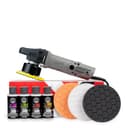
Chemical Guys TORQX Random Orbital Polisher Kit

Chemical Guys TORQX Random Orbital Polisher Kit

The beginner buy that is a kit rather than a machine: polisher, three pads and four liquids in one box, so you start correcting the day it arrives instead of ordering five more things. It is no longer the cheap option — check the live price against the bare G9 before you decide, because the kit has drifted above it.

Buy this instead if you want one box
$214.99 · View on Amazon

Price as of November 12, 2026. #ad How we’re funded

3
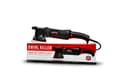
Adam's Polishes Swirl Killer 15mm Polisher

Adam's Polishes Swirl Killer 15mm Polisher

A long-throw (15 mm) polisher that covers panels faster with less pass-count. The bigger orbit cuts more efficiently, but it's slightly more machine to control on tight areas.

Buy this instead for whole-car speed
$237.99 · View on Amazon

Price as of November 12, 2026. #ad How we’re funded

4
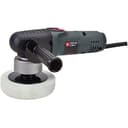
PORTER-CABLE 6-Inch Variable-Speed Polisher

PORTER-CABLE 6-Inch Variable-Speed Polisher

The tool that taught a generation to polish. It's not the smoothest anymore, but it's cheap, tough, and there are thousands of tutorials shot on this exact machine.

Buy this instead to spend the least
$159.00 · View on Amazon

Price as of November 12, 2026. #ad How we’re funded

#1Top pick — The machine this review is about

Griot's Garage G9 Random Orbital Polisher

A powerful, smooth random-orbital that's still beginner-safe — the random orbit makes it very hard to burn paint. The 9 mm throw and Griot's satisfaction guarantee are the tie-breakers over similar tools.

Who it is for:someone buying one machine and not wanting to buy a second one in two years. The G9 is the middle of Griot’s own range and the most machine most people will ever need for a car they own rather than a car they are paid to fix.

The published case for it is short and strong: a 1,000 watt motor, a 9 mm throw, a speed dial with six settings from 2,000 to 6,400 OPM, a 6 in vented orbital backing platethat Griot’s says “dissipates heat and extends pad life”, a 10 ft quick-connect power cordshared across its polisher line, and a fan-cooled counterbalance the maker credits with reducing “tool heat, vibration, and hand fatigue”.

Honest cons, in the order they will matter to you. It is a bare machine: no pads, no compound, no polish, so the real first-purchase cost is the tool plus a pad set plus two liquids. The plate is 6 in, which is the larger of the two common sizes and rules out a chunk of the 5 in pad kits on the market. And the lifetime warranty Griot’s is famous for is not stated in the present tense anywhere we could find on its own site — see the warranty section below, because we corrected our own product data over it.

Strengths

  • Random-orbital action is forgiving — very hard to damage paint
  • Strong, smooth motor that pulls through a cut without bogging
  • Covered by Griot's 100% Satisfaction Guarantee (the product page links the terms rather than stating them)

Trade-offs

  • Priced above the bare-bones beginner tools
  • Pads and polishes are extra unless you buy a kit
What it is1000 W random-orbital DA polisher, 9 mm throw
Size9 mm orbit
CoverageNot published
ActionRandom orbital (dual action)
Orbit / throw9 mm
Motor1000 W
Speed6 settings, 2,000-6,400 OPM
Backing plate6 in vented

Specs read from the product listing, on September 7, 2026. “Not published” means the brand does not state that figure.

#2Buy this instead if you want one box

Chemical Guys TORQX Random Orbital Polisher Kit

The beginner buy that is a kit rather than a machine: polisher, three pads and four liquids in one box, so you start correcting the day it arrives instead of ordering five more things. It is no longer the cheap option — check the live price against the bare G9 before you decide, because the kit has drifted above it.

Who it is for:a first-timer who would rather start this weekend than assemble a shopping list. The TORQX ships as a kit — machine, pads and polishes together — and that is a genuine advantage over the G9 for exactly one buyer: the one who has never corrected paint and does not yet know which pads to order.

The trade is real and worth stating plainly, and it is not the throw. On a live read of 2026-11-02 Chemical Guys publishes 9 mmfor the TORQX — the same figure as the G9, and a correction to the 8 mm this site previously carried. What differs is the motor (800 W against 1,000 W), the complete absence of a published OPM range, and pads basic enough that you will replace them. You are buying a lower ceiling in exchange for a lower floor — see G9 vs TORQX for the full head-to-head.

Strengths

  • Ships with three Hex-Logic pads and four V-Line liquids - no separate shopping list
  • Forgiving random-orbital action
  • Chemical Guys and the listing now both publish a 9 mm throw, the same figure Griot's publishes for the G9

Trade-offs

  • 800 W against the G9's 1,000 W - less motor for the same published throw
  • Chemical Guys publishes no OPM range and no speed-setting count for it at all
  • Included pads are basic - you'll upgrade eventually
  • Often prices above the bare G9, which undercuts the 'cheapest way in' case for it
What it is800 W random-orbital DA polisher kit, 9 mm throw
Size9 mm orbit
CoverageNot published
ActionRandom orbital (dual action)
Orbit / throw9 mm
Motor800 W
SpeedVariable - no OPM range published
Weight4.7 lb (listing)
Includes3 Hex-Logic pads + 4 V-Line liquids

Specs read from the product listing, on November 2, 2026. “Not published” means the brand does not state that figure.

#3Buy this instead for whole-car speed

Adam's Polishes Swirl Killer 15mm Polisher

A long-throw (15 mm) polisher that covers panels faster with less pass-count. The bigger orbit cuts more efficiently, but it's slightly more machine to control on tight areas.

Who it is for: someone correcting an entire car, probably more than once, who cares about hours. A 15 mm throw moves more pad across more paint per rotation, so panels finish in fewer passes.

It is not a straight upgrade. A long throw is harder to keep flat on curves, mirror caps and tight panels, and that is where a DA’s safety margin comes from. Adam’s publishes the 15 mm figure and no speed range, so the comparison stops being specification-to-specification there. We lay the whole trade out in 8 mm vs 15 mm polishers.

Strengths

  • 15 mm long throw covers ground and cuts faster
  • Comfortable, well-balanced body
  • Backed by Adam's warranty and support

Trade-offs

  • Long throw is trickier on curves and tight panels
  • Priciest polisher here
What it isLong-throw (15 mm) random-orbital polisher
Size15 mm orbit
CoverageNot published
ActionRandom orbital (dual action)
Orbit / throw15 mm (long throw)
Backing plate5-6 in

Specs read from the product listing, on July 18, 2026. “Not published” means the brand does not state that figure.

#4Buy this instead to spend the least

PORTER-CABLE 6-Inch Variable-Speed Polisher

The tool that taught a generation to polish. It's not the smoothest anymore, but it's cheap, tough, and there are thousands of tutorials shot on this exact machine.

Who it is for: someone who wants to find out whether they enjoy paint correction before committing. The 7424XP is the machine thousands of tutorials were filmed on, it takes standard 6 in plates, and it is durable in a way that has nothing to do with refinement.

The honest gap: Porter-Cable publishes 4.5 amps, 2,500–6,800 OPM, a 6 in pad and 5-1/2 lbs — and no orbit or throw figure at all. The single specification that determines how much a DA cuts is absent from the maker’s page for the machine that taught a generation to polish. Our G9 vs 7424XP comparison is built around that gap.

Strengths

  • Inexpensive and durable
  • Huge library of tutorials use this exact tool
  • Standard backing plate accepts common pad sizes

Trade-offs

  • Rougher and louder than newer random-orbitals
  • Bare tool — pads and polishes are extra
What it isVariable-speed random-orbital, the classic starter
SizeNot published
CoverageNot published
ActionRandom orbital (dual action)
SpeedVariable
Backing plate6 in

Specs read from the product listing, on July 18, 2026. “Not published” means the brand does not state that figure.

What you still have to buy

This is the part a specification sheet hides. The G9 arrives as a machine and a backing plate. To correct a car with it you also need, at minimum:

  • Pads — at least two per process.Griot’s own manuals say to use a fresh pad for each step and at least two pads per process when detailing a vehicle, and the BOSS Hybrid Micro manual raises that to three or four. Nobody publishes a per-car total, so our pad-count guidederives 6–8 for a two-stage correction from the maker’s per-process figures rather than inventing one.
  • A compound and a polish. Two liquids, not one, if the car has real defects. See compound vs polish for which your paint actually needs, and the compound picks.
  • 6 in pads, specifically.The included plate is 6 in. A great deal of the pad market — including several kits on our own polishing pad roundup— is sold in 5 in. Griot’s lists optional 5 in and 6 in vented plates, so this is solvable, but it is an extra purchase nobody warns you about.
  • A way to see what you are doing. Swirls hide under garage fluorescents and reappear in daylight. A detailing light is the difference between finishing a panel and thinking you finished a panel.

When the G9 is the wrong machine

Three cases, and we would rather you spent less than bought the wrong tool:

You want to fix one scratch. Do not buy a 1,000 watt machine for a door handle smudge. Hand polishing genuinely works for spot repairs and single scratches, and the fingernail test will tell you in ten seconds whether the defect will polish out at all.

You have no mains power where the car lives. The 10 ft cord is generous and it is still a cord. A cordless machine is the honest answer for street parking, with the runtime trade stated.

Your paint is not ready. A polisher is the third step, not the first. Wash, then decontaminate, then correct. Running a pad over bonded fallout drags it across the clear coat. Our paint correction guide sets out the order.

The verdict, in one line each

  • One machine, owned for years, a car you care about: the G9. The published specification is the strongest in its class and the 9 mm throw is the reason.
  • Never corrected paint before, want everything in one box: the TORQX kit.
  • Correcting whole cars and counting hours:a 15 mm machine — within Griot’s own lineup that is the G15, and the comparison is less one-sided than it looks.
  • Finding out whether you like this: the 7424XP, and accept that its maker publishes no throw figure.

A note on safety. A dual-action polisher is forgiving, not harmless. The random orbit is what makes it hard to burn through clear coat, and that protection disappears the moment the pad stops rotating — on an edge, a sharp body line, or under too much downward pressure. Keep the pad flat, keep it moving, work in sections you can see, and never run a machine on a panel that has not been washed and decontaminated: polishing grit into paint is how a correction session adds defects instead of removing them. Eye protection, and no loose sleeves near a spinning plate.

Frequently asked questions

Is the Griot's G9 good for beginners?

Yes, with one caveat. Griot's markets it as a 'beginner-friendly dual action car polisher' promising 'professional-level results, no experience required', and the random orbital action genuinely is forgiving - the pad is free to stop rotating under load, which is what makes burning through clear coat hard rather than easy. The caveat is that it is a bare machine. A true beginner buying the G9 also has to choose pads, a compound and a polish with no guidance from Griot's, because the product page publishes no recommended pads or liquids at all. If that research sounds like friction rather than fun, a kit like the Chemical Guys TORQX gets you polishing sooner even though its ceiling is lower.

What is the throw on a Griot's G9, and does it matter?

9 mm, which Griot's publishes on the product page. Throw - also called orbit - is how far the pad travels in its orbital path, and it scales coverage per pass and cut rate. It does NOT scale paint safety: the randomness of the orbit is what makes a DA forgiving, not the size of the orbit. So a 9 mm machine is not safer than a 15 mm machine, it is slower and easier to keep flat on tight panels. 9 mm sits deliberately in the middle: more cut than the 8 mm starter machines, more control than the 15 mm long-throw ones.

Does the G9 come with pads?

No. It ships as the machine with a 6 in vented orbital backing plate and a 10 ft quick-connect power cord. Griot's publishes nothing on its product page about what else is in the box - the Product information tab was empty when we read it on October 26, 2026 - so budget for the tool plus a pad set plus a compound plus a polish. Note the plate size: 6 in, which means 6.5 in pads. A lot of pad kits are sold in 5.5 in for a 5 in plate, and Griot's does list optional 5 in and 6 in vented plates if you want to run the smaller size.

Does the Griot's G9 have a lifetime warranty?

We could not confirm that in the present tense from a Griot's page, and we changed our own product data because of it. The G9 product page publishes a '100% Satisfaction Guarantee' with 'we want you as a customer for life' and puts the actual terms behind a link rather than on the page. The only page on griotsgarage.com we located that states a duration is the founder's message, and it says it in the past tense: 'We had a lifetime guarantee on everything we sold, and I mean everything.' A 180-day trial plus a lifetime guarantee against defects, with a wear-and-tear exclusion, is reproduced on several reseller product pages - but a reseller is not a maker source, so we do not cite it as one. If the warranty is the reason you are choosing this machine, ask Griot's directly before you buy.

G9 or G15 - which Griot's polisher should I get?

Griot's own education page positions them differently rather than as better and worse. The G9 is listed for 'Versatile, light to moderate paint correction and wax application'; the BOSS G15 and G21 are listed for 'Professional-level, light to severe paint correction and paint finishing'. So the G15 is the machine for severe defects and for working faster across a whole car, and the G9 is the machine for a car you maintain. Worth knowing before you spend up: that same page lists orbit sizes per model and never explains what throw size means, so the decision is being made for you on marketing language rather than published data.

How loud is the G9, and how much does it vibrate?

Griot's does not publish either figure. The only claim on the product page is qualitative - a 'fan-cooled counterbalance reduces tool heat, vibration, and hand fatigue' - with no decibel rating and no vibration measurement behind it. No polisher in our registry publishes a decibel or vibration number, which is why no page on this site ranks machines on comfort. Treat hand fatigue as a real consideration and an unmeasured one.

Can the G9 remove deep scratches?

Only the ones that are in the clear coat. The test is your fingernail: if it catches in the scratch, the defect is through the clear coat and polishing cannot fill it - that is a touch-up or body-shop job, and running a machine harder over it only thins the clear coat around it. Within the clear coat, the limiting factor is usually the pad and liquid rather than the machine, which is why our pad material comparison exists: a foam cutting pad that has run out of cut is the point at which a microfiber pad does more for your result than a bigger motor would.

How long does the G9 take to correct a car?

Griot's publishes no figure, and neither does any other polisher maker in our registry - there is no duty cycle, no run-time limit and no coverage rate on the page. What the published specs do tell you is the direction: a 9 mm throw covers less paint per pass than a 15 mm one, so a two-stage correction on a sedan is a weekend job rather than an afternoon for most people. Plan around pads rather than hours. Running out of clean pads mid-car is the thing that actually stops a session, because a packed pad stops cutting and starts generating friction heat.

Sources

  • Griot's Garage — G9 Random Orbital Polisher (item 10901), re-read 2026-10-26 — Maker page on a FRESH read, recorded separately from the 2026-10-02 read because the page publishes LESS today. Published on this read: "Powerful 1,000-watt motor and 9mm throw for quick defect removal"; "Speed dial with 6 settings ranging from 2000 - 6400 OPM"; "6\" Vented Orbital Backing Plate dissipates heat and extends pad life"; "10' Quick-Connect Power Cord compatible with all our polishers"; "Ergonomic double-shot rubber grips for added control and comfort"; "Fan-cooled counterbalance reduces tool heat, vibration, and hand fatigue"; positioned as a "beginner-friendly dual-action car polisher" promising "professional-level results, no experience required"; item 10901; a "100% Satisfaction Guarantee" whose terms sit behind a link rather than on the page. NOT published on this read: amperage, weight, safety class, any description of Constant Speed Control, country of manufacture, warranty length, what is in the box (the Product information, Shipping, Reviews and Regulatory tabs were all empty), recommended pads or polish, a decibel or vibration figure, and any duty-cycle or run-time limit. The amperage, weight, safety-class and Constant Speed Control wording quoted on our page therefore come from the 2026-10-02 read of this same URL, recorded under h3GriotsG9, and are labeled as such (accessed October 26, 2026)
  • Griot's Garage — G9 Random Orbital Polisher (item 10901) — Maker specs: 1,000 watt motor, 8.5 amperes, 9 mm throw; speed dial with 6 settings from 2,000-6,400 OPM free speed; Constant Speed Control circuitry 'ensures consistent speed regardless of downward pressure'; fan-cooled counterbalance to reduce tool heat, vibration and hand fatigue; 6 in vented orbital backing plate; 10 ft quick-connect power cord; 5.0 lb / 2.27 kg without cord; Safety Class II; optional 5 in and 6 in vented backing plates (accessed October 5, 2026)
  • Griot's Garage - Message from our founder — The ONLY page on griotsgarage.com located on this read that states a guarantee duration, and it states it in the PAST TENSE: "We had a lifetime guarantee on everything we sold, and I mean everything." The page does not say whether that policy still applies, does not define "lifetime" and lists no conditions or exclusions. The G9 product page itself publishes only a "100% Satisfaction Guarantee" whose terms sit behind a link. A 180-day trial plus a lifetime guarantee against defects with a wear-and-tear exclusion is reproduced on several RESELLER product pages, which are not maker sources and are therefore not cited as one - so the lifetime warranty our own registry long listed as the G9 tie-breaker could NOT be confirmed in the present tense from a Griot's page on this read, and the registry row was corrected to match (accessed October 26, 2026)
  • Griot's Garage — Education: Buffers — Maker's own machine positioning: the G9 is for 'Versatile, light to moderate paint correction and wax application'; the BOSS G21 and G15 are 'Professional-level, light to severe paint correction and paint finishing'; the GR3 Mini Rotary is an 'Innovative solution for spot repair, removal of isolated severe paint defects'; the G8 Mini is for tight spaces; orbit sizes are listed per model but the page does not explain what throw size means (accessed October 5, 2026)
  • Griot's Garage — G9 6" Random Orbital Polisher user manual (item 10901) — Manual PDF, located via live search of griotsgarage.com. The readable maker guidance across the Griot's polisher manuals is to use a fresh pad for each step and at least two pads per process when detailing a vehicle, to use a separate pad for each machine polish, wax or sealant so products do not contaminate one another, and to rinse and wring a pad after polishing and clean the pad face during work with a conditioning brush. The BOSS Hybrid Micro Polisher manual raises that to 3-4 pads per process. NO per-car pad total, NO pad lifespan in hours and NO replacement interval is published; the PDF's body text would not extract cleanly on this read, so only the figures confirmed by the live search result are recorded here (accessed October 17, 2026)
  • PORTER-CABLE — 7424XP 6 in Variable-Speed Random Orbit Polisher — Maker specs: 4.5 Amp, AC only; 2,500-6,800 OPM electronic variable speed; 6 in pad; 5-1/2 lbs; two-position removable side handle; 100 percent ball and roller bearing construction; ships with a polishing pad, side handle and wrench; '3 Year Limited Warranty, 1 Year Free Service, 90 Days Satisfaction Guaranteed'; described as 'Ideal for polishing and sanding automotive and marine projects'. The maker's page does NOT publish an orbit/throw figure (accessed October 5, 2026)
  • Griot's Garage — How-To: Polish — Machine polishing removes swirls, light scratches, water spots and oxidation; work small sections and start least-aggressive (accessed July 18, 2026)

Keep reading