Clay & Coat

Best Car Polisher Under $200

Six machines that sat under $200 on the last price refresh, ranked on published throw, motor wattage and speed range - including the one that is genuinely the best polisher on this site, not just the best cheap one.

By Stephen V.Last updated How we pick

The verdict

Buy the Griot’s Garage G9 Random Orbital. It is the best polisher under $200 and also the best polisher we recommend at any price — 1000 W, a 9 mm throw and a published 2,000–6,400 OPM range across six settings, which is the widest speed band of any machine on this page. It is for anyone who wants one polisher and does not want to buy a second one in two years.

The budget pick is the Niusken Cordless Car Buffer Polisher Kit, the cheapest machine here that still arrives with batteries and pads. It is a spot-work and coating-spreading tool rather than a paint-correction machine, and the page says so plainly. If you want corded simplicity for less than the G9, the PORTER-CABLE 7424XP is the long-standing answer and has more tutorial coverage than everything else here combined.

Every pick below carried a live price under $200 as of November 12, 2026. Prices come from the price layer, not from this page, so the figure in the table is the current one — if a machine has since moved above the cap, the table will show it.

Two hundred dollars is a genuinely useful ceiling in this category, because it is just above where the good machines actually start. Below about $100 you are buying a cordless spot tool. Between $150 and $200 you can buy a full-size, mains-powered random-orbital polisher that a professional detailer would be happy to use all day. Very little above $200 does anything a careful person cannot do with the machines on this page — the money buys a longer throw, which is faster rather than better.

So this page is ranked on the four figures that decide what a polisher can do, in this order. Action— random orbital (dual action) machines are forgiving because the pad stops spinning under load, which is why every pick here is one. Orbit, or throw, which is how far the pad travels per rotation: more throw covers ground faster and is slightly harder to control. Motor wattage, which decides whether the machine keeps spinning when you lean on a curved panel. And the published speed range, because the low end is what you need for spreading a coating or a wax and the high end is what you need for cutting.

One honesty note that shapes the whole table: brands in this category are selective about what they publish. Griot’s and WEN publish throw, speed range and settings. PORTER-CABLE publishes neither a throw figure nor an OPM range for the 7424XP — only “variable speed”. Milwaukee publishes no action type, no speed range and no pad size for the M12 kit. Where a figure is missing below it is left out of the comparison column and marked “Not published” in that machine’s full write-up, because an absent spec is a finding about the brand, not a gap we should fill in.

And one piece of arithmetic worth doing before you spend anything. A polisher is a one-time purchase; pads and liquids are the consumable. A single shop paint-correction job costs several times the price of the most expensive machine on this page, so if you intend to correct your own paint even twice, the tool has already paid for itself. That is the real reason to buy at the top of this band rather than the bottom.

How this is funded: we earn a commission if you buy through our links, at no extra cost to you. It never changes which product we recommend, and we’ll tell you when we’d skip one. Full disclosure.

Quick picks

Ranked on published specs, coverage and buyer fit. Select a row to jump to the full write-up. We haven’t tested these in a lab — here is exactly what we do instead.

#ProductKey specsBest forPrice
1
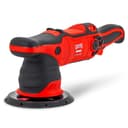
Griot's Garage G9 Random Orbital Polisher

Griot's Garage G9 Random Orbital Polisher

A powerful, smooth random-orbital that's still beginner-safe — the random orbit makes it very hard to burn paint. The 9 mm throw and Griot's satisfaction guarantee are the tie-breakers over similar tools.

Action
Random orbital (dual action)
Orbit / throw
9 mm
Motor
1000 W
Speed
6 settings, 2,000-6,400 OPM
Best overall under $200
$179.99 · View on Amazon

Price as of November 12, 2026. #ad How we’re funded

2
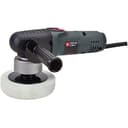
PORTER-CABLE 6-Inch Variable-Speed Polisher

PORTER-CABLE 6-Inch Variable-Speed Polisher

The tool that taught a generation to polish. It's not the smoothest anymore, but it's cheap, tough, and there are thousands of tutorials shot on this exact machine.

Action
Random orbital (dual action)
Speed
Variable
Best cheap mains-powered DA
$159.00 · View on Amazon

Price as of November 12, 2026. #ad How we’re funded

3
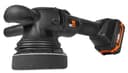
WEN 20V Max Cordless 5-Inch Dual Action Polisher and Waxer Kit (20875)

WEN 20V Max Cordless 5-Inch Dual Action Polisher and Waxer Kit (20875)

The most tool for the least money in this group: a 5-inch dual-action head with a published 15 mm throw, six speeds, a 4.0Ah battery, a charger and three graded pads, for well under the bare tool price of the pro machines. It is also the only cordless listing here that states both its action type and its throw, which in this aisle counts for a lot. The catch is the platform - WEN 20V Max packs fit WEN tools and nothing else - and the listing never says whether the motor is brushless.

Action
Dual action - rotates and oscillates
Orbit / throw
15 mm
Speed
6 settings, 1,800-5,000 RPM
Best cordless under $100
$97.99 · View on Amazon

Price as of November 12, 2026. #ad How we’re funded

4
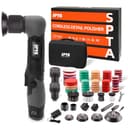
SPTA 12V Cordless Mini Polisher (LD104US)

SPTA 12V Cordless Mini Polisher (LD104US)

The tool that solves the problem a 5-inch machine cannot. With 25, 50 and 80 mm backing plates it gets into emblems, body lines, mirror caps, pillars and bumper corners - the places where full-size polishers either will not fit or will chew an edge. Nobody needs this first, and plenty of people want it second.

Action
Free-spinning dual action (rotary attachment included)
Speed
2,000-4,500 OPM
Best for tight panels
$129.99 · View on Amazon

Price as of November 12, 2026. #ad How we’re funded

5
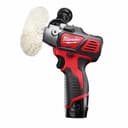
Milwaukee M12 Variable Speed Polisher/Sander Kit (2438-22)

Milwaukee M12 Variable Speed Polisher/Sander Kit (2438-22)

The compact one that lives on the M12 platform, which is the reason to buy it: if your garage already runs M12 batteries, this is the cheapest way into a genuinely well-built cordless polisher. It is a spot tool rather than a whole-car machine, and it is honest about being small.

What it is
Compact M12-platform cordless polisher/sander, sold as a kit
Best if you already own M12
$205.00 · View on Amazon

$221.698% off

Price as of November 12, 2026. #ad How we’re funded

6
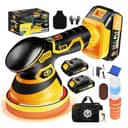
Niusken Cordless Car Buffer Polisher Kit

Niusken Cordless Car Buffer Polisher Kit

A cheap cordless kit for spot correction and applying coatings — not for correcting a whole car, but genuinely handy for touch-ups where dragging a cord is a pain.

What it is
Cordless mini/DA polisher kit with batteries
Budget pick
$49.99 · View on Amazon

$59.9917% off

Price as of November 12, 2026. #ad How we’re funded

Specs as published on each product’s own listing, read between July 18, 2026 and October 20, 2026. Prices are live, as of November 12, 2026. A figure a brand does not publish is left out of this table and shown as “Not published” in that product’s full write-up below.

The picks in full

#1Top pick — Best overall under $200

Griot's Garage G9 Random Orbital Polisher

A powerful, smooth random-orbital that's still beginner-safe — the random orbit makes it very hard to burn paint. The 9 mm throw and Griot's satisfaction guarantee are the tie-breakers over similar tools.

Who it is for: anyone buying their first machine who does not want to buy a second one, and anyone replacing an older entry-level polisher. It is the most machine available under this ceiling and it is not close.

It wins on published figures rather than reputation. 1000 W is the highest wattage here. The 2,000–6,400 OPM band across six settings is the widest — the 2,000 end is what lets you machine-apply a sealant or spread a coating without slinging it, and the 6,400 end is what lets you actually cut. The 6 in vented backing plate is also the largest included plate on the page, which matters because pad diameter decides how long a full car takes.

Two cautions, both from the listing rather than from us. Griot’s publishes a “100% Satisfaction Guarantee” with the terms behind a link rather than a warranty term in years. And on our last read the listing reported an availability date and a maximum order quantity of one rather than a plain in-stock string — orderable, but check the ship date before you plan a weekend around it.

Strengths

  • Random-orbital action is forgiving — very hard to damage paint
  • Strong, smooth motor that pulls through a cut without bogging
  • Covered by Griot's 100% Satisfaction Guarantee (the product page links the terms rather than stating them)

Trade-offs

  • Priced above the bare-bones beginner tools
  • Pads and polishes are extra unless you buy a kit
What it is1000 W random-orbital DA polisher, 9 mm throw
Size9 mm orbit
CoverageNot published
ActionRandom orbital (dual action)
Orbit / throw9 mm
Motor1000 W
Speed6 settings, 2,000-6,400 OPM
Backing plate6 in vented

Specs read from the product listing, on September 7, 2026. “Not published” means the brand does not state that figure.

#2Best cheap mains-powered DA

PORTER-CABLE 6-Inch Variable-Speed Polisher

The tool that taught a generation to polish. It's not the smoothest anymore, but it's cheap, tough, and there are thousands of tutorials shot on this exact machine.

Who it is for: someone who wants a full-size corded random-orbital for meaningfully less than the G9, and who learns from video. This machine has been the default beginner DA for well over a decade, which means almost every paint-correction tutorial you will find was filmed on it or on its direct equivalent.

That history is the actual argument for it. The trade is transparency: PORTER-CABLE publishes no throw figure and no OPM range — the listing says “variable-speed” and leaves it there. Our G9 against 7424XP comparison goes through what each brand does and does not state, and the short version is that you are buying a known quantity rather than a documented one.

Strengths

  • Inexpensive and durable
  • Huge library of tutorials use this exact tool
  • Standard backing plate accepts common pad sizes

Trade-offs

  • Rougher and louder than newer random-orbitals
  • Bare tool — pads and polishes are extra
What it isVariable-speed random-orbital, the classic starter
SizeNot published
CoverageNot published
ActionRandom orbital (dual action)
SpeedVariable
Backing plate6 in

Specs read from the product listing, on July 18, 2026. “Not published” means the brand does not state that figure.

#3Best cordless under $100

WEN 20V Max Cordless 5-Inch Dual Action Polisher and Waxer Kit (20875)

The most tool for the least money in this group: a 5-inch dual-action head with a published 15 mm throw, six speeds, a 4.0Ah battery, a charger and three graded pads, for well under the bare tool price of the pro machines. It is also the only cordless listing here that states both its action type and its throw, which in this aisle counts for a lot. The catch is the platform - WEN 20V Max packs fit WEN tools and nothing else - and the listing never says whether the motor is brushless.

Who it is for: anyone who parks away from an outlet, or who wants a complete kit rather than a bare tool. Battery, charger, three graded pads and an auxiliary handle in one box, for under half the G9.

It is also the cheapest machine on this page that publishes the specs that matter: dual action, a 15 mm throw and 1,800–5,000 RPM across six settings. A 15 mm throw on a cordless tool is a genuinely long orbit — faster across a panel than the G9’s 9 mm, and a little less forgiving near edges and badges. WEN publishes no motor wattage, which is the figure you would most want for a cordless, and battery runtime is the thing no listing in this category quantifies.

Strengths

  • Dual action stated plainly - the head rotates and oscillates, with a published 15 mm throw
  • Six speeds from 1,800-5,000 RPM, adjustable for waxing through compounding
  • Genuinely complete: 4.0Ah battery, charger, coarse, medium and fine pads, auxiliary handle, two-year warranty

Trade-offs

  • One battery in the box, so polishing stops when it is flat - a second pack is an extra purchase
  • The listing never states whether the motor is brushless, which is the spec that decides runtime under load
  • WEN 20V Max batteries fit WEN tools only - it is not a DEWALT or Milwaukee platform tool
What it is20V cordless 5-inch dual-action polisher kit, 15 mm throw, battery and charger included
Size5 in pad
CoverageNot published
ActionDual action - rotates and oscillates
Speed6 settings, 1,800-5,000 RPM
MotorNot published
Orbit / throw15 mm
Battery20V Max 4.0Ah, one included
In the boxBattery, charger, 3 graded pads, auxiliary handle

Specs read from the product listing, on October 20, 2026. “Not published” means the brand does not state that figure.

#4Best for tight panels

SPTA 12V Cordless Mini Polisher (LD104US)

The tool that solves the problem a 5-inch machine cannot. With 25, 50 and 80 mm backing plates it gets into emblems, body lines, mirror caps, pillars and bumper corners - the places where full-size polishers either will not fit or will chew an edge. Nobody needs this first, and plenty of people want it second.

Who it is for:someone who already owns a full-size machine and keeps running out of room — A-pillars, mirror caps, badges, bumper creases, the strip under a door handle. It is a complement, not a first polisher.

It publishes an unusually complete spec sheet for a budget tool: 25, 50 and 80 mm plates, a 2,000–4,500 OPM range, two 12 V batteries in the box and a rotary attachment alongside the free-spinning dual-action head. The reason it is not ranked higher is simply scale — an 80 mm pad will correct a whole car eventually, and nobody should want to find out how long that takes.

Strengths

  • Three backing plates - 25, 50 and 80 mm - so the tool matches the size of the area
  • Free-spinning dual action, 2,000-4,500 OPM, with a rotary attachment for heavier cutting
  • Two batteries and a very large pad and brush assortment included

Trade-offs

  • Useless as your only polisher - an 80 mm pad on a full car is an afternoon you will not enjoy
  • 12V and small-battery: this is short-session, small-area work by design
  • The listing's own copy borrows another brand's product name, which does not inspire confidence in the rest of it
What it is12V cordless mini polisher, 25/50/80 mm plates, 2,000-4,500 OPM
Size25 / 50 / 80 mm plates
CoverageNot published
ActionFree-spinning dual action (rotary attachment included)
Speed2,000-4,500 OPM
Battery12V 2000 mAh, two included
Pad sizes25, 50 and 80 mm

Specs read from the product listing, on September 8, 2026. “Not published” means the brand does not state that figure.

#5Best if you already own M12

Milwaukee M12 Variable Speed Polisher/Sander Kit (2438-22)

The compact one that lives on the M12 platform, which is the reason to buy it: if your garage already runs M12 batteries, this is the cheapest way into a genuinely well-built cordless polisher. It is a spot tool rather than a whole-car machine, and it is honest about being small.

Who it is for: a trade buyer with an M12 battery shelf already in the van. If you own the platform, this is a compact polisher/sander that shares your charger and your spares, and that is worth real money on a job site.

If you do not own M12, it is the hardest pick here to justify: it sits at the very top of the band and Milwaukee publishes no action type, no speed range and no pad size for it on the listing we read. For the same money the G9 publishes all three and includes a larger plate. Buy it for the battery ecosystem, not for the spec sheet.

Strengths

  • Shares batteries with the rest of the M12 range, which is the whole value proposition
  • Compact and light enough to control one-handed on vertical panels and tight areas
  • Tool-brand build quality rather than a detailing-brand rebadge

Trade-offs

  • The Amazon listing publishes almost no specifications - no speed range, no pad size, no action type
  • Small footprint means it is a spot-correction tool, not a way to polish a whole car
  • Costs more than the budget cordless kits while including fewer pads and accessories
What it isCompact M12-platform cordless polisher/sander, sold as a kit
SizeNot published
CoverageNot published
ActionNot published
SpeedNot published
PlatformMilwaukee M12
In the boxKit (2438-22)
Pad sizeNot published

Specs read from the product listing, on September 8, 2026. “Not published” means the brand does not state that figure.

#6Budget pick

Niusken Cordless Car Buffer Polisher Kit

A cheap cordless kit for spot correction and applying coatings — not for correcting a whole car, but genuinely handy for touch-ups where dragging a cord is a pain.

Who it is for:the cheapest honest way into machine work — spreading a spray coating, waxing without wrist ache, fixing one scuff on a bumper. It arrives with two 21 V batteries and pads, so there is nothing else to buy.

Be clear about what the budget buys. This is the cheapest product on the page that does the job it is named for, and that job is spot work and product application — not correcting a whole car’s swirls. No throw figure and no OPM range are published for it. If paint correction is the actual goal, the gap between this and the G9 is the single best-spent money in this entire category.

Strengths

  • Cordless freedom for quick jobs and awkward spots
  • Comes with batteries and pads
  • Cheapest way into machine work

Trade-offs

  • Battery life and power limit it to small jobs
  • Not for full-car heavy correction
What it isCordless mini/DA polisher kit with batteries
SizeNot published
CoverageNot published
PowerCordless (21V, 2 batteries)
Best forSpot work / coatings
IncludesBatteries + pads

Specs read from the product listing, on July 18, 2026. “Not published” means the brand does not state that figure.

How to choose inside the $200 band

Corded or cordless? Corded, if you have an outlet. Every full-size machine here that publishes a wattage is corded, and wattage is what stops the pad stalling when you press into a curve. Cordless is the right answer only when the parking situation makes a cable genuinely impractical, or when the machine is a second, small tool for detail work.

How much throw do you want? More throw covers ground faster. Less throw is more forgiving around edges, badges and body lines, where a long-throw machine wants to walk. Around 9 mm is the comfortable first-machine answer; 15 mm is faster and asks more of you. Our throw comparison works through the trade in detail, and G9 against G15 shows what happens inside one brand when only the orbit changes.

Does it come with pads?Three of the six machines here do, and that is worth more than it looks: a pad set is a real fraction of the tool’s price. If your machine arrives bare, budget for pads in the same order rather than discovering on Saturday morning that you own a polisher and nothing to put on it. Our pad roundup covers which grades you actually need and how many.

What $200 does not buy

It does not buy a rotary polisher, and that is fine — a rotary spins the pad under power at all times, which is how you burn through a clear coat in a second of inattention. Every machine on this page is a random orbital, which stalls the pad rather than digging in. If you want the difference argued properly, read polisher vs buffer.

It also does not buy the long-throw machines. A 15 mm or 21 mm mains-powered polisher sits above this band and corrects a large car noticeably faster. The honest framing is that a long throw saves time, not that it produces a better finish — the finish comes from the pad, the liquid and your technique.

And it does not buy inspection. The cheapest genuinely useful upgrade after a polisher is not a better polisher; it is a light that shows you what you just did. A mini swirl-finder is a low-double-digit purchase and it is the difference between correcting paint and hoping. The detailing light roundup ranks the options, and our paint correction kit page puts the whole shopping list in the order you will need it.

Three mistakes that cost more than the machine

Polishing a car that has not been decontaminated.Bonded iron and tar under the pad is abrasive in a way no compound intends. Wash, chemically decontaminate, then clay — our decontamination kit page lists the products for each stage, and this guide explains why the order matters.

Starting with the most aggressive liquid you own. Test the least aggressive combination that works on one small area first, then step up only if it fails. See compound vs polish.

Not protecting the paint afterwards.Correction removes clear coat and leaves it bare. Seal or coat the same day — the sub-$100 coating page covers what that costs.

About the prices on this page

Prices are read from the live price layer, stamped with the date in the table, and refreshed daily. We do not store a price anywhere in this page’s content, which is why you will never see a stale number here — if the refresh stops, the figures disappear and the buttons fall back to “Check price on Amazon” instead of lying to you. The $200 ceiling is applied against that live data, on November 12, 2026.

Frequently asked questions

What is the best car polisher under $200?

The Griot's Garage G9 Random Orbital. It publishes a 1000 W motor, a 9 mm throw and six speed settings spanning 2,000-6,400 OPM, and it ships with a 6 inch vented backing plate - the highest wattage, the widest published speed band and the largest included plate of any machine under the $200 ceiling. It is also the machine we recommend for first-time buyers at any price, because the low end of that speed range makes it usable for spreading waxes and coatings, not just for cutting.

Is a $100 polisher good enough for paint correction?

Sometimes, with caveats. The WEN 20875 cordless kit sits under $100 and publishes dual action, a 15 mm throw and a 1,800-5,000 RPM range, which is a real correction spec. What it does not publish is motor wattage or battery runtime, and both of those decide whether the machine can sustain a full car. Below that price you are buying a spot-work tool: the Niusken kit will spread a coating and fix a scuff happily, but correcting a whole car's swirls with it is not what it is for.

Cordless or corded for car polishing?

Corded, unless your parking situation makes it impossible. Every full-size machine on this page that publishes a motor wattage is mains-powered, and wattage is what keeps the pad turning when you press into a curved panel. Cordless wins on convenience and on reaching a car parked away from an outlet, and it is the right choice for a small second machine used on badges and pillars. No listing in this category publishes a runtime figure, which is the spec you would most want before committing to battery power for a full detail.

Do I need a 15 mm long-throw polisher?

No. A longer throw covers ground faster; it does not produce a better finish, which comes from the pad, the liquid and your technique. A 9 mm machine is more forgiving around edges, badges and body lines, where a long-throw head wants to walk away from you. Buy throw if you regularly correct large vehicles and want to save time. Our 8 mm vs 15 mm comparison and the G9-vs-G15 head-to-head both work through the trade with the published figures.

What else do I need to buy with the polisher?

Pads, a liquid, and a light. Three of the six machines here include pads, which is worth a real fraction of the price - if yours arrives bare, order pads in the same basket. For liquids, one all-round compound covers most first jobs; a dedicated cutting and finishing pair is the step after that. The light is the item people skip and then regret, because without one you cannot see whether the defect you just worked on is actually gone. A mini swirl-finder flashlight costs less than a bottle of compound.

Will a polisher under $200 damage my paint?

Not easily, because every machine on this page is a random orbital rather than a rotary. The pad on a random orbital stalls under pressure instead of continuing to spin, which is the mechanism that makes these machines forgiving enough to learn on. The real risks are unrelated to price: polishing paint that was not decontaminated first, so there is grit under the pad; running a dry pad; and working an edge or a badge where the clear coat is thinnest. Correct the technique and a $54 machine is as safe as a $200 one.

How long does a polisher last?

No brand on this page publishes a duty cycle, a bearing life or a warranty term in years - Griot's offers a satisfaction guarantee with the terms behind a link, and the others state a returns window rather than a warranty. So we are not going to put a number on it. What the specs do tell you is which machines are built to be worked: motor wattage is published for the G9 and nothing else full-size here, and it is the figure that correlates with not stalling, which is the thing that kills cheap polishers.

Sources

  • Griot's Garage — How-To: Polish — Machine polishing removes swirls, light scratches, water spots and oxidation; work small sections and start least-aggressive (accessed July 18, 2026)
  • Griot's Garage — G9 Random Orbital Polisher (item 10901) — Maker specs: 1,000 watt motor, 8.5 amperes, 9 mm throw; speed dial with 6 settings from 2,000-6,400 OPM free speed; Constant Speed Control circuitry 'ensures consistent speed regardless of downward pressure'; fan-cooled counterbalance to reduce tool heat, vibration and hand fatigue; 6 in vented orbital backing plate; 10 ft quick-connect power cord; 5.0 lb / 2.27 kg without cord; Safety Class II; optional 5 in and 6 in vented backing plates (accessed October 5, 2026)
  • Griot's Garage — G9 6" Random Orbital Polisher user manual (item 10901) — Manual PDF, located via live search of griotsgarage.com. The readable maker guidance across the Griot's polisher manuals is to use a fresh pad for each step and at least two pads per process when detailing a vehicle, to use a separate pad for each machine polish, wax or sealant so products do not contaminate one another, and to rinse and wring a pad after polishing and clean the pad face during work with a conditioning brush. The BOSS Hybrid Micro Polisher manual raises that to 3-4 pads per process. NO per-car pad total, NO pad lifespan in hours and NO replacement interval is published; the PDF's body text would not extract cleanly on this read, so only the figures confirmed by the live search result are recorded here (accessed October 17, 2026)
  • PORTER-CABLE — 7424XP 6 in Variable-Speed Random Orbit Polisher — Maker specs: 4.5 Amp, AC only; 2,500-6,800 OPM electronic variable speed; 6 in pad; 5-1/2 lbs; two-position removable side handle; 100 percent ball and roller bearing construction; ships with a polishing pad, side handle and wrench; '3 Year Limited Warranty, 1 Year Free Service, 90 Days Satisfaction Guaranteed'; described as 'Ideal for polishing and sanding automotive and marine projects'. The maker's page does NOT publish an orbit/throw figure (accessed October 5, 2026)

Keep reading