Clay & Coat

Best Water Spot Remover

Hard-water spot removers compared on chemistry and rated surfaces - dissolve the mineral first, and only reach for a polisher if that fails.

By Stephen V.Last updated How we pick

Water spots are not dirt. They are what is left when a droplet of hard water evaporates on your paint and leaves its dissolved minerals — mostly calcium and magnesium — behind as a ring. That is why washing does nothing to them: soap is designed to lift organic soil, and this is rock.

Getting them off is a question of picking the right level of aggression, and the order matters. Dissolve first, abrade last.A dedicated water-spot remover attacks the mineral chemically and leaves the clear coat alone. Polishing removes the spot by removing the paint around it — effective, but you only have so much clear coat, and you cannot put it back.

The picks below cover the useful range: a detailer-grade acidic remover for etched deposits, a clinging gel for vertical glass, and two multi-surface sprays for the everyday sprinkler-overspray problem.

How this is funded:we earn a commission if you buy through our links, at no extra cost to you. It never changes which product we recommend, and we’ll tell you when we’d skip one. Full disclosure.

Quick picks

Ranked on published specs, coverage and buyer fit. Select a row to jump to the full write-up. We haven’t tested these in a lab — here is exactly what we do instead.

#ProductBest forPrice
1
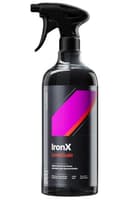
CarPro Spotless 2.0 Water Spot & Mineral Remover

CarPro Spotless 2.0 Water Spot & Mineral Remover

The detailer's choice for genuinely etched mineral deposits. It works chemically on the mineral itself rather than abrading the clear coat, which is the right order of operations - dissolve first, polish only if that fails.

Best overall
$30.99 · View on Amazon

Price as of August 31, 2026. #ad How we’re funded

2
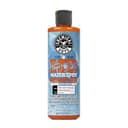
Chemical Guys Heavy Duty Water Spot Remover Gel

Chemical Guys Heavy Duty Water Spot Remover Gel

A gel rather than a spray, and that is the useful part - it clings to vertical glass and does not run off the spot you are trying to treat before it has had time to work.

Best for vertical glass
$19.97 · View on Amazon

Price as of August 31, 2026. #ad How we’re funded

3
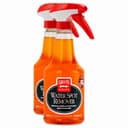
Griot's Garage Water Spot Remover

Griot's Garage Water Spot Remover

The broadest surface rating of the group - Griot's lists paint, chrome, plastic trim and glass - which makes it the low-anxiety bottle when spots have landed across a whole side of the car.

Best multi-surface
$13.99 · View on Amazon

Price as of August 31, 2026. #ad How we’re funded

4
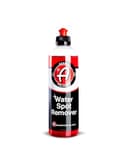
Adam's Polishes Water Spot Remover

Adam's Polishes Water Spot Remover

The household crossover: Adam's lists it for shower doors and windows alongside car paint and glass. That is a fair signal of what it is - a hard-water stain remover that happens to be car-safe, rather than a paint-correction product.

Best budget pick
$14.44 · View on Amazon

$16.9915% off

Price as of August 31, 2026. #ad How we’re funded

The picks in full

#1Top pick — Best overall

CarPro Spotless 2.0 Water Spot & Mineral Remover

The detailer's choice for genuinely etched mineral deposits. It works chemically on the mineral itself rather than abrading the clear coat, which is the right order of operations - dissolve first, polish only if that fails.

Strengths

  • Neutralizes hard-water minerals chemically rather than by abrasion
  • Works on glass as well as paint, where spotting is often worst
  • Saves the clear coat you would remove by compounding the spots away

Trade-offs

  • Acidic chemistry - it needs care, ventilation and thorough rinsing
  • The most expensive bottle in this group
What it isAcidic mineral-deposit remover for paint and glass
SizeNot published
CoverageNot published
TypeChemical (acidic) mineral remover
Rated surfacesPaint, glass
pHNot published

Specs read from the product listing, on August 18, 2026. “Not published” means the brand does not state that figure.

#2Best for vertical glass

Chemical Guys Heavy Duty Water Spot Remover Gel

A gel rather than a spray, and that is the useful part - it clings to vertical glass and does not run off the spot you are trying to treat before it has had time to work.

Strengths

  • Gel consistency clings to vertical surfaces and stays on the spot
  • Rated for both glass and paint
  • Easier to control and localize than a liquid

Trade-offs

  • Gel needs more thorough rinsing than a thin liquid
  • Heavy-duty chemistry - not something to leave dwelling in the sun
What it isClinging gel water-spot remover, 16 oz
Size16 oz
CoverageNot published
TypeGel water-spot remover
Rated surfacesGlass, paint
pHNot published

Specs read from the product listing, on August 18, 2026. “Not published” means the brand does not state that figure.

#3Best multi-surface

Griot's Garage Water Spot Remover

The broadest surface rating of the group - Griot's lists paint, chrome, plastic trim and glass - which makes it the low-anxiety bottle when spots have landed across a whole side of the car.

Strengths

  • Rated for paint, chrome, plastic trim and glass
  • Priced below the specialist acidic removers
  • Straightforward spray-and-wipe use

Trade-offs

  • Less aggressive than a dedicated acidic remover on etched deposits
  • Severe etching will still need machine polishing afterwards
What it isMulti-surface water-spot remover
SizeNot published
CoverageNot published
TypeMulti-surface water-spot remover
Rated surfacesPaint, chrome, plastic trim, glass
pHNot published

Specs read from the product listing, on August 18, 2026. “Not published” means the brand does not state that figure.

#4Best budget pick

Adam's Polishes Water Spot Remover

The household crossover: Adam's lists it for shower doors and windows alongside car paint and glass. That is a fair signal of what it is - a hard-water stain remover that happens to be car-safe, rather than a paint-correction product.

Strengths

  • Rated for glass, shower doors, windows and paint
  • Sensible price for a bottle you will use a few times a year
  • Widely available in a larger twin pack

Trade-offs

  • Aimed at surface staining rather than deep etching
  • As with any acidic cleaner, keep it off hot panels and rinse well
What it isHard-water stain remover for glass and paint
SizeNot published
CoverageNot published
TypeHard-water stain remover
Rated surfacesGlass, paint, windows
pHNot published

Specs read from the product listing, on August 18, 2026. “Not published” means the brand does not state that figure.

The three grades of water spot

1. Surface deposits

Fresh mineral sitting on top of the paint. These often come off with a quick detailer and a little dwell time, and they will certainly come off with a proper water-spot remover. If you catch spots in the first day or two, this is all you are dealing with.

2. Bonded mineral

Left through a few hot days, the deposit bonds properly to the clear coat. This is what the products on this page are actually for: an acidic formula dissolves the mineral so it can be rinsed away, with no mechanical abrasion at all.

3. Etching

If mineral-laden water sits and bakes, it can eat a shallow crater into the clear coat. Once the paint itself is deformed, no chemical will fix it — you are looking at machine polishing with a compound to level the surface. The tell is simple: chemically clean the panel, then look at it under a light from a low angle. If you can still see a ring, it is etched.

How to choose and use one

Chemistry and form

Nearly all of these products are acidic — that is the mechanism, and it is why they work where soap does not. The practical differences are strength and form. A thin liquid is fastest to apply over a whole panel; a gel clings to vertical glass and stays on the spot long enough to work instead of running into the door seal. Very few brands publish an actual pH figure, which is why that spec reads “Not published” above.

Check what it is rated for

Glass tolerates far more than paint, and paint tolerates more than bare aluminum or an unsealed wheel finish. The multi-surface products list paint, chrome, trim and glass explicitly; the strongest removers are more selective. Read the label, and if a surface is not listed, do not assume.

Working safely

Work in the shade on a cool panel — an acidic product on hot paint flashes off and concentrates, which is how you turn a water spot into a chemical stain. Do one panel at a time, keep the dwell short, and rinse thoroughly with plenty of water before moving on. Wear gloves and eye protection, and keep the product off polished aluminum and anodized finishes.

Because these products are acidic, they will strip wax and can degrade a sealant. Plan to re-protect the panel afterwards with a wax or spray coating— and expect to, rather than being surprised by it.

Stopping them coming back

Removal is treating the symptom. The cause is water drying on the car, so the fix is not letting it. Dry the car properly and promptly with a good drying towel rather than letting it air-dry. Do not wash in direct sun, where panels dry faster than you can work. Keep the car off the path of a lawn sprinkler, which is the single most common source of severe spotting we see described. And a hydrophobic spray coating genuinely helps: water beads tightly and rolls off rather than sheeting out and sitting there evaporating.

Frequently asked questions

What actually causes water spots on a car?

Dissolved minerals - mainly calcium and magnesium - in hard water. When a droplet evaporates on the paint, the water leaves but the mineral does not, and it dries as a ring. Sprinklers, bore water and washing in direct sun are the usual culprits. Because the residue is mineral rather than organic soil, ordinary car shampoo does essentially nothing to it, which is why a dedicated acidic remover exists.

Will a water spot remover damage my paint?

Used correctly, no - these products are formulated to dissolve mineral deposits while leaving the clear coat intact, which is far gentler than abrading the spot away with a compound. The risks come from misuse: applying to a hot panel in direct sun, letting an acidic product dwell too long, or using it on a surface the brand does not list. Work cool and in the shade, keep dwell times short, and rinse thoroughly.

How do I know if a water spot is etched?

Clean the panel chemically first, then look along it under a bright light at a low angle. If the mark disappears, it was a surface deposit. If you can still see a ring or crater after the mineral is gone, the spot has etched into the clear coat and no chemical will remove it - the paint itself is deformed. That needs machine polishing with a compound to level the surrounding clear coat.

Can I use vinegar to remove water spots?

Diluted white vinegar is mildly acidic and will lift light, fresh deposits, which is why the tip circulates. It is not a good default: the concentration is uncontrolled, it strips wax, and on bonded or etched spots it simply is not strong enough while still being aggressive enough to matter on trim and unsealed metal. A purpose-made remover with a stated surface list is safer and works on deposits vinegar will not touch.

Does a ceramic coating prevent water spots?

It reduces them but does not eliminate them. A hydrophobic surface makes water bead tightly and roll off, so less of it stays put to evaporate. But any droplet that does dry on the surface still leaves its mineral behind, and spots can bond to the coating itself. Coated cars usually spot less and clean up far more easily - they are not immune, and they still need drying rather than air-drying.

Sources

  • Chemical Guys — Ceramic Coating MaintenanceOn coating longevity: durability drops toward 1-2 years without care but reaches multiple years with pH-neutral washing and periodic maintenance (accessed July 18, 2026)
  • Griot's Garage — How-To: PolishMachine polishing removes swirls, light scratches, water spots and oxidation; work small sections and start least-aggressive (accessed July 18, 2026)

Keep reading