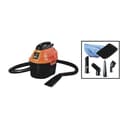
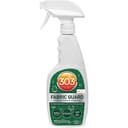
The sequence that actually works
1. Dry first, thoroughly. Pull the mats out, move the seats both ways, and vacuum the carpet properly before anything gets wet. Every bit of grit you remove dry is grit that does not turn into mud when you add solution. This stage takes longer than people expect and it determines most of the result.
2. Pretreat the stains, do not flood the carpet. Spray the specific areas, let the product dwell for the time its label states, and resist the urge to saturate. More water does not clean better; it just takes longer to remove and reaches the sound deadening underneath.
3. Agitate. This is the stage that does the work. A drill brush, a stiff hand brush or a detailing brush, worked in overlapping passes. If you take one thing from this page, it is that agitation beats chemistry on soft surfaces almost every time.
4. Extract or blot.A wet/dry vacuum pulls the suspended soil out with the water. Without one, blot hard with a dry microfiber — press, do not rub, and keep moving to a dry part of the towel. Rubbing distorts the pile and can set a stain deeper.
5. Dry with air moving. Doors open, a fan if you have one, and do not close the car up until the pile is dry to a pressed palm. This is the step that prevents the smell.
6. Protect. Fabric guard on dry fabric, so the next spill is a blot rather than a project.
What this category does not publish
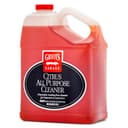
- One product in six publishes a dilution ratio.Griot’s does; Chemical Guys, Adam’s and the rest leave it blank, which means “dilute to taste” is doing a lot of work on those labels.
- One product publishes a carpet or upholstery rating.Again Griot’s. Several of the others are honest that they are exterior-focused, which is more useful than a vague claim.
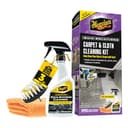
- One product publishes a pH.Meguiar’s states that the cleanser in the Carpet & Cloth Kit is pH-neutral. No other entry states a pH at all, and pH is the figure that most affects whether a cleaner is safe on dyed fabric.
- Nobody publishes a coverage figure in square feet, or a drying time. Both would be genuinely useful and neither exists on any listing we read.
None of that makes these bad products. It does mean that a page claiming to rank them on cleaning power would be inventing the basis for the ranking, so this one ranks on what is in the box, what the maker says it is for, and whether you can dial it down.
Three things people try that do not work
A stronger chemical instead of a brush. The most common mistake, and it risks bleaching the fabric while leaving the soil in place. If a mild solution plus agitation did not shift it, the answer is more agitation or a second pass, not a stronger mix.
A household carpet shampoo.Domestic carpet products are formulated for wool and synthetic household carpet and routinely foam heavily. Foam you cannot rinse out of a car — and you cannot rinse a car — is residue, and residue is what makes carpet re-soil fast. Use an automotive product or a dilutable APC at interior strength.
Treating pet hair as a cleaning problem. It is a mechanical one: hair wraps around fibres and wet cleaning weaves it in deeper. Remove the hair first, with a rubber brush or a vacuum designed for it, then clean. We cover it in how to remove pet hair from a car and the pet hair vacuum roundup.
Smells, and what they actually are
A carpet smell is usually one of three things: something organic still in the pile, moisture that never fully dried, or a soiled cabin filter. Cleaning fixes the first. Drying properly fixes the second, and no amount of fragrance substitutes for it — masking a damp smell leaves the damp. For the stubborn cases, how to get smells out of your car works through odour removal in order of how aggressive it is, and the air freshener roundup separates the products that eliminate odour from the ones that cover it.
About the prices on this page
Every figure in the table is read live from the price layer and carries its own date stamp. Nothing here stores a price. Note that the two gallon-sized products look expensive next to the 16 oz bottles and are not — at the published 10:1 interior dilution, a gallon of concentrate is eleven gallons of working solution, which is the kind of arithmetic that only shows up once you read the label.