Clay & Coat

Aquapel vs Rain-X: Which Windshield Treatment Should You Buy?

The two best-known windshield repellents compared on the one thing that separates them: Aquapel publishes a durability claim and a bonding mechanism, Rain-X publishes neither.

By Stephen V.Last updated How we pick

How this is funded: we earn a commission if you buy through our links, at no extra cost to you. It never changes which product we recommend, and we’ll tell you when we’d skip one. Full disclosure.

These are the two names everybody knows, they sit on the same shelf, and the price gap between them is large enough that the question answers itself for a lot of buyers. So this page does something narrower than a roundup: it compares what Aquapel and Rain-X each put in writing, because on windshield repellents the published claims differ far more than the in-use experience does.

The short version is that one of these companies publishes a mechanism and a durability claim, and the other publishes neither. That is the whole comparison, and everything below is the detail.

What each maker actually publishes

Aquapel Glass TreatmentRain-X Original
Stated mechanism“Forms a chemical bond with the glass” — explicitly contrasted with products that “simply coat glass”Not published
Durability claim“One application can last for months!”; “up to 6 times longer than silicone-based products”Not published
Reapplication intervalNot published as a figureNot published
FormatSealed single-use applicators (4-pack)7 oz bottle, applied with a cloth
Application conditionsClean glass; squeeze applicator wings “until a popping sound is heard”Clean, dry glass; “apply in temperatures above 40 degrees F”; two passes
Stated extras“Improves vision in the rain, day and night”; easier to clear ice, snow, dirt and bugsRated for exterior glass
WarningsSingle-use — an opened applicator must be usedCalifornia Prop 65: can expose you to naphthalene, “known to the State of California to cause cancer”

Bonded versus coated: does the distinction matter?

Aquapel draws the line itself, and it is the most substantive claim on either page: a chemical bond to the glass as opposed to a film resting on it. In principle that is a real difference, and it is the same distinction that separates a ceramic coating from a wax on paint — a bonded layer wears through rather than wiping off, so it degrades gradually instead of disappearing in patches.

Two honest qualifications. First, Rain-X does not describe its own mechanism at all, so we are comparing a published claim against silence rather than two competing claims — we cannot tell you Rain-X only coats, merely that Rain-X does not say. Second, Aquapel’s “up to 6 times longer than silicone-based products” is measured against a product category, not against Rain-X by name, and “up to” is a ceiling rather than an expectation. We are not going to convert that into a months figure.

Cost per treatment, which is the real decision

Neither product is expensive in absolute terms, so the sensible frame is cost per windshield per year. Aquapel is sold as a four-pack of sealed applicators, and one applicator does one windshield — so the pack is four treatments, and the price per treatment is fixed and knowable. Rain-X is a 7 oz bottle that will treat a windshield many times over, so the cost per treatment is very low, but it is a bottle that degrades once opened and whose claimed life nobody publishes.

That shapes the recommendation more than any performance argument. If you want to do the job once or twice a year and not think about it, Aquapel’s sealed applicators are worth the premium precisely because the product cannot have gone off in the interim. If you enjoy a five-minute job on a Saturday and will happily redo it the moment beading fades, Rain-X is the rational buy and the extra applications cost almost nothing. Live prices for both are in the table above, stamped with the date we read them.

The mistake both products get blamed for

Most “it did not work” and “it made my wipers judder” reports trace back to the same cause: the glass was not clean enough. A windshield collects a bonded film of road grime, exhaust residue and old wiper rubber that ordinary glass cleaner does not fully remove, and a repellent applied over that film adheres to the film rather than the glass. It then wears off in patches, which is exactly the condition that makes a wiper blade chatter.

Both makers tell you this in their own directions — Rain-X specifies clean, dry glass and above 40 °F; Aquapel’s first step is cleaning the glass. Treat that instruction as the load-bearing part of the process, not boilerplate. A clay bar or a dedicated glass polish on the windshield before the first application makes a bigger difference than choosing between these two products does. Our guide to cleaning car windows without streaks covers the prep, and what decontamination is explains why a surface can be visually clean and chemically dirty.

So which one?

Buy Aquapel if you want the product with a published bonding claim and a published durability claim, you would rather do the job twice a year than twice a season, and a sealed applicator that cannot degrade on the shelf appeals to you. Buy Rain-X if you want the cheapest obvious improvement available today from a shop two minutes away, and you are comfortable reapplying on feel rather than on a schedule. Neither is a mistake. If you want the longest-lived option on this page and are willing to prep properly, that is CarPro FlyBy30, and the full set of options is in our windshield coating roundup.

If you have already decided to move on from Rain-X

This page is a two-product comparison. If what you actually want is a shortlist of everything that replaces Rain-X — a real ceramic glass coating with a published lifespan, an SiO2 cleaner that adds repellency with no extra step, or the one treatment rated for Perspex as well as glass — our Rain-X alternatives page is organized by the reason you are switching rather than by rank.
What to buy, ranked

Ranked on published specs, coverage and buyer fit. Select a row to jump to the full write-up. We haven’t tested these in a lab — here is exactly what we do instead.

#ProductBest forPrice
1
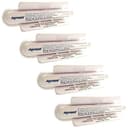
Aquapel Glass Treatment Applicators

Aquapel Glass Treatment Applicators

Sold as sealed single-use applicators, which is unusual and genuinely clever: the chemistry cannot go off in a half-used bottle in your garage, and each application is the same as the last.

Best overall — the one with a published claim
$40.98 · View on Amazon

Price as of November 12, 2026. #ad How we’re funded

2
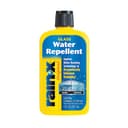
Rain-X Original Glass Treatment

Rain-X Original Glass Treatment

The one everybody has heard of, and at this price the sensible place to start. It does not last as long as the coatings above, but it is available in every filling station and reapplying it is a five-minute job.

Best value — cheap, everywhere, reapply often
$9.18 · View on Amazon

Price as of November 12, 2026. #ad How we’re funded

3
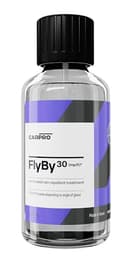
CarPro FlyBy30 Glass Sealant

CarPro FlyBy30 Glass Sealant

The detailer-grade option: a proper glass sealant rather than a rub-on repellent, sold for windshields, side windows and mirrors. It asks for real prep and rewards it with the longest life in this group.

Best durability, if you will prep the glass
$25.68 · View on Amazon

Price as of November 12, 2026. #ad How we’re funded

4
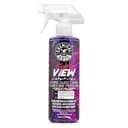
Chemical Guys HydroView Ceramic Glass Cleaner & Coating

Chemical Guys HydroView Ceramic Glass Cleaner & Coating

Cleans and coats in one pass, which is the pragmatic middle ground: less durable than a dedicated coating, far less effort, and it removes the separate cleaning step that people skip and then wonder why their coating failed.

Best for people who skip the prep step
$22.99 · View on Amazon

Price as of November 12, 2026. #ad How we’re funded

#1Top pick — Best overall — the one with a published claim

Aquapel Glass Treatment Applicators

Sold as sealed single-use applicators, which is unusual and genuinely clever: the chemistry cannot go off in a half-used bottle in your garage, and each application is the same as the last.

The pick, and the reason is documentary rather than experiential. Aquapel publishes a mechanism — it “forms a chemical bond with the glass which increases water repellency,” explicitly as against products that “simply coat glass” — and it publishes a durability claim: “One application can last for months!” and “up to 6 times longer than silicone-based products.” Rain-X publishes neither.

The sealed single-use applicator is the other genuine advantage, and it is easy to undervalue. A part-used bottle of glass repellent sitting in a hot garage for two years is not the same product it was; a sealed applicator is. Each application is identical to the last. The trade is cost per application: a four-pack of applicators is more per treatment than a 7 oz bottle, and once you pop an applicator (Aquapel’s own instruction is to squeeze the wings “until a popping sound is heard”) you have to use it.

Strengths

  • Single-use sealed applicators - no degraded half-bottle problem
  • Long-standing reputation among windshield installers
  • Very quick to apply, one window at a time

Trade-offs

  • Cost per application is high compared with a bottle
  • Once an applicator is opened it must be used
What it isSingle-use windshield treatment applicators (4-pack)
Size4 applicators
CoverageNot published
TypeGlass water repellent
FormatSealed single-use applicators
Rated durabilityNot published

Specs read from the product listing, on August 18, 2026. “Not published” means the brand does not state that figure.

#2Best value — cheap, everywhere, reapply often

Rain-X Original Glass Treatment

The one everybody has heard of, and at this price the sensible place to start. It does not last as long as the coatings above, but it is available in every filling station and reapplying it is a five-minute job.

Not a bad product — a differently-positioned one. Rain-X costs a few dollars, is stocked in every filling station in the country, and the improvement in rain visibility after you apply it is immediate and obvious. If your plan is to reapply whenever you notice the beading has faded, the economics are strongly in its favor.

What you should know before buying it as the “same thing, cheaper”: the Rain-X product page publishes no durability figure and no reapplication interval. It tells you how to apply it — clean, dry glass, above 40 °F, “a firm, circular and overlapping motion,” then a second pass to “ensure complete and uniform coverage” — and stops there. It also carries a California Proposition 65 warning that the product “can expose you to chemicals including Naphthalene, which is known to the State of California to cause cancer.” Apply it outdoors and wash your hands.

Strengths

  • Costs a few dollars and is stocked absolutely everywhere
  • Immediate, obvious improvement in rain visibility
  • Reapplication is quick and cheap enough to be routine

Trade-offs

  • Shortest-lived option here - months, not a year
  • Can cause wiper judder on some cars as it wears unevenly
What it isConsumer glass water repellent, 7 oz
Size7 oz
CoverageNot published
TypeGlass water repellent
Rated surfacesExterior glass
Rated durabilityNot published

Specs read from the product listing, on August 18, 2026. “Not published” means the brand does not state that figure.

#3Best durability, if you will prep the glass

CarPro FlyBy30 Glass Sealant

The detailer-grade option: a proper glass sealant rather than a rub-on repellent, sold for windshields, side windows and mirrors. It asks for real prep and rewards it with the longest life in this group.

The step up from both. FlyBy30 is a detailer-grade glass sealant rather than a rub-on repellent: CarPro’s listing rates it for windshield, windows and mirrors, and it is designed to bond to the glass rather than sit on it. The price of that is prep — the glass has to be properly decontaminated and polished first, which is an hour of work most people reading this page have no intention of doing.

Be aware of what is not published: CarPro states no rated durability figure on the listing we read, and no size. So the honest pitch is “professional chemistry with professional prep requirements,” not “lasts X months.” If you are already coating your paint and have the decontamination gear out anyway, doing the glass at the same time is the sensible play.

Strengths

  • Professional glass coating chemistry rather than a consumer repellent
  • Rated for windshield, windows and mirrors
  • Bonds to the glass rather than sitting on it

Trade-offs

  • Requires thorough decontamination and a polish of the glass first
  • Fussier to apply evenly than a wipe-on repellent
What it isProfessional-grade glass sealant for windshield and windows
SizeNot published
CoverageNot published
TypeGlass sealant / coating
Rated surfacesWindshield, windows, mirrors
Rated durabilityNot published

Specs read from the product listing, on August 18, 2026. “Not published” means the brand does not state that figure.

#4Best for people who skip the prep step

Chemical Guys HydroView Ceramic Glass Cleaner & Coating

Cleans and coats in one pass, which is the pragmatic middle ground: less durable than a dedicated coating, far less effort, and it removes the separate cleaning step that people skip and then wonder why their coating failed.

The pragmatist’s answer, and worth taking seriously because the most common reason a glass treatment underperforms is not the treatment — it is glass that was not clean when the treatment went on. HydroView cleans and lays down an SiO2 coating in one pass, which removes the step people rush or skip entirely. At 16 oz it covers all the glass on a car many times over.

The trade is exactly what you would expect and Chemical Guys does not pretend otherwise: a combined cleaner-and-coating will not match a dedicated coating for longevity, and heavily contaminated glass still needs a real decontamination first. Think of it as the maintenance product that keeps repellency topped up between proper applications — which is how most people should use it.

Strengths

  • Combines glass cleaning and SiO2 coating in a single product
  • Removes the prep step most people rush or skip
  • 16 oz covers all the glass on a car many times over

Trade-offs

  • A combined product will not match a dedicated coating for longevity
  • Heavily contaminated glass still needs a proper decontamination first
What it isCombined ceramic glass cleaner and coating, 16 oz
Size16 oz
CoverageNot published
TypeSiO2 glass cleaner + coating
Rated surfacesWindows, windshield
Rated durabilityNot published

Specs read from the product listing, on August 18, 2026. “Not published” means the brand does not state that figure.

Frequently asked questions

Is Aquapel better than Rain-X?

On what each maker publishes, yes. Aquapel states that it forms a chemical bond with the glass rather than simply coating it, and claims one application 'can last for months' and up to six times longer than silicone-based products. Rain-X's product page publishes no durability figure and no reapplication interval at all. Rain-X is substantially cheaper and sold everywhere, so if you are happy to reapply whenever beading fades, it remains good value.

How long does Aquapel last?

Aquapel's own page says 'One application can last for months!' and that it lasts 'up to 6 times longer than silicone-based products'. It does not publish a specific number of months, so neither will we. Real-world life depends on how clean the glass was at application, how much the wipers run and whether the car is garaged.

How long does Rain-X last?

Rain-X does not publish a durability figure or a reapplication interval on its Original Glass Water Repellent product page. Its own directions are about application method rather than longevity. The registry note on this product describes it as the shortest-lived option in this group - months rather than a year - and reapplication is quick and cheap enough to do routinely.

Does Rain-X cause wiper judder?

It can on some cars, and it is the most common complaint about any glass repellent. The mechanism is uneven wear: as the treatment thins in the wiped arc but survives outside it, the blade alternates between a slick patch and a less slick one and chatters. Reapplying evenly, or stripping and redoing the glass, usually fixes it. A fresh set of blades on a properly cleaned windshield is the other half of the answer.

Can I apply Aquapel or Rain-X over an existing treatment?

You can, but you should not expect a good result. Both products are designed to go onto clean, dry glass - Rain-X's directions say so explicitly, and Aquapel's three steps start with cleaning the glass. A partially worn previous treatment is an uneven surface, and the new application will be uneven too. Strip the glass first with a dedicated glass cleaner or a light polish.

Do glass treatments actually improve safety?

Aquapel cites a University of Michigan study in which hydrophobic coatings improved an operator's visual acuity by nearly 34% and improved response time by 25 percent, from four seconds to three. That is the maker citing research, not a result we produced or verified, and we present it as such. What is uncontroversial is that water beading and shedding rather than sheeting leaves a clearer view in heavy rain, especially at night.

Sources

  • Aquapel (PGW Auto Glass) — Aquapel Glass Treatment — Maker page: Aquapel 'forms a chemical bond with the glass which increases water repellency, causing water to bead and easily shed off the glass', as opposed to products that 'simply coat glass'; 'One application can last for months!' and it 'lasts up to 6 times longer than silicone-based products'; single-use applicator is squeezed by the wings 'until a popping sound is heard', wiped up and down then side to side on clean glass and dried immediately; claims it 'improves vision in the rain, day and night' and makes it 'easier to clear ice, snow, and even dirt and bugs'; cites a University of Michigan study in which hydrophobic coatings improved visual acuity by nearly 34% and response time by 25 percent, from four seconds to three (accessed October 5, 2026)
  • Rain-X — Original Glass Water Repellent — Maker page: rated for exterior glass; directions are to clean and dry the glass, apply in temperatures above 40 degrees F, apply to 'a small, folded, dry cloth', wipe on 'using a firm, circular and overlapping motion', allow to dry ('a slight haze may appear'), then 'Reapply Rain-X to ensure complete and uniform coverage' and remove the final haze; NO durability figure and NO reapplication interval are published anywhere on the page; carries a California Proposition 65 warning that the product 'can expose you to chemicals including Naphthalene, which is known to the State of California to cause cancer' (accessed October 5, 2026)
  • Gtechniq — Everything You Need to Know About Ceramic Coatings — Manufacturer explainer: ceramic coatings are SiO2-based, bond to the clear coat, are hydrophobic, and act as a sacrificial protective layer that lasts multiple years (accessed July 18, 2026)
  • Chemical Guys — Ceramic Coating Maintenance — On coating longevity: durability drops toward 1-2 years without care but reaches multiple years with pH-neutral washing and periodic maintenance (accessed July 18, 2026)
  • California Vehicle Code § 26708 — Material Obstructing or Reducing Driver's View — A person shall not drive with any object or material placed in or upon the vehicle that obstructs or reduces the driver's clear view through the windshield or side windows (accessed September 22, 2026)

Keep reading