Clay & Coat

Best Fabric Protector for Car Seats

Fabric protectors compared on chemistry, rated fabrics and cost per interior - the cheap step that turns a spilled coffee into a wiped-up coffee.

By Stephen V.Last updated How we pick

Cloth seats have one weakness, and it is not wear — it is absorbency. A spilled drink does not sit on a fabric seat the way it would on leather; it goes straight through the weave into the foam underneath, where you cannot reach it with a towel. That is why a coffee spill becomes a permanent shadow and, in warm weather, a smell.

A fabric protector puts a hydrophobic layer on the individual fibers so liquid beads on the surface long enough for you to blot it up. It does not make fabric waterproof, and it will not save you from a spill you leave for a week. What it buys you is time, and with spills, time is the whole game.

This is one of the highest-value, lowest-effort products in car care, and almost nobody applies it. Twenty minutes and one bottle, on a new car or a freshly cleaned interior, changes how the seats age.

How this is funded:we earn a commission if you buy through our links, at no extra cost to you. It never changes which product we recommend, and we’ll tell you when we’d skip one. Full disclosure.

Quick picks

Ranked on published specs, coverage and buyer fit. Select a row to jump to the full write-up. We haven’t tested these in a lab — here is exactly what we do instead.

#ProductBest forPrice
1
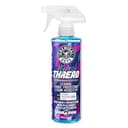
Chemical Guys HydroThread Ceramic Fabric Protectant

Chemical Guys HydroThread Ceramic Fabric Protectant

Ceramic chemistry applied to fabric, and the only product here designed specifically for a car interior rather than adapted to it. Spills bead on the surface long enough to be blotted rather than soaking straight into the foam.

Best overall
$24.99 · View on Amazon

Price as of August 31, 2026. #ad How we’re funded

2
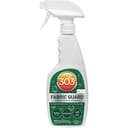
303 Products Fabric Guard Water Repellent

303 Products Fabric Guard Water Repellent

The one made for outdoor fabric, which is why it is the strongest option here - it is formulated to restore water repellency to convertible tops and marine canvas, and cloth seats are an easier job than either.

Best for convertible tops
$22.63 · View on Amazon

$27.9919% off

Price as of August 31, 2026. #ad How we’re funded

3
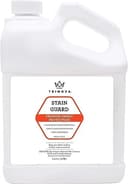
TriNova Stain Guard Fabric Protector

TriNova Stain Guard Fabric Protector

Sold as a gallon refill, which changes the maths entirely if you are protecting a whole interior, a second car, or re-treating every year. Cost per treated seat is by far the lowest here.

Best value in volume
$59.99 · View on Amazon

Price as of August 31, 2026. #ad How we’re funded

4
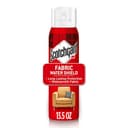
Scotchgard Fabric Water Shield

Scotchgard Fabric Water Shield

The household name, and the cheapest way to protect a set of cloth mats. It is not a car-specific product and makes no automotive claims, but the chemistry is the same one that has been protecting upholstery for decades.

Best budget pick
$11.96 · View on Amazon

$12.998% off

Price as of August 31, 2026. #ad How we’re funded

The picks in full

#1Top pick — Best overall

Chemical Guys HydroThread Ceramic Fabric Protectant

Ceramic chemistry applied to fabric, and the only product here designed specifically for a car interior rather than adapted to it. Spills bead on the surface long enough to be blotted rather than soaking straight into the foam.

Strengths

  • SiO2 fabric chemistry aimed specifically at automotive interiors
  • Beads liquid on the surface so spills can be blotted before soaking in
  • Doubles as a stain guard on carpet and mats

Trade-offs

  • Most expensive per ounce in this group
  • Needs a genuinely clean, dry surface to bond properly
What it isCeramic (SiO2) fabric protectant and stain guard, 16 oz
Size16 oz
CoverageNot published
TypeSiO2 fabric protectant
Rated fabricsAutomotive upholstery, carpet
Rated durabilityNot published

Specs read from the product listing, on August 18, 2026. “Not published” means the brand does not state that figure.

#2Best for convertible tops

303 Products Fabric Guard Water Repellent

The one made for outdoor fabric, which is why it is the strongest option here - it is formulated to restore water repellency to convertible tops and marine canvas, and cloth seats are an easier job than either.

Strengths

  • Formulated for demanding outdoor fabric, not just indoor upholstery
  • Restores repellency rather than just adding a light stain guard
  • Available in 16 oz and 32 oz

Trade-offs

  • Needs a well-ventilated space and full drying time
  • Overkill and expensive for a set of floor mats
What it isOutdoor-grade fabric water repellent, 16 oz
Size16 oz
CoverageNot published
TypeWater repellent
Rated fabricsOutdoor fabrics
Rated durabilityNot published

Specs read from the product listing, on August 18, 2026. “Not published” means the brand does not state that figure.

#3Best value in volume

TriNova Stain Guard Fabric Protector

Sold as a gallon refill, which changes the maths entirely if you are protecting a whole interior, a second car, or re-treating every year. Cost per treated seat is by far the lowest here.

Strengths

  • 128 fl oz refill - the lowest cost per treated surface by a wide margin
  • Enough product to treat carpets, mats and seats together
  • Straightforward stain-guard chemistry

Trade-offs

  • Gallon format needs decanting into a sprayer
  • Highest single up-front cost despite the best per-ounce value
What it isFabric stain guard, 128 fl oz refill
Size128 fl oz
CoverageNot published
TypeStain guard
Rated fabricsNot published
Rated durabilityNot published

Specs read from the product listing, on August 18, 2026. “Not published” means the brand does not state that figure.

#4Best budget pick

Scotchgard Fabric Water Shield

The household name, and the cheapest way to protect a set of cloth mats. It is not a car-specific product and makes no automotive claims, but the chemistry is the same one that has been protecting upholstery for decades.

Strengths

  • Cheapest option here and stocked in every supermarket
  • Decades-old, well-understood repellent chemistry
  • Easy aerosol application on mats and small panels

Trade-offs

  • Not formulated or rated for automotive interiors specifically
  • Shorter-lived than the ceramic fabric products
What it isHousehold fabric water repellent spray
SizeNot published
CoverageNot published
TypeWater repellent
Rated fabricsClothing, household fabric
Rated durabilityNot published

Specs read from the product listing, on August 18, 2026. “Not published” means the brand does not state that figure.

How to choose a fabric protector

Ceramic or traditional repellent

The newer SiO2 / ceramic fabric products bond to the fibers and tend to give tighter beading and better longevity, and they are the ones designed specifically for car interiors. Traditional fluoropolymer-style repellents are cheaper, well understood and perfectly adequate for floor mats and cloth trim. For seats you actually sit on daily, the ceramic products are worth the difference.

Rated fabric matters

Products aimed at outdoor fabric — convertible tops, marine canvas — are formulated to face weather, so they are the strongest option here, and a cloth car seat is a considerably easier job than a soft top. Household stain guards are the weakest but also the cheapest and are entirely reasonable for mats. Check what the manufacturer actually lists rather than assuming a car seat is covered.

Volume, and the honest maths

A full interior — five seats, carpets and mats — uses far more product than people expect, because coverage requires the fabric to be genuinely wetted, not misted. If you are treating a whole car, or re-treating annually, a large refill is dramatically cheaper per seat than aerosol cans, which is why a gallon jug earns its place on this list despite being an awkward format.

Applying it so it actually works

Clean first, and be thorough about it. A protector bonds to fibers, and any dirt on those fibers is what it bonds to instead. Worse, sealing an existing stain under a repellent layer makes that stain much harder to remove later. Vacuum deeply, then clean the fabric with an upholstery-rated cleaner, and let the seats dry completely — genuinely completely, which usually means overnight.

Test an inconspicuous area. Under a seat or on the rear of a backrest. Some fabrics darken slightly, and it is much better to find out there.

Apply evenly and generously.Light, even coats across the whole panel — patchy application gives you patchy protection and, on some fabrics, a visible edge where the treated area stops. Two light coats beat one heavy one. Mask or cover adjacent plastic, leather and glass; repellent overspray on a screen or a leather bolster is annoying to remove.

Ventilate, and give it time. These are solvent-carried products being applied in a very small enclosed space, so work with the doors open and let the car air thoroughly before driving it. Most products want several hours to cure before the seats are used, and overnight is safer.

What to expect afterwards

Water and thin liquids will bead and sit on the surface for a while. Blot spills — do not rub, which pushes liquid through the barrier and into the foam. Expect to re-treat roughly annually, and after any deep clean or extraction, because shampooing removes the protection along with the dirt. If a spill does get through and leaves an odor, that is a different problem living in the foam rather than the fabric.
Frequently asked questions

Does fabric protector actually work on car seats?

Yes, within realistic limits. It makes the fibers hydrophobic so spilled liquid beads on the surface instead of soaking straight through to the foam, which gives you time to blot it up. It does not make fabric waterproof and it will not save a spill left for days. The practical benefit is turning a permanent stain into a wiped-up spill, which on cloth seats is a substantial difference.

How often should I reapply fabric protector?

Roughly once a year for normal use, and always after a deep clean or wet extraction - shampooing removes the protective layer along with the dirt. The simplest test is to drip a little water on an area you treated: if it beads and sits, the protection is working; if it soaks straight in, it is time to re-treat. High-wear areas like the driver's seat base go first.

Can I apply fabric protector over an existing stain?

You can, but you should not. The protector bonds to whatever is on the fibers, so applying it over a stain seals that stain in and makes it considerably harder to remove afterwards. Clean the fabric thoroughly with an upholstery-rated cleaner, let it dry completely - usually overnight - and then protect. Any protector applied to dirty fabric also bonds poorly and fails early.

Will fabric protector change the color or feel of my seats?

It should not, but some fabrics darken slightly, which is why a test patch matters. Apply to an inconspicuous area first - under a seat or on the back of a backrest - and let it dry fully before judging. Patchy or heavy application is the more common cosmetic problem: it can leave a visible edge where the treated area stops, so work in light, even coats across whole panels.

Is it safe to spray fabric protector inside a car?

With proper ventilation, yes - but treat it seriously. These are solvent-carried aerosols applied in about the smallest enclosed space you will ever clean, and the EPA is explicit that cleaners and solvents off-gas volatile organic compounds. Work with all the doors open, avoid prolonged breathing of the mist, and leave the car open to air for several hours before driving it.

Sources

Keep reading