Clay & Coat

How to Prevent Water Spots on Your Car

Water spots are not a product problem, they are a drying problem. What minerals actually leave behind, the three stages of damage, and the routine that stops spots forming in the first place.

By Stephen V.Last updated How we pick

How this is funded: we earn a commission if you buy through our links, at no extra cost to you. It never changes which product we recommend, and we’ll tell you when we’d skip one. Full disclosure.

Water spots are caused by water drying on your car, not by water touching it — so the fix is to get the water off the surface before it evaporates, every time. Wash out of direct sun on cool panels, finish with a free-flowing sheet rinse rather than a spray, dry immediately starting with the glass, and blow the trapped water out of mirrors, badges and trim gaps. If you buy one thing, buy a blower: it is the only tool that removes water from the places a towel cannot reach, and those places are where the streak that appears ten minutes after you finish comes from.

That is the whole answer, and almost everything sold as a water-spot product is sold for the stage after you have already lost. This page is about not getting there.

What a water spot actually is

Tap water carries dissolved minerals — mostly calcium and magnesium, the same things that fur up a kettle. When a droplet sits on a panel and evaporates, the water leaves and the minerals do not. What you see is the outline of where the droplet sat, as a hard-edged pale ring, because the mineral concentrated at the drying edge.

That is stage one, and it is trivial to fix. The problem is that minerals left on a surface do not stay inert. Given heat, sun and time they bond to the clear coat, and eventually they eat into it. Which gives three distinct stages, each needing a completely different response:

StageWhat it isHow it looksWhat fixes it
1. DepositMineral sitting on top of the clear coatPale ring, wipes at with a fingernailA wash, or a water spot remover and a towel
2. Bonded scaleMineral keyed into the surface over weeksWill not wash off, feels slightly roughAcidic or chelating remover, sometimes clay afterwards
3. EtchingA shallow crater in the clear coat itselfVisible as a dimple or halo at an angle, even when cleanMachine polishing — removes clear coat, no undo

Every hour a deposit stays on the paint moves it closer to the next row, and the move is one way. A spot caught on the day of the wash costs you a towel; a spot left through a hot summer costs you a correction and some of your clear coat. That gradient is why prevention is worth a routine rather than a product.

The three things that create spots

Everything that causes water spotting is one of these, and knowing which one you are fighting tells you which part of the routine to tighten.

Heat and sun — the accelerator

Evaporation is the mechanism, and heat is the throttle. A panel in direct sun can dry before you have walked around the car with a towel, which is why washing at midday in summer is the single most common way to spot a car you were trying to clean. A cool panel in shade gives you minutes instead of seconds.

Hard water — the dose

The more dissolved mineral your supply carries, the more residue every droplet leaves. This is the variable you cannot change, only work around, and it is the reason this topic generates so much contradictory advice: the same routine genuinely produces different results on different water.

Standing water — the opportunity

A flat film of water left on a panel is the worst case, because it has the largest contact area and the longest drying time. This is where protection earns its money — a slick, hydrophobic surface pulls water into tight beads and lets a rinse carry it away, so there is simply less water left to dry. It is also where the sheet rinse earns its money, for free.

The four purchases that actually prevent spots

Ranked on published specs, coverage and buyer fit. Select a row to jump to the full write-up. We haven’t tested these in a lab — here is exactly what we do instead.

#ProductBest forPrice
1
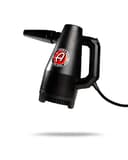
Adam's Polishes Mini Air Cannon Handheld Car Dryer

Adam's Polishes Mini Air Cannon Handheld Car Dryer

The one most people should buy. It is the cheapest tool here whose listing states the air is FILTERED, and it is handheld - which matters more than raw power, because the dryer you can pick up with one hand is the dryer you will actually use on every wash instead of reaching for a towel.

The real fix — dry without touching the car
$104.99 · View on Amazon

Price as of October 15, 2026. #ad How we’re funded

2
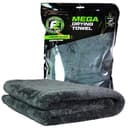
ExoForma Mega Car Drying Towel

ExoForma Mega Car Drying Towel

The absorbency play: 1200 GSM double-twist pile at 24 x 36 in, with the listing claiming it holds up to nine pounds of water. If you want to dry a full-size vehicle without stopping to wring anything out, this is the construction that does it.

Best towel for getting water off fast
$19.95 · View on Amazon

Price as of October 15, 2026. #ad How we’re funded

3
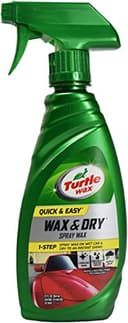
Turtle Wax Quick & Easy Wax and Dry Spray Wax

Turtle Wax Quick & Easy Wax and Dry Spray Wax

Not a pure quick detailer - it is a drying aid that leaves carnauba behind, which is a genuinely different job. Spray it onto a wet car as you dry and you top up protection in the time drying already takes.

Best drying aid — spot insurance at no time cost
$20.82 · View on Amazon

Price as of October 15, 2026. #ad How we’re funded

4
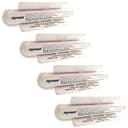
Aquapel Glass Treatment Applicators

Aquapel Glass Treatment Applicators

Sold as sealed single-use applicators, which is unusual and genuinely clever: the chemistry cannot go off in a half-used bottle in your garage, and each application is the same as the last.

Best for the surface that spots worst
$40.98 · View on Amazon

Price as of October 15, 2026. #ad How we’re funded

#1Top pick — The real fix — dry without touching the car

Adam's Polishes Mini Air Cannon Handheld Car Dryer

The one most people should buy. It is the cheapest tool here whose listing states the air is FILTERED, and it is handheld - which matters more than raw power, because the dryer you can pick up with one hand is the dryer you will actually use on every wash instead of reaching for a towel.

A blower is the only tool here that solves the problem rather than racing it. It removes water from a panel without contact, and critically it gets water outof the places a towel cannot reach — mirror housings, badge recesses, grille slats, trim gaps, lug recesses — which is where the streak that appears ten minutes after you finished drying comes from.

This is the handheld, filtered option: filtration first is the right priority for anything you point at paint, and it is the pick that makes most people stop towel-drying. Adam’s does not publish a CFM figure on the listing, so we do not quote airflow numbers for it or rank the category on them. If you want a full-size machine or the cheaper way to find out whether a blower changes your routine, the car dryer roundup has the whole category.

Strengths

  • Listing states filtered air - the whole point of a car dryer over a blower
  • Handheld and light enough to use one-handed around mirrors and grilles
  • Listing names use before wax or ceramic coating, which is the real job

Trade-offs

  • Less airflow than the full-size units - slower on a large vehicle
  • Adam's publishes no CFM or motor figure for this model
What it isHandheld filtered car dryer
SizeNot published
CoverageNot published
FormatHandheld
Filtered airYes
Airflow (CFM)Not published
MotorNot published

Specs read from the product listing, on October 6, 2026. “Not published” means the brand does not state that figure.

#2Best towel for getting water off fast

ExoForma Mega Car Drying Towel

The absorbency play: 1200 GSM double-twist pile at 24 x 36 in, with the listing claiming it holds up to nine pounds of water. If you want to dry a full-size vehicle without stopping to wring anything out, this is the construction that does it.

Speed is the point. A 1200 GSM double-twist pile towel at 24 x 36 inholds enough water to dry a large vehicle in one go without wringing, and “without wringing” is the spec that matters here — every pause to wring a towel is time the rest of the car spends evaporating.

Technique matters as much as the towel: lay it flat and blot, or drag it once with no pressure, rather than wiping in circles. Chemical Guys’ own swirl analysis puts friction at the root of swirl marks and recommends blotting or a blower over wiping, so the fast-drying method and the scratch-safe method are fortunately the same method. Other sizes and weights are compared on our drying towel roundup.

Strengths

  • 1200 GSM double-twist pile - the most absorbent construction on this list
  • 24 x 36 in with an edgeless design, so no stitched border to drag
  • Manufacturer states it holds up to 9 lbs of water

Trade-offs

  • Heavy and awkward once fully loaded
  • Takes a long time to machine-dry between washes
What it is1200 GSM double-twist pile, 24 x 36 in, edgeless
Size24 x 36 in
CoverageManufacturer states it holds up to 9 lbs of water
WeaveDouble-twist pile, edgeless
GSM1200
Dimensions24 x 36 in

Specs read from the product listing, on August 18, 2026. “Not published” means the brand does not state that figure.

#3Best drying aid — spot insurance at no time cost

Turtle Wax Quick & Easy Wax and Dry Spray Wax

Not a pure quick detailer - it is a drying aid that leaves carnauba behind, which is a genuinely different job. Spray it onto a wet car as you dry and you top up protection in the time drying already takes.

A drying aid is the most underrated anti-spot purchase there is. You mist it onto a wet panel as you dry, and it does two things: it adds lubrication so the towel glides instead of grabbing, and it leaves a hydrophobic layer behind, so the water that is still arriving from a seam beads up and runs rather than spreading into a film and drying flat.

This one cleans and leaves carnauba behind, which means the protection step happens during the drying step at no extra time cost — the cheapest way to keep a surface slick between proper waxes. It is a topper, not protection in its own right: do not mistake it for a wax or a sealant.

Strengths

  • Works on a wet car as a drying aid, so it costs no additional time
  • Leaves carnauba protection rather than just cleaning
  • Manufacturer states it helps prevent water spots

Trade-offs

  • Wax content makes it the wrong choice for a plain dust wipe-down
  • Protection is measured in weeks, not months
What it isSpray wax drying aid - cleans and leaves carnauba
SizeNot published
CoverageNot published
TypeSpray wax / drying aid
ProtectionCarnauba
Rated durabilityNot published

Specs read from the product listing, on August 18, 2026. “Not published” means the brand does not state that figure.

#4Best for the surface that spots worst

Aquapel Glass Treatment Applicators

Sold as sealed single-use applicators, which is unusual and genuinely clever: the chemistry cannot go off in a half-used bottle in your garage, and each application is the same as the last.

Glass is where water spots show first, look worst and etch fastest, and it is the surface most routines treat last. A glass repellent is the single highest-value anti-spot product on a car, because it attacks the problem at the source: water that leaves the glass on its own never gets the chance to evaporate on it.

Aquapel states that it forms a chemical bond with the glass to increase water repellency, causing water to bead and shed, as opposed to products that “simply coat glass”, and that one application “can last for months”. It also claims to last “up to 6 times longer than silicone-based products” — note that this is measured against a product category, not a named rival, and that “up to” is a ceiling, not an average. Single-use applicators mean no part-used bottle going off in a cupboard. Our Aquapel vs Rain-X comparison covers the cheaper alternative.

Strengths

  • Single-use sealed applicators - no degraded half-bottle problem
  • Long-standing reputation among windshield installers
  • Very quick to apply, one window at a time

Trade-offs

  • Cost per application is high compared with a bottle
  • Once an applicator is opened it must be used
What it isSingle-use windshield treatment applicators (4-pack)
Size4 applicators
CoverageNot published
TypeGlass water repellent
FormatSealed single-use applicators
Rated durabilityNot published

Specs read from the product listing, on August 18, 2026. “Not published” means the brand does not state that figure.

The spot-free wash routine, in order

None of the above helps if the wash itself creates the problem. This is the sequence, and the order is the point.

  1. Shade, cool panels, and ideally not midday. Everything else on this list is damage control for getting this wrong.
  2. Pre-rinse, then foam or wash panel by panel. Soaping a whole car and rinsing at the end means the first panel you touched has been drying for fifteen minutes. Work in sections: wash, rinse, move on. The two-bucket method handles the grit side of this.
  3. Final-rinse as a sheet, not a spray.Take the nozzle off and let water flow over each panel from the top. Surface tension pulls most of it off in one continuous sheet — dramatically less water left behind than any spray pattern leaves, and the easiest free improvement available.
  4. Dry glass first, then paint, then wheels. Glass spots fastest. Wheels last, because they are the dirtiest and they are where you want to be when the rest of the car is already safe.
  5. Blow out the trapped water. Mirrors, badges, grille, fuel filler, trim gaps, lug recesses. Skipping this is why a perfectly dried car has three streaks on it an hour later.

The full scratch-safe version of the drying step — towel choice, blotting technique and the mistakes that mar paint — is in how to dry your car without scratching. This page is about the mineral problem; that one is about the friction problem. They happen in the same five minutes.

Hard water, soft water, and whether a filter is worth it

The severity of your water-spot problem is set by your water supply, and there is nothing you can do about that except work around it. Hard water carries dissolved calcium and magnesium; soft water carries much less. Two people can follow identical routines in different towns and get completely different results, which is why forum advice on this topic contradicts itself so often.

Deionizing or resin filters that strip minerals from the rinse water do work — a genuinely mineral-free rinse can air-dry without spotting at all. We have no verified product listing for one, so we are not recommending a specific unit, and we would point out that the consumable resin is the real cost rather than the housing. For most people, the cheaper route is the sheet rinse plus immediate drying described above. If your water is hard enough that spots appear while you are still drying the car, a filter is the upgrade worth researching.

Sprinklers, rain and the two worst cases

Most severe spotting does not come from washing. It comes from these two.

Lawn sprinklersare the single most destructive water source for paint, and the reason is a compounding one: a sprinkler hits the same car with the same hard water every day, in the sun, with nobody drying it. Those are etched spots, not deposits, and they are a correction job. If a sprinkler reaches where you park, move the car or adjust the sprinkler — no product will out-run a daily dose.

Rain is not the problem; the drying is. Rainwater is relatively soft, but it lands on a dusty car, picks up whatever is on the surface, and then dries in place. A car that is rained on and then parked in the sun ends up with spots full of dirt as well as minerals. The practical answer on a protected car is a quick detailerand a clean towel the next morning — but only on a car whose surface is slick enough that the dust lifts rather than grinds in. On a dusty, unprotected panel, leave it until you can wash it properly.

Protection is prevention

Everything above is about managing water. Protection changes how water behaves in the first place, and it is the reason a coated car can sit through a rain shower and look fine while the car next to it spots.

On a slick, hydrophobic surface water pulls into tight beads with far less contact area, and a sheet rinse carries most of it away before drying starts. A sealant or ceramic coatingis therefore an anti-spot purchase as much as a gloss one. Chemical Guys’ coating-maintenance guidance also supplies the caveat worth hearing: coating durability drops toward one to two years without care but reaches multiple years with pH-neutral washing and periodic maintenance — so protection only keeps paying if you maintain it.

One genuine warning for coated cars, from the same source set: hot water can degrade a coating, and a coating is not a spot-proof surface. What it buys you is time — the water beads, the sheet rinse takes more of it away, and you have longer before evaporation matters. It does not mean you can leave a coated car to air-dry in the sun.

If spots have already formed

Prevention is a different job from removal, and the right product depends on which stage you are at. Stage one, fresh mineral deposits sitting on top of the clear coat, comes off with a dedicated water spot removerand a towel. Stage two, bonded mineral scale that has keyed into the surface, needs an acidic or chelating remover, and sometimes a clay bar afterwards. Stage three is etching — the mineral has sat long enough that it has eaten a shallow crater in the clear coat, and no chemical fills a crater.

Griot’s own polishing guidance lists water spots among the defects machine polishing removes, which is the honest answer for stage three: it is a correction job, done with abrasives, on a dual-action polisher, and the clear coat you remove does not come back. That is the real argument for everything on this page: stage one costs five minutes, stage three costs a weekend and some of your paint.
Frequently asked questions

How do you prevent water spots on a car?

Stop water evaporating on the surface. In practice that means washing out of direct sun on cool panels, working panel by panel rather than soaping the whole car first, finishing with a free-flowing sheet rinse (nozzle off) so most of the water leaves in one go, drying immediately starting with the glass, and blowing water out of mirrors, badges and trim gaps where it hides and runs out later. Keeping a wax, sealant or coating on the paint makes all of that easier because water beads and sheets instead of sitting in flat films.

What actually causes water spots?

Dissolved minerals, mostly calcium and magnesium, carried by tap water. When a droplet evaporates the water leaves and the minerals stay, drying as a hard-edged ring on the surface. Left there, the deposit can etch a shallow crater into the clear coat — which is why a spot caught the same day wipes off and a spot left for a month needs polishing. How bad your problem is depends largely on how hard your local water is, which is why identical routines give different results in different towns.

Will a ceramic coating stop water spots?

It reduces them substantially and does not eliminate them. On a slick hydrophobic surface water pulls into tight beads with far less contact area and a sheet rinse carries most of it off before evaporation starts — so you get more time before spots form. But the minerals are in the water, not in the paint, and a coated panel left to air-dry in the sun will still spot. Chemical Guys also notes that hot water degrades a coating, and that coating durability depends on pH-neutral washing and periodic maintenance.

Why does my car get water spots even when I dry it?

Almost always water hiding somewhere a towel cannot reach. Mirror housings, badge recesses, grille slats, fuel filler surrounds, trim gaps and wheel lug recesses hold water that runs out onto a clean, dry panel ten minutes after you have put the towel away, and then dries in the sun. A blower solves it in thirty seconds. The other common cause is drying too slowly on a hot day — the panel you reach last has been evaporating since the rinse.

Are sprinkler water spots worse than rain spots?

Much worse, for two reasons. Sprinkler water is tap water, so it is mineral-rich, and it hits the same car in the same places every single day with nobody drying it — so the deposits build and then etch. Rainwater is comparatively soft; the damage from rain comes from it landing on a dusty surface and drying there, not from the water itself. If a sprinkler reaches where you park, move the car or adjust the sprinkler. No product out-runs a daily dose of hard water.

Should I use a water filter or deionizer for washing?

It works, and it is the only approach that lets a car air-dry without spotting at all, because a mineral-free rinse leaves nothing behind. Two caveats: the consumable resin is the real running cost rather than the housing, and it only makes sense if your water is hard enough to cause spots while you are still drying. We have no verified product listing for a filter, so we are not recommending a specific unit. For most people the sheet rinse plus immediate drying is the cheaper fix.

Is it better to let a car air dry or towel dry?

Neither, ideally — blow it dry. Air drying guarantees mineral spots because every droplet evaporates in place. Towel drying prevents spots but is the single biggest source of swirl marks, because Chemical Guys' own analysis puts friction at the root of them. A blower removes the water without contact, which is why it is the one purchase that improves both problems at once. If you are towel drying, blot or drag with no pressure rather than wiping in circles.

Does a drying aid help with water spots?

Yes, more than people expect, and at no time cost. You mist it on wet panels as you dry: it lubricates the towel so it glides rather than grabs, and it leaves a hydrophobic layer so the water still arriving from seams beads and runs instead of spreading into a film that dries flat. A spray-wax drying aid also tops up protection during a step you were doing anyway. It is a topper though — treat it as insurance, not as the wax itself.

Sources

  • Chemical Guys — Ceramic Coating Maintenance — On coating longevity: durability drops toward 1-2 years without care but reaches multiple years with pH-neutral washing and periodic maintenance (accessed July 18, 2026)
  • Chemical Guys — What Causes Swirl Marks on Car Paint and How to Prevent Them — Manufacturer guide: friction is the root cause - a dirty towel, gritty wash mitt or automatic car wash brush moving in a circular motion leaves tiny scratches; swirl marks show up most noticeably on dark colors such as black and navy blue because of the contrast against light reflection; prevent with the two-bucket method and a microfiber mitt, and dry by blotting with a plush microfiber towel or with a blower rather than wiping; wax can temporarily fill light swirl marks and make them less visible but does not remove the underlying scratches (accessed September 29, 2026)
  • Chemical Guys — How to Wash a Ceramic Coated Car — Manufacturer guide: 'always opt for pH-neutral shampoos' because harsh or acidic cleaners strip the water-repelling properties that make a coating work; 'strong solvents and abrasive detergents can degrade the coating's hydrophobic properties', and acidic or alkaline cleaners weaken the protective layer; suggested cadence is to 'aim to wash your car every two weeks', more often after bird droppings, tree sap or heavy dirt; hot water can degrade the coating; dry with premium plush microfiber rather than rough generic towels (accessed October 5, 2026)
  • Aquapel (PGW Auto Glass) — Aquapel Glass Treatment — Maker page: Aquapel 'forms a chemical bond with the glass which increases water repellency, causing water to bead and easily shed off the glass', as opposed to products that 'simply coat glass'; 'One application can last for months!' and it 'lasts up to 6 times longer than silicone-based products'; single-use applicator is squeezed by the wings 'until a popping sound is heard', wiped up and down then side to side on clean glass and dried immediately; claims it 'improves vision in the rain, day and night' and makes it 'easier to clear ice, snow, and even dirt and bugs'; cites a University of Michigan study in which hydrophobic coatings improved visual acuity by nearly 34% and response time by 25 percent, from four seconds to three (accessed October 5, 2026)
  • Griot's Garage — How-To: Polish — Machine polishing removes swirls, light scratches, water spots and oxidation; work small sections and start least-aggressive (accessed July 18, 2026)
  • Chemical Guys — Two Bucket Method Car Wash Guide — Separate wash and rinse buckets keep contaminated water off the mitt — the main source of wash-induced swirl marks (accessed July 18, 2026)
  • US EPA WaterSense — Best Management Practices — EPA best management practices for outdoor water use including vehicle washing (accessed July 18, 2026)

Keep reading