Clay & Coat

Mothers Back-to-Black vs Meguiar's Ultimate Black

Two trim restorers at nearly the same price, settled by what each maker will put in writing: one publishes a 103-wash lab figure, the other publishes no durability claim at all.

By Stephen V.Last updated How we pick

How this is funded: we earn a commission if you buy through our links, at no extra cost to you. It never changes which product we recommend, and we’ll tell you when we’d skip one. Full disclosure.

These two sit next to each other on the shelf, cost within a couple of dollars of one another, promise the same outcome, and are the two products almost everyone considers when gray trim starts bothering them. There is a clean way to settle it, and it does not require us to pretend we ran a side-by-side durability test: compare what each manufacturer is willing to publish.

On that test the result is lopsided. Meguiar’s commits to a specific, checkable number. Mothers commits to none. That does not make Back-to-Black a bad product — it makes it a product sold on a different promise, and the rest of this page is about which promise suits your trim.

What each maker publishes, side by side

Mothers Back-to-Black (06112)Meguiar’s Ultimate Black
Durability claimNot published“Lab tested to 103 consecutive hand washes using a pH balanced car shampoo”
Stated technologyIngredient list names dimethicone and a PEG tridecyl ether with an acrylate crosspolymer as lubricant / film formers“Breakthrough UV clear coat technology”
Leads onCleaning — removes “light oxidation, dirt, wax residue and surface film”Durability and darkness — “lasts even after 100 washes”
Protection claimAgainst deterioration from “sun, smog, ozone, water, chemicals and airborne contaminants”“Outstanding UV protection”
Rated surfacesTrim and plastic (no detailed list published)Unpainted exterior plastic, vinyl, rubber: bumpers, moldings, mirror housings, windshield cowls
Stated size12 fl oz / 355 mL16 oz (listing)
Finish describedNot publishedFast-drying, non-greasy, will not streak when wet
Reapplication intervalNot publishedNot published as an interval — expressed as a wash count instead

Every cell above is read from the maker’s own product page on the date in our sources list. The empty cells are findings, not gaps in our research — a manufacturer declining to state a durability figure is information.

Restoring versus dressing: the distinction that decides this

Faded black trim is not dirty. Sunlight breaks down the surface layer of the polymer, which scatters light instead of absorbing it, and the plastic reads gray. There are three ways to address that, and they are genuinely different jobs:

  • Dress it. Lay a film over the degraded surface that fills the microscopic roughness so light is absorbed again. Both products on this page are essentially doing this. It looks excellent immediately and lasts as long as the film does.
  • Re-pigment it. Put dye back into the plastic, as Solution Finish does. Slower, fussier, and the result is matte like factory trim rather than glossy.
  • Coat it. Cure a ceramic layer onto the trim, as the Cerakote kit does. The longest-lived approach and the least forgiving of poor prep.

That hierarchy is why Meguiar’s wash-count claim is the most interesting number on this page. A dressing’s whole weakness is that washing removes it. A dressing that survives 103 hand washes is behaving much more like a coating than like a dressing — which is exactly what “UV clear coat technology” is asserting. Whether it delivers that in your climate we cannot tell you; we can tell you it is the only one of these four products that put a figure on it.

Where Back-to-Black genuinely wins

Two situations, and they are not small. First, the first application on neglected trim: Mothers’ copy leads with removing oxidation, dirt, wax residue and surface film, and trim that has had three years of road grime and wax overspray baked onto it needs cleaning before it needs protecting. Using Back-to-Black as the cleaning-and-darkening step, then a more durable product on top later, is a perfectly sensible sequence.

Second, cost of experimentation. It is the cheaper bottle and the registry note on it is honest about its role: testing the water before spending on a premium restorer. If you do not yet know whether your trim is dull (a dressing fixes it) or genuinely oxidized gray (a dressing will not), the cheap bottle is the diagnostic.

Application: the part that decides your result

Both products fail the same way, and it is not the product’s fault. The two mistakes are applying over trim that is not fully clean and fully dry, and applying too much without removing the excess. Meguiar’s own directions end with removing excess residue with a fresh microfiber towel, and that final wipe-back is the difference between even, factory-look trim and a blotchy, greasy panel that collects dust.

So: clean the trim with an all-purpose cleaner, let it dry completely, tape the paint edges if you are using a dye-based product, apply thin, spread with a brush into the grain, and wipe back. Then leave it alone — neither product benefits from a second coat applied before the first has cured, and both will streak if it rains on them in the first hour.

So which one?

Buy Meguiar’s Ultimate Black if your trim is dull rather than chalky and you want the longest-lasting result of the two, backed by the only published durability figure in this comparison. Buy Mothers Back-to-Black if the trim is grubby as well as faded, if you want the cheaper bottle to find out what you are dealing with, or if you simply prefer reapplying more often to paying more up front. If the trim has gone properly gray, neither is the right tool — go to a dye-based restorer. The full set of options, including the preventative protectant that stops this happening to trim that is still black, is in our trim restorer roundup.
What to buy, ranked

Ranked on published specs, coverage and buyer fit. Select a row to jump to the full write-up. We haven’t tested these in a lab — here is exactly what we do instead.

#ProductBest forPrice
1
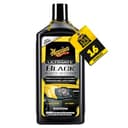
Meguiar's Ultimate Black Plastic Restorer

Meguiar's Ultimate Black Plastic Restorer

The mainstream pick: cheap, in every parts store, and effective on moderately faded trim. It does more dressing than restoring, which means the result looks great immediately and needs redoing sooner.

Best overall — the only published durability figure
$9.44 · View on Amazon

$11.9921% off

Price as of November 12, 2026. #ad How we’re funded

2
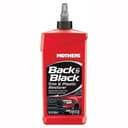
Mothers Back-to-Black Trim & Plastic Restorer

Mothers Back-to-Black Trim & Plastic Restorer

The cheapest way to find out whether your trim is restorable at all. At this price it is worth trying before you spend on anything else - and on lightly faded trim the result is often all you needed.

Best budget pick — buy it for cleaning, not durability
3
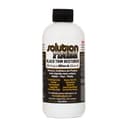
Solution Finish Black Plastic & Vinyl Trim Restorer

Solution Finish Black Plastic & Vinyl Trim Restorer

The one detailers keep recommending, and the reason is in the product name on the listing: no wet look. It restores color to faded plastic rather than coating it in a greasy dressing that washes off and slings onto your paint.

Best if the trim has actually gone gray
$33.99 · View on Amazon

Price as of November 12, 2026. #ad How we’re funded

4
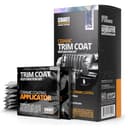
Cerakote Ceramic Trim Coat Kit

Cerakote Ceramic Trim Coat Kit

The durability play. It applies a ceramic layer over the trim rather than feeding it a dressing, and it comes as a kit with applicators - the option to choose when you are tired of redoing the same faded mirror caps every spring.

Longest-lasting approach — a coating, not a dressing
$16.88 · View on Amazon

Price as of November 12, 2026. #ad How we’re funded

#1Top pick — Best overall — the only published durability figure

Meguiar's Ultimate Black Plastic Restorer

The mainstream pick: cheap, in every parts store, and effective on moderately faded trim. It does more dressing than restoring, which means the result looks great immediately and needs redoing sooner.

This wins on evidence, not on our opinion of the finish. Meguiar’s publishes a specific, falsifiable durability claim: the formula is “lab tested to 103 consecutive hand washes using a pH balanced car shampoo”, with marketing copy that rounds it to “lasts even after 100 washes.” It attributes that to “breakthrough UV clear coat technology.” Mothers publishes no durability claim of any kind for Back-to-Black. When two products cost roughly the same and one of them will commit to a number, buy the number.

Read the claim precisely, though, because the conditions are part of it: consecutive hand washes with a pH-balanced shampoo, in a lab. That is not 103 trips through an automatic wash with a strong alkaline pre-soak, and it is not a time period — 103 washes is five years for a fortnightly washer and a single year for someone who washes weekly in two cars. Meguiar’s directions are to spray into a towel or onto the surface, spread with a brush or microfiber, then remove excess with a fresh towel; it is rated for unpainted exterior plastic, vinyl and rubber — bumpers, moldings, mirror housings, windshield cowls.

Strengths

  • Inexpensive and available essentially everywhere
  • Immediate visible improvement with minimal effort
  • 16 oz covers a lot of trim

Trade-offs

  • Leans dressing rather than restoration, so it needs redoing more often
  • Can look glossier than factory on some textures
What it isBlack plastic trim restorer, 16 oz
Size16 oz
CoverageNot published
TypeTrim restorer / dressing
FinishNot published
Rated durabilityNot published

Specs read from the product listing, on August 18, 2026. “Not published” means the brand does not state that figure.

#2Best budget pick — buy it for cleaning, not durability

Mothers Back-to-Black Trim & Plastic Restorer

The cheapest way to find out whether your trim is restorable at all. At this price it is worth trying before you spend on anything else - and on lightly faded trim the result is often all you needed.

Back-to-Black is a good product sold on a different promise, and the promise is worth understanding. Mothers’ own description leads with cleaning: it “removes light oxidation, dirt, wax residue and surface film with ease, bringing back that like-new color and protecting against further deterioration caused by sun, smog, ozone, water, chemicals and airborne contaminants.” That is a restorer-and-cleaner pitch, and on genuinely grubby, lightly oxidized trim it is the more useful of the two for the first application.

What it does not do is tell you how long the result lasts. There is no wash count, no month figure and no reapplication interval anywhere on the product page. The published ingredient list gives a clue to why: the film-forming and lubricating agents named are dimethicone and a PEG tridecyl ether with an acrylate crosspolymer, which is dressing chemistry rather than a UV clear coat. At 12 fl oz / 355 mL it is also the smaller bottle of the two. Buy it as the cheap way to clean and darken trim; expect to redo it sooner.

Strengths

  • The cheapest product in this group by some margin
  • Long-running formula stocked nearly everywhere
  • Also sold as an aerosol for awkward textured surfaces

Trade-offs

  • Shortest-lived result here on badly sun-bleached trim
  • Needs frequent reapplication to stay looking fresh
What it isBudget trim and plastic restorer, 12 oz
Size12 oz
CoverageNot published
TypeTrim restorer / dressing
FinishNot published
Rated durabilityNot published

Specs read from the product listing, on August 18, 2026. “Not published” means the brand does not state that figure.

#3Best if the trim has actually gone gray

Solution Finish Black Plastic & Vinyl Trim Restorer

The one detailers keep recommending, and the reason is in the product name on the listing: no wet look. It restores color to faded plastic rather than coating it in a greasy dressing that washes off and slings onto your paint.

Neither headline product is the right answer when trim has oxidized past gray into chalky. Both are dressings that darken what is there; Solution Finish is a dye-based restorer — it puts pigment back into the plastic rather than laying a glossy film over it. Its listing specifies a matte finish with no wet look, which is what factory trim actually looks like.

Honest limits: Solution Finish publishes no rated durability figure either, and no size on the listing we read, and it is the premium-priced option here. It is also less forgiving — a dye that gets onto paint is a different problem from a dressing that gets onto paint. Tape the edges. If your trim is merely dull rather than gray, this is more product than you need.

Strengths

  • Restores color rather than adding a temporary greasy shine
  • Matte, factory-look finish with no wet-look sheen
  • A very small amount treats a whole car's trim

Trade-offs

  • The most expensive bottle in this group up front
  • Needs thoroughly clean, dry trim or the result is patchy
What it isNon-greasy black trim and vinyl restorer
SizeNot published
CoverageNot published
TypeDye-based trim restorer
FinishMatte, no wet look
Rated durabilityNot published

Specs read from the product listing, on August 18, 2026. “Not published” means the brand does not state that figure.

#4Longest-lasting approach — a coating, not a dressing

Cerakote Ceramic Trim Coat Kit

The durability play. It applies a ceramic layer over the trim rather than feeding it a dressing, and it comes as a kit with applicators - the option to choose when you are tired of redoing the same faded mirror caps every spring.

The structural answer to the reapplication treadmill. This is a ceramic trim coating supplied as a kit with applicators, which is a different category from everything above: a dressing sits on the plastic and washes away, a coating cures onto it. If “not having to do this again for as long as possible” is the goal, this is the right shape of product.

The caveat is the same one that applies to every coating: Cerakote publishes no rated durability figure on the listing we read, so the longevity argument rests on the product category rather than on a stated number. And a coating magnifies prep errors. Trim has to be genuinely clean and dry before it goes on, because whatever is under the coating is sealed in for the duration.

Strengths

  • Ceramic coating chemistry rather than a wipe-off dressing
  • Supplied as a kit with the applicators you need
  • Manufacturer sells it on guaranteed restoration of faded trim

Trade-offs

  • Coating chemistry means prep and technique matter more
  • Harder to correct if you get an uneven application
What it isCeramic trim coating kit for faded plastic
SizeNot published
CoverageNot published
TypeCeramic trim coating
Supplied asKit with applicators
Rated durabilityNot published

Specs read from the product listing, on August 18, 2026. “Not published” means the brand does not state that figure.

Frequently asked questions

Which lasts longer, Mothers Back-to-Black or Meguiar's Ultimate Black?

On published claims, Meguiar's. Meguiar's states Ultimate Black is lab tested to 103 consecutive hand washes using a pH balanced car shampoo, and attributes that to a UV clear coat technology. Mothers publishes no durability figure, no wash count and no reapplication interval for Back-to-Black anywhere on its product page. That is a comparison of a stated number against silence, not two competing numbers.

Does Meguiar's Ultimate Black really last 100 washes?

That is the maker's claim and it comes with conditions worth reading. The stated figure is 103 consecutive hand washes using a pH-balanced car shampoo, under lab testing. It is not a time period, and it is not a claim about automatic washes with strong alkaline pre-soaks. At a fortnightly hand wash, 103 washes is about four years; at a weekly wash, about two.

Is Back-to-Black a restorer or a dressing?

Mothers positions it as both, and its own copy leads with cleaning: it removes light oxidation, dirt, wax residue and surface film while bringing back like-new color. The published ingredient list names dimethicone and a PEG tridecyl ether with an acrylate crosspolymer as the lubricating and film-forming agents, which is dressing chemistry rather than a pigment or a clear coat. For trim that has genuinely gone gray, a dye-based restorer such as Solution Finish is the more appropriate tool.

Can I use either product on painted plastic?

Meguiar's rates Ultimate Black for unpainted exterior plastic, vinyl and rubber - bumpers, moldings, mirror housings and windshield cowls. That wording excludes painted surfaces. Treat both products as unpainted-trim products, keep them off paint and glass, and wipe any overspray immediately rather than letting it cure.

How do I stop trim restorer streaking or going blotchy?

Almost every blotchy result comes from applying over trim that was not fully clean and fully dry, or from applying too much and not removing the excess. Meguiar's directions explicitly end with removing excess residue using a fresh microfiber towel - that step is not optional. Clean the trim with an all-purpose cleaner first, let it dry completely, apply thinly, then wipe back.

Will a trim restorer stop trim fading again?

Only partly, and the mechanism matters. A dressing with UV blockers slows further fading while it is present, which is why durability and protection are the same question. Mothers claims protection against deterioration from sun, smog, ozone, water and chemicals; Meguiar's claims a UV clear coat. Neither reverses fade permanently. A dedicated preventative protectant such as 303 Aerospace applied to trim that has not yet gone gray is the cheaper long game.

Sources

  • Mothers — Back-to-Black Trim & Plastic Restorer (06112) — Maker page: 'Removes light oxidation, dirt, wax residue and surface film with ease, bringing back that like-new color and protecting against further deterioration caused by sun, smog, ozone, water, chemicals and airborne contaminants'; net content 12 fl oz / 355 mL; the published ingredient list names water, dimethicone as a lubricant, poly(ethylene glycol) tridecyl ether as a lubricant/film former, a C10-30 alkyl acrylate crosspolymer film former, a C10-16 alcohol ethoxylate emulsifier, morpholine as a pH adjuster and methylchloroisothiazolinone as an antimicrobial; NO durability claim, NO wash-count figure and NO reapplication interval are published on the page (accessed October 5, 2026)
  • Meguiar's — Ultimate Black Plastic Restorer (G15812, 12 oz) — Maker page: 'breakthrough UV clear coat technology' claimed to outlast conventional protectants, with 'darkness and shine that lasts even after 100 washes'; the formula is stated to be 'lab tested to 103 consecutive hand washes using a pH balanced car shampoo'; rated for unpainted exterior plastic, vinyl and rubber including bumpers, moldings, mirror housings and windshield cowls; directions are to spray into a towel or onto the surface and spread with a brush or microfiber towel, then remove excess residue with a fresh microfiber towel; described as fast-drying, non-greasy and non-streaking when wet (accessed October 5, 2026)
  • Gold Eagle Co. (303 Products) — 303 Aerospace Protectant — Maker page: matte finish with no oily or greasy residue; claims it blocks up to 98% of UV radiation if used properly and consistently; use on clean, dry surfaces, wipe completely dry, extra buffing helps; reapply every 3-5 weeks; not recommended for clear plastics, unfinished leather, gauge panels or headlights (accessed September 18, 2026)
  • Chemical Guys — Best Wax for Black Cars — Manufacturer guide: black paint is 'notoriously unforgiving, revealing every swirl mark, scratch, and imperfection that lighter colors easily hide', and absorbs more UV than lighter colors, raising oxidation risk; products should be trim-safe so they leave no white residue on black trim, rubber or plastic, because white residue is especially visible on a black car; suggested cadence is carnauba-based every 3-4 months, hybrid 4-6 months, ceramic 6-9 months, with black cars benefiting from more frequent maintenance (accessed September 29, 2026)
  • Chemical Guys — Synthetic Wax vs. Carnauba — Natural carnauba gives a warm, deep gloss but lasts several weeks and needs frequent reapplication; engineered synthetic wax/sealant bonds to paint and can last up to six months or more (accessed July 18, 2026)

Keep reading