How to choose a wash mitt
Chenille, plush or twist pile
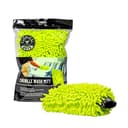
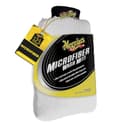
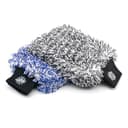
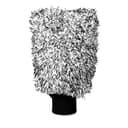
Chenillemitts have long microfiber “noodles”. They hold a lot of soap, they release grit readily when you agitate them in a rinse bucket, and they are cheap. That combination is why they are the default recommendation. Plushmicrofiber mitts have a shorter, denser pile — a little less grit clearance, a little more surface contact. Twist pile and premium 70/30 blends give the deepest, softest pile and the best safety margin on paint that shows everything.
Sponge core, or no core
Some mitts wrap a foam sponge in microfiber. The core gives the mitt shape and a large soap reservoir, which is genuinely nice to use. The trade is that you cannot wring a cored mitt out completely, so it takes longer to flush grit out of it in the rinse bucket. Coreless mitts are floppier but they purge cleaner. Neither is wrong; it depends on whether you value the feel or the flush.
Why a sponge is the wrong tool
A flat sponge has no depth to store the dirt it lifts. Grit sits on the flat face, trapped between foam and clear coat, and gets dragged the full length of the panel. The same is true of the sponges built into most petrol-station wash brushes. If you take one thing from this page: the upgrade from a sponge to a five-dollar chenille mitt is the single cheapest paint-protection decision available to you.
Using a mitt so it actually stays safe
A good mitt used badly is still a scratch machine. The rules are simple and they all follow from the same idea — get the grit out of the mitt before it goes back on the paint.
Use the two-bucket method: one bucket of soap, one of clean rinse water, both with grit guards. After each panel, rinse the mitt in the plain-water bucket, rub it against the grit guard so the dirt falls out and stays at the bottom, then reload with soap. Wash top-down, because the lower quarter of a car carries most of the abrasive road film. Use a separate mitt entirely for the lower panels — a second cheap chenille is worth more than a single expensive one.
Pre-washing does most of the work for you. Blanketing the car in foam from a foam cannon and rinsing it off lifts loose grit before the mitt ever makes contact, which is why enthusiasts treat the foam step as safety equipment rather than theater.
When to retire a mitt
Immediately, if it hits the ground. Otherwise, when the pile has matted down and stops springing back after washing, or when it no longer holds suds the way it did new. A matted mitt behaves more like a sponge every wash. And launder mitts the same way you launder drying towels— no fabric softener, low heat, and never in the same load as the towels you use on wheels.