Clay & Coat

Iron Remover vs Wheel Cleaner: What's the Difference?

They bleed the same purple and they are not the same product. What each one is formulated to do, why reaching for the cheap one on paint is the expensive mistake, and which to buy if you only buy one.

By Stephen V.Last updated How we pick

How this is funded: we earn a commission if you buy through our links, at no extra cost to you. It never changes which product we recommend, and we’ll tell you when we’d skip one. Full disclosure.

Buy a dedicated wheel cleaner for the wheels and a paint-rated iron remover for the paint — and if you only want one bottle, buy the iron remover whose listing rates it for paint, glass and wheels. The confusion is understandable: both products often use the same iron-reactive chemistry and both bleed the same alarming purple. But the row that decides which belongs on your clear coat is the rated-surface list, not the color.

The expensive version of getting this wrong is in one direction only. Using an iron remover on wheels wastes money. Using a wheel cleaner on paint it was never rated for is how you find out what a concentrated chemical does to clear coat when it dries in the sun.

What each one is actually for

Iron removerWheel cleaner
Primary jobDissolve ferrous particles embedded in clear coatClean brake dust, road film and grease off wheel finishes
Typical rated surfacesPaint and wheels (one here adds glass)Wheel finishes; paint only where stated
How often you use itA couple of times a year, or before a coatingEvery wheel wash
Cleaning power beyond ironLow — it is a decontaminant, not a degreaserHigher, often as a clinging foaming gel
Color changeUsually yes (one here does not claim it)Often yes, on iron-reactive formulas
Strips wax and sealantYes — it is a prep step, so protect afterwardsNot the intent; several state they are coating-safe
Published pHNot published by any product on this siteNot published by any product on this site
Published dwell time in minutesNot publishedNot published
Cost per useHigher per ounceLower, and lower still as a concentrate

The last two rows before cost deserve emphasis, because they are the honest limit of every comparison on this topic. We went looking for a published pH figure and a dwell time in minutes across both categories and found neither, on any product in our registry. Every chemistry claim in this category — “acid-free”, “pH-balanced”, “safe on coatings” — is an adjective supplied by the maker with no number behind it.

The same purple, different formulations

Iron-reactive chemistry works by converting embedded ferrous particles into a soluble compound, and the purple bleed is a visible by-product of that reaction. Because brake dust is overwhelmingly iron, the same chemistry is useful in both categories — which is exactly why the two product types look so similar on a wheel.

What differs is everything built around the reactive component. A wheel cleaner adds surfactants and clinging agents so it dwells on a vertical wheel face and lifts the greasy road film that iron chemistry alone does nothing about. An iron remover is formulated to be tolerable on clear coat for a dwell period, with less aggressive general cleaning.

So a wheel cleaner on paint may be too much cleaner, and an iron remover on wheels is usually not enough cleaner — it will pull the iron out and leave the film. That is the practical difference, and it is more useful than the chemistry lecture.

One warning the purple does not give you

The color change is a confirmation and a timer, not a measurement. Nobody publishes a scale, so a darker bleed on product A does not mean more iron than a lighter bleed on product B — it may just mean a different dye load. Use it for what it genuinely tells you: where the contamination is, and when the reaction has tapered off enough to rinse.

And one product on this page makes no color-change claim at all. The Sonax iron and fallout remover wins the rated-surface comparison and loses the feedback comparison, which is a real trade rather than a detail. If visual confirmation is what you want from this step, the color-changing option is the one to buy even though its surface list is narrower.

Where both of them sit in a detail

Order of operations does more work than product choice here. Wheels first, on a cool car, because they carry the dirtiest contamination and need the strongest chemicals — and doing them first means that mess is rinsed away before the paint is wet. Then a two-bucket wash with a pH-neutral shampoo to take off the loose film.

Only then does the iron remover go on the paint, panel by panel, followed by a tar remover and then clay. Chemicals dissolve what they can first, so the clay bar has less to shear off and lasts longer — which is the same argument made in iron remover vs clay bar, where the answer is also both, in that order.

Finally, protect. An iron remover takes the old wax or sealant with it, so a decontaminated car is bare paint. Follow with a wax, a sealant or a coating in the same session.

If you want to stop buying either one so often

Coat the wheels. Brake dust that lands on a ceramic coating sits on the coating rather than bonding to the finish, and comes off with shampoo and a soft brush instead of a reactive chemical. That converts a chemical job into a rinse, which is the only genuine way out of this category — see ceramic coating for wheels.

On the paint side the equivalent is protection plus frequency: a coated, regularly washed car accumulates far less embedded iron than a bare one left for a season. Neither is free, and both beat scrubbing.
Which bottle for which job

Ranked on published specs, coverage and buyer fit. Select a row to jump to the full write-up. We haven’t tested these in a lab — here is exactly what we do instead.

#ProductBest forPrice
1
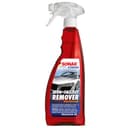
Sonax Iron + Fallout Remover (750 ml, 513400)

Sonax Iron + Fallout Remover (750 ml, 513400)

The widest rated-surface list in this group: Sonax rates it for paint, glass AND wheels, and names lime scale and industrial residue alongside embedded iron - so one 750 ml bottle covers a whole decontamination pass instead of just the wheels. It is also the largest bottle here, which matters on a step you apply panel by panel across an entire car.

Best if you only buy one
$24.99 · View on Amazon

Price as of October 20, 2026. #ad How we’re funded

2
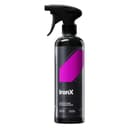
CarPro IronX Iron Remover

CarPro IronX Iron Remover

The product that made color-changing iron removers mainstream, and still the detailer's default. CarPro is explicit about why it matters: embedded iron does not just look like rust freckles, it can cause premature clear-coat failure.

Best dedicated iron remover for paint
$29.94 · View on Amazon

Price as of October 20, 2026. #ad How we’re funded

3
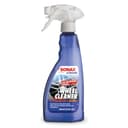
Sonax Wheel Cleaner Full Effect

Sonax Wheel Cleaner Full Effect

The color-changing, acid-free cleaner detailers trust: spray it on, watch it bleed purple as it dissolves bonded brake dust and iron, then rinse. Safe on virtually every wheel finish.

Best dedicated wheel cleaner
$16.99 · View on Amazon

Price as of October 20, 2026. #ad How we’re funded

4
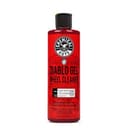
Chemical Guys Diablo Gel Wheel & Rim Cleaner

Chemical Guys Diablo Gel Wheel & Rim Cleaner

A concentrated gel you dilute to strength, which makes it the cheapest per use if you clean wheels often. Dial it strong for filthy wheels, weak for a maintenance clean.

Best wheel cleaner if you want to control the strength
$18.99 · View on Amazon

Price as of October 20, 2026. #ad How we’re funded

#1Top pick — Best if you only buy one

Sonax Iron + Fallout Remover (750 ml, 513400)

The widest rated-surface list in this group: Sonax rates it for paint, glass AND wheels, and names lime scale and industrial residue alongside embedded iron - so one 750 ml bottle covers a whole decontamination pass instead of just the wheels. It is also the largest bottle here, which matters on a step you apply panel by panel across an entire car.

Who it is for:anyone who wants one bottle to cover the whole decontamination pass. This is the entry here with the widest rated-surface list — Sonax rates it for paint, glass and wheels, not wheels alone, and names lime scale and industrial residue alongside embedded iron. At 750 ml it is also the largest bottle in the group, which matters on a step you apply panel by panel across an entire car.

Honest cons: Sonax publishes no pH figure, and there is no color-change claim on the listing — so you get less visual feedback than the purple-bleeding rivals, which is a real loss on a step where the color is how you know it is working. The metric 750 ml bottle carries no US fluid-ounce figure, which makes per-ounce comparison awkward.

Strengths

  • Rated for paint, glass and wheels, not wheels alone
  • 750 ml is more volume than the 16 oz bottles most rivals ship
  • Listing names industrial residue and lime scale, not just brake dust
  • Described as a fast-acting formula

Trade-offs

  • Sonax publishes no pH figure for this product
  • No color-change claim on the listing, so you get less visual feedback than the purple-bleeding rivals below
  • Metric 750 ml bottle with no US fluid-ounce figure printed, which makes per-ounce comparison awkward
What it isIron and fallout decon spray for paint, glass and wheels, 750 ml
Size750 ml
CoverageNot published
TypeIron and fallout remover
Rated surfacesPaint, glass, wheels
Also removesIndustrial residue, lime scale
pHNot published

Specs read from the product listing, on October 6, 2026. “Not published” means the brand does not state that figure.

#2Best dedicated iron remover for paint

CarPro IronX Iron Remover

The product that made color-changing iron removers mainstream, and still the detailer's default. CarPro is explicit about why it matters: embedded iron does not just look like rust freckles, it can cause premature clear-coat failure.

Who it is for: the decontamination step before a coating, where you want the reference product and the visual confirmation. CarPro is explicit about the stakes: embedded iron does not just look like rust freckles, it can cause premature clear-coat failure. The color-changing chemistry shows you exactly where the contamination is, which is the difference between decontaminating a panel and hoping you did.

Honest cons: the smell is genuinely unpleasant and needs ventilation — this is not a closed-garage product. It is the premium price per ounce in this group, and CarPro publishes no pH figure either. 500 mL is enough for one full-car pass, not several.

Strengths

  • Color-changing chemistry shows you exactly where the contamination is
  • 500 mL with a sprayer - enough for a full-car decontamination
  • The long-standing benchmark other iron removers are compared against

Trade-offs

  • The smell is genuinely unpleasant and needs ventilation
  • Premium price per ounce in this group
What it isColor-changing iron remover, 500 mL (17 oz)
Size500 mL (17 oz)
CoverageNot published
TypeColor-changing iron remover
Rated surfacesPaint, wheels
pHNot published

Specs read from the product listing, on August 18, 2026. “Not published” means the brand does not state that figure.

#3Best dedicated wheel cleaner

Sonax Wheel Cleaner Full Effect

The color-changing, acid-free cleaner detailers trust: spray it on, watch it bleed purple as it dissolves bonded brake dust and iron, then rinse. Safe on virtually every wheel finish.

Who it is for: the wheels, which is the job this page exists to keep separate. The listing publishes an acid-free, iron-reactive chemistry, ready to use, and states it is safe on coatings. Iron-reactive means it changes color as it dissolves embedded ferrous particles, so you can see the work happening and know when to rinse.

Honest cons: no pH figure and no dwell time in minutes are published, so “acid-free” is a claim rather than a measurement. Ready-to-use also means you are paying to ship water, and it is the priciest per ounce here.

Strengths

  • Acid-free and pH-balanced, so it's safe on coated and delicate wheels
  • Bleeds purple as it reacts with iron — you can see it working
  • Ready to use, no dilution to get wrong

Trade-offs

  • Premium price per bottle
  • The sulfur smell as it activates is strong
What it isAcid-free, iron-reactive (color-change), ready to use
Size500 mL
CoverageMany wheels per bottle — a few sprays each
ChemistryAcid-free, iron-reactive
Safe on coatingsYes
DilutionReady to use

Specs read from the product listing, on October 4, 2026. “Not published” means the brand does not state that figure.

#4Best wheel cleaner if you want to control the strength

Chemical Guys Diablo Gel Wheel & Rim Cleaner

A concentrated gel you dilute to strength, which makes it the cheapest per use if you clean wheels often. Dial it strong for filthy wheels, weak for a maintenance clean.

Who it is for:someone cleaning wheels often who wants it weak for maintenance and strong for a neglected set. The listing publishes a pH-balanced concentrate, dilutable to strength, and states it is safe on coatings — which makes it the cheapest per wash of the wheel options.

Honest cons: a concentrate puts the dilution decision on you, and no ratio table appears on the listing we read. Mixed strong, the acid-free claim still holds but the dwell discipline matters more.

Strengths

  • Concentrated — dilute to the strength the job needs
  • Cheapest per use when diluted
  • pH-balanced and coating-safe

Trade-offs

  • You have to mix it — no ready-to-use convenience
  • Gel clings well but needs a good rinse
What it isConcentrated, dilutable gel wheel cleaner
Size16 fl oz concentrate
CoverageMakes multiple bottles of ready-to-use when diluted
ChemistrypH-balanced concentrate
Safe on coatingsYes
DilutionDilutable to strength

Specs read from the product listing, on July 18, 2026. “Not published” means the brand does not state that figure.

The cheapest correct setup

One dedicated wheel cleaner, used ready-to-use on wheels only, plus one iron remover rated for paint, used two or three times a year on the paint. That is the whole kit. The wheel cleaner is the product you go through; the iron remover is the one that sits in the cupboard between decontamination sessions.

If you want to compress that to one bottle, the Sonax iron and fallout remover is the entry here whose rated surfaces cover both jobs — at the cost of the color feedback. Everything else in the order of operations is in what paint decontamination is.

A note on safety. Neither product should ever dry on a surface. Both are mostly water carrying active ingredients, so as the water evaporates the actives concentrate — which is how a chemical that is harmless at bottle strength leaves a mark on clear coat. Work on cool, shaded panels, one wheel or one panel at a time, with the hose running before you spray. Iron removers release a sulphur smell that genuinely needs ventilation; do not use one in a closed garage. Keep both off carbon-ceramic brake discs if your car has them, and rinse thoroughly rather than relying on the next wash.

Frequently asked questions

What is the difference between an iron remover and a wheel cleaner?

Chemically they overlap - both typically use iron-reactive chemistry that turns purple as it dissolves embedded ferrous particles - but they are formulated and RATED for different surfaces. An iron remover is a paint decontamination product: it is made to sit on clear coat for a dwell period, and the products on this site are rated for paint and wheels. A wheel cleaner is formulated for wheel finishes and the heavy brake dust and road grime that collect there, often with extra cleaning power and clinging agents. The decision-relevant row is the rated-surface list on the listing, not the color it bleeds.

Can you use wheel cleaner on paint?

Check the rated-surface list first, and treat silence as a no. Some wheel cleaners publish paint among their surfaces; many only publish wheel finishes. Even where it is rated, the procedural risk is the same one that applies to overspray: a wheel cleaner left to dry on a hot panel concentrates as its water evaporates, and that is what marks clear coat. A product that is harmless at bottle strength on a wet panel for one minute is not the same product after ten minutes in the sun. If you want to decontaminate paint, buy something rated for paint.

Can you use an iron remover on wheels?

Yes, and it works well - embedded brake dust is exactly the contamination the chemistry is designed for. Two caveats. First, an iron remover is usually more expensive per ounce than a dedicated wheel cleaner, so using it as your weekly wheel product burns money on a job a cheaper bottle does. Second, an iron remover is a pure decontaminant and brings less general cleaning power and less clinging action than a wheel cleaner formulated as a foaming gel, so it will dissolve the iron and leave the greasy road film behind.

Do you need both an iron remover and a wheel cleaner?

For most people, yes - because they do different jobs on different schedules. The wheel cleaner is a regular-use product you go through, used on every wheel wash. The iron remover is an occasional decontamination step on the paint, used a couple of times a year or before a coating. If you want to compress it to one bottle, look for one whose listing rates it for paint AND wheels: the Sonax iron and fallout remover on this page is rated for paint, glass and wheels, which is the widest list in our registry.

Why does iron remover smell so bad?

The sulphur smell is a by-product of the chemistry that makes the color change work, and every detailer who has used one recognises it. It is not a sign of a defective bottle. The practical implication is ventilation: do not use an iron remover in a closed garage, and work outdoors or with the doors open. CarPro's IronX is the best-known example and the smell is listed as a real con on our own product card rather than glossed over.

Should you use an iron remover before or after washing?

After. A wash with a pH-neutral shampoo removes the loose road film first, so the decontamination chemical acts on bonded contamination rather than being wasted on dirt that soap would have taken off. The full order is: wheels first, then wash, then chemical decontamination (iron remover, then tar remover), then clay, then correct or protect. Every particle a chemical dissolves is one your clay bar does not have to drag across the paint.

Does an iron remover strip wax or a ceramic coating?

It strips wax and sealant - that is part of what it is for, since decontamination is a prep step and you are meant to protect afterwards. Treat the paint as bare once you have finished and follow with a wax, sealant or coating in the same session, or the car is less protected than before you started. Coatings are more variable: some iron removers state coating compatibility and some explicitly warn against it, so read the row on the bottle you own rather than assuming. On this site the water-spot remover from CarPro is the clearest example of a decon product whose own listing warns it may damage coatings.

Is the purple color a measure of how much iron there was?

No, and nobody publishes a scale for it. The color change tells you the chemistry is reacting with ferrous particles, which is genuinely useful - it shows you WHERE the contamination is and tells you when activity is tapering off so you can rinse. It is not a quantity readout, and more purple does not reliably mean more iron than a lighter bleed on a different product. Treat it as a visual confirmation and a timer, not a measurement. Note that the Sonax iron and fallout remover makes no color-change claim at all, which is listed as a con on its card.

Sources

  • Meguiar's — Hot Rims Black Wheel Cleaner (G230524, 24 oz) — Maker page: formulated to safely wash all black wheel finishes — gloss, matte, satin, black chrome and wheels with black accents; stated to be acid-free and pH-balanced so it "won't attack the coating on your wheels" while it dissolves brake dust, road grime and grease; a foaming gel for "great coverage and maximum dwell time". The page publishes NO dwell time in minutes and NO pH figure (accessed October 11, 2026)
  • Chemical Guys — Two Bucket Method Car Wash Guide — Separate wash and rinse buckets keep contaminated water off the mitt — the main source of wash-induced swirl marks (accessed July 18, 2026)
  • Chemical Guys — How To Clay Bar Your Car — Clay removes bonded contaminants (brake dust, rail dust, fallout, overspray, tar, sap) that washing can't; lubricant prevents marring (accessed July 18, 2026)
  • Chemical Guys — Road Salt On Cars: How It Damages Your Vehicle & How To Prevent It — Manufacturer guide: "Salt accelerates corrosion, clings to undercarriages, and works its way into seams where rust forms quietly"; salt "attracts moisture and creates a corrosive mixture that breaks down clear coat and paint", exposing metal to rust; the areas that "trap salt and often develop rust first" are wheel wells, brake lines, exhaust parts, the frame, rocker panels and body seams; rust can begin "within weeks when salt remains on the vehicle and moisture is present"; recommends "weekly washes" through winter and to "flush wheel wells, rims, and the underbody to remove packed-in salt"; pH-balanced snow foams "break down salt and winter grime without disturbing waxes, sealants, or ceramic coatings"; a ceramic coating creates "a slick, hydrophobic layer that blocks salt, slush, and contaminants from bonding to your paint". The page publishes NO temperature or humidity threshold (accessed October 11, 2026)
  • Car Care Council — Car Care Guide (Be Car Care Aware) — Industry guidance on tire and wheel maintenance — inflation, rotation and inspection (accessed July 18, 2026)

Keep reading