Clay & Coat

Best Iron Remover

Iron and fallout removers compared on volume, rated surfaces and value - the chemical decontamination step that decides whether your coating lasts.

By Stephen V.Last updated How we pick

Your paint is full of metal. Brake dust, rail dust and industrial fallout are tiny iron particles that embed themselves in the clear coat, and once there they oxidize — which is to say they rust, in your paint, expanding slightly as they go. On white and silver cars they eventually show as orange freckles. On dark cars you usually cannot see them at all, which does not mean they are not there.

An iron remover is a chemical that reacts with those particles and dissolves them so they rinse away. Most use a color-changing chemistry that turns purple as it works, which is the most satisfying thirty seconds in car care and, more usefully, a map of exactly how contaminated your paint was.

This is the step to do before claying, and before any coating, sealantor wax. Chemistry first, mechanical second, protection last — get that order wrong and you are either claying out contamination you could have dissolved, or sealing rust under a coating for two years.

How this is funded:we earn a commission if you buy through our links, at no extra cost to you. It never changes which product we recommend, and we’ll tell you when we’d skip one. Full disclosure.

Quick picks

Ranked on published specs, coverage and buyer fit. Select a row to jump to the full write-up. We haven’t tested these in a lab — here is exactly what we do instead.

#ProductBest forPrice
1
Adam's Polishes Iron Remover

Adam's Polishes Iron Remover

The best value of the mainstream iron removers, and rated broadly - Adam's lists paint, wheels, motorcycles, RVs and boats. It is explicitly positioned as the step before clay, wax or coating, which is exactly the right mental model.

Best overall
$13.00 · View on Amazon

$19.9935% off

Price as of August 31, 2026. #ad How we’re funded

2
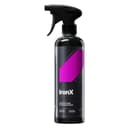
CarPro IronX Iron Remover

CarPro IronX Iron Remover

The product that made color-changing iron removers mainstream, and still the detailer's default. CarPro is explicit about why it matters: embedded iron does not just look like rust freckles, it can cause premature clear-coat failure.

Best for a full coating prep
$29.94 · View on Amazon

Price as of August 31, 2026. #ad How we’re funded

3
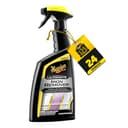
Meguiar's Ultimate Iron Remover

Meguiar's Ultimate Iron Remover

The cheapest route into chemical decontamination, at 24 oz for less than most 16 oz rivals. If iron removal has been the step you skip because of cost, this removes the excuse.

Best budget pick
$11.97 · View on Amazon

$13.9914% off

Price as of August 31, 2026. #ad How we’re funded

4
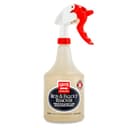
Griot's Garage Iron and Fallout Remover

Griot's Garage Iron and Fallout Remover

The big bottle. At 35 oz it is the one to buy if you are decontaminating a large vehicle or several cars, and Griot's rates it across multiple exterior surfaces rather than paint alone.

Best for large vehicles
$27.95 · View on Amazon

$29.997% off

Price as of August 31, 2026. #ad How we’re funded

5
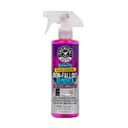
Chemical Guys Decon Pro Iron Remover & Wheel Cleaner

Chemical Guys Decon Pro Iron Remover & Wheel Cleaner

Sold as an iron remover and a wheel cleaner in one bottle, which is honest - the chemistry is the same, and brake dust is iron. If you want one product covering both jobs rather than two, this is it.

Best dual-purpose
$18.99 · View on Amazon

Price as of August 31, 2026. #ad How we’re funded

The picks in full

#1Top pick — Best overall

Adam's Polishes Iron Remover

The best value of the mainstream iron removers, and rated broadly - Adam's lists paint, wheels, motorcycles, RVs and boats. It is explicitly positioned as the step before clay, wax or coating, which is exactly the right mental model.

Strengths

  • Rated for paint, wheels, motorcycle, RV and boat surfaces
  • Positioned as the pre-clay, pre-coating step - the correct order
  • Noticeably cheaper per bottle than the specialist brands

Trade-offs

  • Same sulfurous smell as every product in this category
  • 16 oz goes quickly on a large vehicle
What it isColor-changing iron and fallout remover, 16 oz
Size16 oz
CoverageNot published
TypeColor-changing iron remover
Rated surfacesPaint, wheels, RV, boat
pHNot published

Specs read from the product listing, on August 18, 2026. “Not published” means the brand does not state that figure.

#2Best for a full coating prep

CarPro IronX Iron Remover

The product that made color-changing iron removers mainstream, and still the detailer's default. CarPro is explicit about why it matters: embedded iron does not just look like rust freckles, it can cause premature clear-coat failure.

Strengths

  • Color-changing chemistry shows you exactly where the contamination is
  • 500 mL with a sprayer - enough for a full-car decontamination
  • The long-standing benchmark other iron removers are compared against

Trade-offs

  • The smell is genuinely unpleasant and needs ventilation
  • Premium price per ounce in this group
What it isColor-changing iron remover, 500 mL (17 oz)
Size500 mL (17 oz)
CoverageNot published
TypeColor-changing iron remover
Rated surfacesPaint, wheels
pHNot published

Specs read from the product listing, on August 18, 2026. “Not published” means the brand does not state that figure.

#3Best budget pick

Meguiar's Ultimate Iron Remover

The cheapest route into chemical decontamination, at 24 oz for less than most 16 oz rivals. If iron removal has been the step you skip because of cost, this removes the excuse.

Strengths

  • 24 oz at a lower price than most 16 oz competitors
  • Widely stocked mainstream brand
  • Straightforward spray-dwell-rinse use

Trade-offs

  • Newer product with less community track record than IronX
  • Meguiar's does not publish a pH or concentration figure
What it isBudget iron remover, 24 oz
Size24 oz
CoverageNot published
TypeIron remover
Rated surfacesNot published
pHNot published

Specs read from the product listing, on August 18, 2026. “Not published” means the brand does not state that figure.

#4Best for large vehicles

Griot's Garage Iron and Fallout Remover

The big bottle. At 35 oz it is the one to buy if you are decontaminating a large vehicle or several cars, and Griot's rates it across multiple exterior surfaces rather than paint alone.

Strengths

  • 35 oz - roughly double the volume of the standard 16 oz bottles
  • Rated for multiple exterior surfaces, not just paint
  • Targets rust, embedded debris and fallout together

Trade-offs

  • Higher up-front price because of the size
  • Large bottle is awkward to use with a trigger sprayer all day
What it isIron and fallout remover, 35 oz
Size35 oz
CoverageNot published
TypeIron and fallout remover
Rated surfacesMultiple exterior surfaces
pHNot published

Specs read from the product listing, on August 18, 2026. “Not published” means the brand does not state that figure.

#5Best dual-purpose

Chemical Guys Decon Pro Iron Remover & Wheel Cleaner

Sold as an iron remover and a wheel cleaner in one bottle, which is honest - the chemistry is the same, and brake dust is iron. If you want one product covering both jobs rather than two, this is it.

Strengths

  • Explicitly rated for both paint decontamination and wheel cleaning
  • Removes the need for a separate wheel cleaner in a small collection
  • Mid-market pricing

Trade-offs

  • A dedicated wheel cleaner will out-clean it on heavily baked brake dust
  • Dual-purpose framing tempts people to use it too often on paint
What it isIron remover and wheel cleaner in one, 16 oz
Size16 oz
CoverageNot published
TypeColor-changing iron remover / wheel cleaner
Rated surfacesPaint, wheels
pHNot published

Specs read from the product listing, on August 18, 2026. “Not published” means the brand does not state that figure.

How to choose an iron remover

Volume, because a full car uses more than you expect

The most common mistake is buying a small bottle and then being sparing with it. Decontamination works by wetting the surface thoroughly and letting the chemistry dwell — a light mist that dries in ninety seconds does very little. A full car takes most of a 16 oz bottle, and a truck or SUV takes more. The larger bottles are usually the better buy.

Color-changing or not

The purple bleed is a diagnostic, not a gimmick. It tells you where contamination is concentrated (almost always the lower third of the car and behind the wheels), and it tells you when the reaction has finished. If you are new to decontamination, a color-changing product teaches you more about your own paint than any guide can.

Dedicated or dual-purpose

Brake dust is iron, so an iron remover cleans wheels too, and some are sold for both. That is genuinely useful for a small product collection. Just remember that a dedicated wheel cleaner will out-clean it on heavily baked-on dust, because it is formulated for the road film and grease around the iron as well.

How to use one properly

Wash the car first. Iron remover reacting with road film is wasted product — you want it reaching the paint. Work in the shade on a cool surface; heat makes it flash off before it can work, and the residue is unpleasant to remove.

Spray a panel until it is genuinely wet, not misted. Let it dwell for the time on the label — usually a few minutes — and watch the bleed. Do not let it dry. If the panel starts drying, mist it again. Then rinse thoroughly with plenty of water, and move to the next section.

Then run your fingertips over the paint inside a thin plastic bag. If it still feels gritty, there is non-ferrous contamination left — tar, sap, overspray — and that is what clay is for. If it feels like glass, you can skip claying entirely, which is the real reward for doing this step first.

Safety, honestly

These products smell genuinely bad — a sulfurous, egg-like odor that is inherent to the chemistry, not a sign of a cheap product. Use them outside or with the garage open, wear gloves and eye protection, and keep the spray off yourself and off hot brake components. Do not use them on bare, unsealed or polished aluminum. And do not use one every wash: this is a two-or-three-times-a-year job, not a maintenance step.

Because the chemistry is aggressive, it strips wax and can degrade a sealant. That is fine — you should be doing this immediately before re-protecting the car anyway. For where it sits in the wider process, see what paint decontamination actually is.
Frequently asked questions

What does an iron remover actually do?

It chemically dissolves the microscopic iron particles that embed themselves in your clear coat from brake dust, rail dust and industrial fallout. Those particles oxidize in place - they rust inside the paint - which is what produces the orange freckling you see on white and silver cars. The chemistry converts the iron into a water-soluble compound so it rinses away, typically turning purple as it reacts.

Do I still need to clay bar after using an iron remover?

Often not, and that is the point of doing it first. An iron remover dissolves ferrous contamination chemically, which is the majority of what makes paint feel rough. After rinsing, do the plastic-bag test: run your fingertips over the paint inside a thin bag. If it feels like glass you can skip claying entirely. If it still feels gritty, that is non-ferrous contamination - tar, sap, overspray - and clay is the right tool for it.

How often should I use an iron remover?

Two or three times a year for most cars, not every wash. It is a decontamination step, not maintenance - the right time is before applying a wax, sealant or ceramic coating, and seasonally if you drive in heavy traffic or park near a railway line. The chemistry is aggressive enough that using it constantly is both unnecessary and hard on your existing protection.

Why does iron remover smell so bad?

The sulfur-based chemistry that reacts with iron produces that egg-like odor, and it is inherent to how the product works rather than a sign of a cheap formulation - every effective iron remover smells similar. Use it outdoors or with the garage door open, and wear gloves. Some brands add fragrance to mask it, with limited success.

Will an iron remover damage my paint or wheels?

Not healthy clear coat used as directed - it is formulated to react with iron rather than with paint. The real cautions are letting it dry on the surface, using it on a hot panel in direct sun, and applying it to bare, unsealed or polished aluminum, which it can stain. Keep it wet, keep it in the shade, rinse thoroughly, and check your wheel finish before spraying it on.

Sources

Keep reading