Clay & Coat

Is Wheel Cleaner Safe on Paint?

Every wheel cleaner we stock is sold as acid-free or pH-balanced, and not one of them publishes a pH number or a dwell time in minutes. What that actually means for your paint, your brakes and your matte wheels.

By Stephen V.Last updated How we pick

How this is funded: we earn a commission if you buy through our links, at no extra cost to you. It never changes which product we recommend, and we’ll tell you when we’d skip one. Full disclosure.

Yes, with one condition that does all the work: do not let it dry on the paint. Every wheel cleaner on this site is sold as acid-free or pH-balanced, and overspray from one of those landing on wet paint and rinsed off a minute later is not what damages cars. What damages cars is a chemical left to evaporate on a hot panel in the sun, concentrating as it goes.

There is a second thing worth saying plainly, because it reframes everything below. We went looking for a published pH figure on all five wheel cleaners we stock, and for a dwell time in minutes. Neither exists. Meguiar’s Hot Rims Black is the most forthcoming of them — it states it is acid-free and pH-balanced so it “won’t attack the coating on your wheels” and describes a foaming gel for “maximum dwell time” — and even that page publishes no pH number and no dwell time. So the chemistry claims across this whole category are adjectives.

What each cleaner publishes

CleanerStated chemistryCoating-safe rowFormpH figure
Sonax Full EffectAcid-free, iron-reactiveYesReady to useNot published
Adam’s Wheel CleanerpH-balanced, iron-reactiveYesReady to useNot published
Meguiar’s Hot Rims BlackAcid-free, pH-balanced, foamingStated for wheel coatingsFoaming gelNot published
Chemical Guys DiablopH-balanced concentrateYesDilutableNot published
Griot’s Heavy DutyHeavy-duty, clingingNot publishedReady to useNot published

The useful reading of that table is the bottom row. Four of the five publish a coating-safety statement and the heavy-duty one does not — which tells you something about where it sits without anybody having to make a claim. Use it on neglected wheels and go back to a maintenance cleaner afterwards.

Dwell time is the variable, not chemistry

Here is the mechanism that matters. A wheel cleaner is mostly water carrying active ingredients. As long as it is wet, the actives are at their intended dilution. As it evaporates, they concentrate — so a cleaner that is harmless at its bottle strength becomes progressively stronger the longer it sits on a hot surface, until what is left is a residue of active ingredient on your clear coat.

Everything in the method on this page follows from that single fact. Cool wheels, because heat drives evaporation. One wheel at a time, because spraying four means the first dwells four times as long. Pre-rinsing the arch and the paint, because wet paint dilutes overspray instead of concentrating it. Hose running before you spray, because the only timing that matters is how long until the rinse.

Three finishes that need more care than paint does

  • Polished or chrome lips. The finish most prone to permanent cloudiness from an aggressive cleaner. Use the mildest thing that works, keep dwell short, and agitate rather than waiting.
  • Matte and satin wheels. The risk is not the metal, it is the matte coating. A product that leaves any sheen ruins the look and nothing restores it. Use a cleaner formulated for the finish, and keep tire shine off the wheel face for the same reason.
  • Carbon-ceramic brake discs. A specific exclusion several makers state. If your car has them, keep cleaner off the disc face.

Standard steel discs are fine. The only brake consequence of cleaning wheels is wet pads — expect a soft first stop and drive gently until they dry.

If overspray has already dried on paint

Do not scrub it. Re-wet the area, wash it with a pH-neutral shampoo, and look at it in good light. Most of the time that is the end of it. If a mark or a dulled patch remains, you have surface staining rather than cleaner still sitting there, and that is a decontamination or correction job — start with an iron remover on the panel and, if the mark survives, see the paint correction guide.

The version of this page you should actually act on is short: wheels first, cool, one at a time, hose running, rinse the arch and the paint below. Do that and the chemistry question stops mattering — which is just as well, because the makers are not publishing the numbers that would answer it.
Which cleaner for which wheel

Ranked on published specs, coverage and buyer fit. Select a row to jump to the full write-up. We haven’t tested these in a lab — here is exactly what we do instead.

#ProductBest forPrice
1
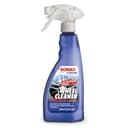
Sonax Wheel Cleaner Full Effect

Sonax Wheel Cleaner Full Effect

The color-changing, acid-free cleaner detailers trust: spray it on, watch it bleed purple as it dissolves bonded brake dust and iron, then rinse. Safe on virtually every wheel finish.

The safe default for almost any wheel
$16.99 · View on Amazon

Price as of October 17, 2026. #ad How we’re funded

2
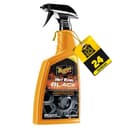
Meguiar's Hot Rims Black Wheel Cleaner

Meguiar's Hot Rims Black Wheel Cleaner

A foaming cleaner tuned for gloss-black and painted wheels, where you want cleaning power without anything harsh on the finish. Clings well so it dwells where it's sprayed.

Best for painted, gloss-black and matte wheels
$13.49 · View on Amazon

Price as of October 17, 2026. #ad How we’re funded

3
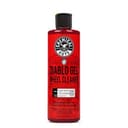
Chemical Guys Diablo Gel Wheel & Rim Cleaner

Chemical Guys Diablo Gel Wheel & Rim Cleaner

A concentrated gel you dilute to strength, which makes it the cheapest per use if you clean wheels often. Dial it strong for filthy wheels, weak for a maintenance clean.

Best if you want to control the strength
$18.99 · View on Amazon

Price as of October 17, 2026. #ad How we’re funded

4
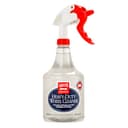
Griot's Garage Heavy-Duty Wheel Cleaner

Griot's Garage Heavy-Duty Wheel Cleaner

The one for wheels that haven't been cleaned in months. It's the most aggressive here on baked-on brake dust — which is exactly why you use it sparingly and rinse thoroughly.

Only for genuinely neglected wheels
$21.99 · View on Amazon

Price as of October 17, 2026. #ad How we’re funded

#1Top pick — The safe default for almost any wheel

Sonax Wheel Cleaner Full Effect

The color-changing, acid-free cleaner detailers trust: spray it on, watch it bleed purple as it dissolves bonded brake dust and iron, then rinse. Safe on virtually every wheel finish.

Who it is for: anyone who wants one bottle and does not want to think about it. The listing publishes an acid-free, iron-reactive chemistry, ready to use, and states it is safe on coatings. Iron-reactive means it changes color as it dissolves embedded ferrous particles, so you can see the work happening and know when to rinse.

Honest cons: no pH figure and no dwell time in minutes are published, so “acid-free” is a claim rather than a measurement. Ready-to-use also means you are paying to ship water, and it is the priciest per ounce here.

Strengths

  • Acid-free and pH-balanced, so it's safe on coated and delicate wheels
  • Bleeds purple as it reacts with iron — you can see it working
  • Ready to use, no dilution to get wrong

Trade-offs

  • Premium price per bottle
  • The sulfur smell as it activates is strong
What it isAcid-free, iron-reactive (color-change), ready to use
Size500 mL
CoverageMany wheels per bottle — a few sprays each
ChemistryAcid-free, iron-reactive
Safe on coatingsYes
DilutionReady to use

Specs read from the product listing, on October 4, 2026. “Not published” means the brand does not state that figure.

#2Best for painted, gloss-black and matte wheels

Meguiar's Hot Rims Black Wheel Cleaner

A foaming cleaner tuned for gloss-black and painted wheels, where you want cleaning power without anything harsh on the finish. Clings well so it dwells where it's sprayed.

Who it is for:the owner of factory gloss-black or matte-finish wheels, where the coating on the wheel is the thing at risk rather than the metal. Meguiar’s formulates it for all black wheel finishes — gloss, matte, satin, black chrome and black accents — and states it is acid-free and pH-balanced so it “won’t attack the coating on your wheels”. It is a foaming gel, for “great coverage and maximum dwell time”.

Honest cons: Meguiar’s publishes no dwell time in minutes and no pH figure either, so “maximum dwell time” has no number attached. A 24 oz bottle is also a lot of product to own if you only have one set of wheels.

Strengths

  • Formulated to be safe on painted and black wheels
  • Clinging foam dwells on vertical surfaces
  • Cheap and easy to find

Trade-offs

  • Less aggressive on heavy baked-on brake dust
  • You'll still need a brush for the barrels
What it isFoaming cleaner tuned for painted/black wheels
Size24 fl oz
CoverageMany wheels per bottle
ChemistryFoaming, wheel-safe
Best onPainted / black wheels
DilutionReady to use

Specs read from the product listing, on July 18, 2026. “Not published” means the brand does not state that figure.

#3Best if you want to control the strength

Chemical Guys Diablo Gel Wheel & Rim Cleaner

A concentrated gel you dilute to strength, which makes it the cheapest per use if you clean wheels often. Dial it strong for filthy wheels, weak for a maintenance clean.

Who it is for:someone cleaning wheels often who wants it weak for maintenance and strong for a neglected set. The listing publishes a pH-balanced concentrate, dilutable to strength, and states it is safe on coatings — which makes it the cheapest per wash of the options here.

Honest cons: a concentrate puts the dilution decision on you, and Chemical Guys publishes no ratio table on the listing we read. Mixed too strong and the acid-free claim is still true but the dwell discipline matters more.

Strengths

  • Concentrated — dilute to the strength the job needs
  • Cheapest per use when diluted
  • pH-balanced and coating-safe

Trade-offs

  • You have to mix it — no ready-to-use convenience
  • Gel clings well but needs a good rinse
What it isConcentrated, dilutable gel wheel cleaner
Size16 fl oz concentrate
CoverageMakes multiple bottles of ready-to-use when diluted
ChemistrypH-balanced concentrate
Safe on coatingsYes
DilutionDilutable to strength

Specs read from the product listing, on July 18, 2026. “Not published” means the brand does not state that figure.

#4Only for genuinely neglected wheels

Griot's Garage Heavy-Duty Wheel Cleaner

The one for wheels that haven't been cleaned in months. It's the most aggressive here on baked-on brake dust — which is exactly why you use it sparingly and rinse thoroughly.

Who it is for: a set of wheels with baked-on brake dust that a maintenance cleaner will not shift. The listing sells it as heavy-duty and clinging, which is what you want when the deposit needs real dwell to break down.

Honest cons: this is the one on this page whose listing does not publish a coating-safety row, and it is the wrong first choice on delicate finishes. Treat a heavy-duty cleaner as a rescue product and go back to a maintenance cleaner afterwards.

Strengths

  • Strong cleaning power on stubborn, baked-on dust
  • Clinging formula that dwells
  • Griot's quality and support

Trade-offs

  • Aggressive — not for daily use on delicate finishes
  • Rinse well and don't let it dry on the wheel
What it isHeavy-duty cleaner for neglected wheels
Size35 fl oz
CoverageMany wheels per bottle
ChemistryHeavy-duty, clinging
Best onHeavily soiled wheels
DilutionReady to use

Specs read from the product listing, on July 18, 2026. “Not published” means the brand does not state that figure.

Coating the wheels is the real answer

The honest long game is to stop needing a strong cleaner. A ceramic coating on the wheel face means brake dust sits on the coating rather than bonding to the finish, and comes off with shampoo and a soft brush. That converts a chemical job into a rinse, which removes the paint risk on this page entirely.

See ceramic coating for wheels for the application, and the wheel brush roundup for the tools that do the mechanical half.

A note on safety. Cool wheels only, never hot ones. A wheel that has just been driven will flash-dry a cleaner before it can work, and a dried chemical on an alloy is how staining happens. Keep cleaner off carbon-ceramic brake discs if the vehicle has them — that is a specific exclusion several makers state. And never let any wheel cleaner dry anywhere, on the wheel or on the paint beside it: have the hose running before you spray.

Frequently asked questions

Is wheel cleaner safe on car paint?

Overspray from an acid-free, pH-balanced wheel cleaner that lands on wet paint and is rinsed off within a minute or two is not the problem people fear. The problem is a cleaner left to dry on paint in the sun, which concentrates as the water evaporates and can stain or mark the clear coat. So the practical rule is about procedure rather than chemistry: wet the surrounding paint before you spray, do one wheel at a time, and rinse the wheel, the arch and the paint below it before anything dries. All five wheel cleaners on this site are sold as acid-free or pH-balanced, and none of them publishes a pH number.

Is acid wheel cleaner safe?

Acid-based cleaners exist, work fast on heavy brake dust, and are not something we recommend or stock - and the reason is margin for error rather than ideology. An acidic cleaner on a cool wheel, rinsed promptly, is used routinely in the trade. The same cleaner on a hot wheel, left to dwell too long, or on a polished or anodised finish, causes staining and etching that does not come back. Every cleaner we list is acid-free, which buys you that margin. If a listing does not state its chemistry at all, that is information too.

Will wheel cleaner damage brakes?

Standard steel brake discs and pads are not harmed by a rinse-off wheel cleaner used normally. The specific exclusion worth knowing is carbon-ceramic brakes, which several makers tell you to keep cleaner off the disc surface of - and if your car has them you already know they are expensive. The more mundane brake issue is water: cleaning wheels leaves wet discs, so expect a soft first stop and drive gently for a few hundred feet until they dry.

Can you use wheel cleaner on chrome or polished wheels?

Acid-free cleaners are the ones to use here, and they are what we stock. Chrome and polished aluminum are the finishes most prone to permanent staining from an aggressive cleaner, and a polished lip in particular will go cloudy and never come back. Use the mildest cleaner that works, keep dwell short, agitate rather than relying on chemistry, and rinse hard. Do not experiment on a polished lip - test somewhere invisible first, which is advice several makers print themselves.

Is wheel cleaner safe on matte black wheels?

Use one formulated for the finish. Meguiar's Hot Rims Black is the product on this site that states it: formulated for all black wheel finishes including gloss, matte, satin and black chrome, acid-free and pH-balanced so it 'won't attack the coating on your wheels'. The risk on a matte wheel is not the metal, it is the matte coating - a cleaner or a dressing that leaves a sheen ruins the look, and nothing restores it. Keep tire shine off matte wheel faces for the same reason.

How long should you let wheel cleaner dwell?

Not one of the five wheel cleaners on this site publishes a dwell time in minutes, which is a real gap. The working rule in the absence of a published figure: never let it dry. On an iron-reactive cleaner the color change tells you the chemistry is working and fading activity tells you it is done - typically a couple of minutes on a cool wheel. If a wheel needs longer than that, you need agitation or a heavy-duty cleaner, not more dwell time.

Should you clean wheels before or after washing the car?

Before, always. Wheels carry the dirtiest contamination on the car and need the strongest chemicals, so doing them first means that mess and those chemicals get rinsed away before the paint is wet and before your wash mitt exists. Doing wheels last means carrying brake dust into your wash bucket. The pH-neutral shampoo wash that follows also removes any overspray residue from the lower panels, which is a useful second reason for the order.

Sources

  • Meguiar's — Hot Rims Black Wheel Cleaner (G230524, 24 oz) — Maker page: formulated to safely wash all black wheel finishes — gloss, matte, satin, black chrome and wheels with black accents; stated to be acid-free and pH-balanced so it "won't attack the coating on your wheels" while it dissolves brake dust, road grime and grease; a foaming gel for "great coverage and maximum dwell time". The page publishes NO dwell time in minutes and NO pH figure (accessed October 11, 2026)
  • Chemical Guys — Two Bucket Method Car Wash Guide — Separate wash and rinse buckets keep contaminated water off the mitt — the main source of wash-induced swirl marks (accessed July 18, 2026)
  • Car Care Council — Car Care Guide (Be Car Care Aware) — Industry guidance on tire and wheel maintenance — inflation, rotation and inspection (accessed July 18, 2026)
  • Chemical Guys — Road Salt On Cars: How It Damages Your Vehicle & How To Prevent It — Manufacturer guide: "Salt accelerates corrosion, clings to undercarriages, and works its way into seams where rust forms quietly"; salt "attracts moisture and creates a corrosive mixture that breaks down clear coat and paint", exposing metal to rust; the areas that "trap salt and often develop rust first" are wheel wells, brake lines, exhaust parts, the frame, rocker panels and body seams; rust can begin "within weeks when salt remains on the vehicle and moisture is present"; recommends "weekly washes" through winter and to "flush wheel wells, rims, and the underbody to remove packed-in salt"; pH-balanced snow foams "break down salt and winter grime without disturbing waxes, sealants, or ceramic coatings"; a ceramic coating creates "a slick, hydrophobic layer that blocks salt, slush, and contaminants from bonding to your paint". The page publishes NO temperature or humidity threshold (accessed October 11, 2026)

Keep reading