Clay & Coat

Best Paint Decontamination Kit

Decontamination is three stages and a fourth nobody mentions. The chemical pass, the tar pass, the clay pass, and the protection you have to put back - picked as one shopping list.

By Stephen V.Last updated How we pick

The verdict

Buy CARPRO TriX as the chemical half and the Meguiar’s Smooth Surface Clay Kit as the mechanical half. TriX is the one product here that does the iron stage and the tar stage in a single pass — it is rated for tar, iron and brake dust, sap and bugs, and it arrives with its own sprayer. That pairing is for anyone decontaminating a car once or twice a year before a polish, a wax or a coating.

The budget pick is Meguiar’s Ultimate Iron Remover— the cheapest product here that performs a real chemical decontamination, in a 24 oz bottle that is the largest in the group. Pair it with the same clay kit and you have the whole sequence for well under the price of one professional detail.

And the stage nobody sells you: Cerakote Rapid Ceramic Paint Sealant. Decontamination strips whatever protection the paint had. Finishing the job without putting protection back is the one genuine mistake this page is trying to prevent.

Paint decontamination is the step between washing and everything good. A wash removes what is sitting on the paint; decontamination removes what has bonded to it — embedded iron particles from brake dust and rail dust, tar from road surfaces, tree sap, bug residue and industrial fallout. You can feel the difference with a fingertip: washed paint that still feels like fine sandpaper is contaminated paint.

Griot’s puts the stakes in the most useful terms we have seen from any maker. Prepping, they write, “reveals completely clean, bare paint and protects delicate surfaces guaranteeing the best possible results with subsequent steps”, and above-surface contaminants or old wax residue “can drastically effect results in paint correction or future wax or sealant application”. That is why this is a purchase and not an optional flourish: every dollar you spend on a coating, a sealant or a polish is wasted if it goes on over bonded contamination.

There are three stages and they are not interchangeable. Chemical iron removaldissolves embedded ferrous particles — the products change colour as they react, which is the only visual confirmation in the whole process. Solvent tar removal handles the sticky, oil-soluble half that an iron remover does nothing to. Mechanical decontamination— clay — shears off whatever is still bonded after the chemicals have done their work. Doing clay first means claying grit across your paint, which is why the order is chemicals, then clay, always.

The fourth stage is the one no kit on the market includes. Every one of these products strips wax and sealant, and most of them say so or imply it. A decontaminated car is a bare car, and bare paint picks up contamination faster than protected paint does. The sealant at the bottom of this page is not an upsell — it is the difference between doing this once a year and doing it every three months.

How this is funded: we earn a commission if you buy through our links, at no extra cost to you. It never changes which product we recommend, and we’ll tell you when we’d skip one. Full disclosure.

Quick picks

Ranked on published specs, coverage and buyer fit. Select a row to jump to the full write-up. We haven’t tested these in a lab — here is exactly what we do instead.

#ProductKey specsBest forPrice
1
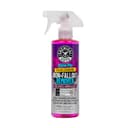
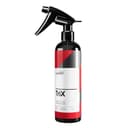
CARPRO TriX Tar & Iron Remover (500 mL, with sprayer)

CARPRO TriX Tar & Iron Remover (500 mL, with sprayer)

The efficient pick if you are decontaminating properly: the listing describes it as combining IronX with TarX, so one product does the iron-fallout pass and the tar pass together instead of you doing two.

Type
Combined solvent + iron remover
Rated for
Tar, iron/brake dust, sap, bugs
Best overall - two stages in one pass
$25.36 · View on Amazon

Price as of November 12, 2026. #ad How we’re funded

2
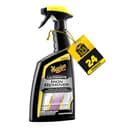
Meguiar's Ultimate Iron Remover

Meguiar's Ultimate Iron Remover

The cheapest route into chemical decontamination, at 24 oz for less than most 16 oz rivals. If iron removal has been the step you skip because of cost, this removes the excuse.

Type
Iron remover
Budget pick
$11.37 · View on Amazon

$13.9919% off

Price as of November 12, 2026. #ad How we’re funded

3
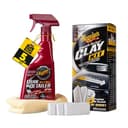
Meguiar's Smooth Surface Clay Kit

Meguiar's Smooth Surface Clay Kit

The most beginner-proof clay: a very forgiving bar plus Meguiar's Quik Detailer as the lubricant, from a brand you can buy anywhere. If you've never clayed a car, start here.

Grade
Fine (soft)
Best clay stage
$17.19 · View on Amazon

$29.9943% off

Price as of November 12, 2026. #ad How we’re funded

4
Chemical Guys Decon Pro Iron Remover & Wheel Cleaner

Chemical Guys Decon Pro Iron Remover & Wheel Cleaner

Sold as an iron remover and a wheel cleaner in one bottle, which is honest - the chemistry is the same, and brake dust is iron. If you want one product covering both jobs rather than two, this is it.

Type
Color-changing iron remover / wheel cleaner
Rated surfaces
Paint, wheels
Best for paint and wheels together
$15.29 · View on Amazon

$19.9924% off

Price as of November 12, 2026. #ad How we’re funded

5
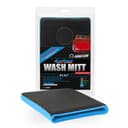
Nanoskin AutoScrub Clay Mitt (Fine)

Nanoskin AutoScrub Clay Mitt (Fine)

A reusable clay mitt that survives being dropped and covers a car far faster than a bar. It marrs more than a bar, so it belongs on a car you'll polish afterward — which is most decontamination jobs anyway.

Grade
Fine
Fastest on a whole car
$52.99 · View on Amazon

Price as of November 12, 2026. #ad How we’re funded

6
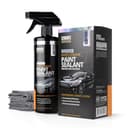
Cerakote Rapid Ceramic Paint Sealant

Cerakote Rapid Ceramic Paint Sealant

The fastest option on this list, and the one that blurs the sealant and spray-coating line. If your objection to sealants is the time they take, this removes it - at the cost of the depth a paste will give you.

Type
Ceramic (SiO2) sealant
The stage people skip
$19.69 · View on Amazon

Price as of November 12, 2026. #ad How we’re funded

Specs as published on each product’s own listing, read between July 18, 2026 and October 6, 2026. Prices are live, as of November 12, 2026. A figure a brand does not publish is left out of this table and shown as “Not published” in that product’s full write-up below.

The coverage & cost-per-use math

The number nobody else on the first page of Google shows you. We take each product’s stated size and coverage, then divide the current price by the uses per unit — so the per-use figure is live arithmetic, not a number we typed. Here’s exactly how we work it out.

ProductSizeCoverage
Meguiar's Smooth Surface Clay KitNot publishedA car or two per kit
Nanoskin AutoScrub Clay Mitt (Fine)Not publishedReusable for many cars over its life

The picks in full

#1Top pick — Best overall - two stages in one pass

CARPRO TriX Tar & Iron Remover (500 mL, with sprayer)

The efficient pick if you are decontaminating properly: the listing describes it as combining IronX with TarX, so one product does the iron-fallout pass and the tar pass together instead of you doing two.

Who it is for: anyone decontaminating a whole car and not wanting to do two full laps of it. One bottle, one dwell, both chemical stages.

It is the only product on this page rated for tar, iron and brake dust, sap and bugs together, and it is supplied with its own sprayer — which sounds trivial until you have decanted a litre of solvent into a generic trigger head. Combining a solvent and an iron remover is the thing that saves the time here: ordinarily tar needs a solvent pass and iron needs a reactive pass, and most people end up doing both on separate weekends or skipping one.

Two honest limits. CARPRO publishes nothing about whether it is safe over a ceramic coating, so on a coated car treat it as unknown and test an inconspicuous panel first. And 500 mL is the smallest volume in this group — enough for a car, not for a season.

Strengths

  • Combines two decontamination jobs - fewer passes over the paint
  • Listing names brake dust, sap, dirt and bugs alongside tar
  • 500 mL with a sprayer is the right size for a car or two

Trade-offs

  • A combined product is a compromise against either dedicated chemical
  • Iron removers smell strongly as they react - work outdoors
What it isCombined tar and iron remover, 500 mL with sprayer
Size500 mL (17 oz)
CoverageNot published
TypeCombined solvent + iron remover
Rated forTar, iron/brake dust, sap, bugs
Supplied withSprayer
Safe over coatingsNot published

Specs read from the product listing, on October 6, 2026. “Not published” means the brand does not state that figure.

#2Budget pick

Meguiar's Ultimate Iron Remover

The cheapest route into chemical decontamination, at 24 oz for less than most 16 oz rivals. If iron removal has been the step you skip because of cost, this removes the excuse.

Who it is for: the lowest-cost honest entry into chemical decontamination, and anyone who wants volume rather than a combined product.

It is the cheapest item on this page that performs a genuine decon stage, and at 24 oz it is also the biggest bottle — which matters because iron removers are used generously and running out mid-car is how panels get skipped. If you buy nothing else chemical, buy this: iron is the contamination that is on every car that has ever been driven behind another car.

What it does not do is tar, and Meguiar’s publishes no rated-surfaces list for it — so for wheels or trim, the Decon Pro below states its scope and this does not. Our iron remover roundup compares the whole category.

Strengths

  • 24 oz at a lower price than most 16 oz competitors
  • Widely stocked mainstream brand
  • Straightforward spray-dwell-rinse use

Trade-offs

  • Newer product with less community track record than IronX
  • Meguiar's does not publish a pH or concentration figure
What it isBudget iron remover, 24 oz
Size24 oz
CoverageNot published
TypeIron remover
Rated surfacesNot published
pHNot published

Specs read from the product listing, on August 18, 2026. “Not published” means the brand does not state that figure.

#3Best clay stage

Meguiar's Smooth Surface Clay Kit

The most beginner-proof clay: a very forgiving bar plus Meguiar's Quik Detailer as the lubricant, from a brand you can buy anywhere. If you've never clayed a car, start here.

Who it is for: a first-timer, and anyone who wants the clay and the lubricant in one box rather than discovering the hard way that clay without lube marrs paint.

Fine, soft grade — which is exactly right for a first attempt, because the aggressiveness of clay is a trade against marring and the soft grades buy you forgiveness. Meguiar’s includes Quik Detailer as the luber, which removes the most common beginner mistake in the whole process.

Their own inspection advice is the part worth internalising: wash and dry, then “rub your fingertips across the top surfaces” — if the paint feels rough, that roughness is bonded contamination, and on a light-coloured car it shows as small dark specks on the rear and lower panels. Meguiar’s publishes no claying interval and no number of uses per bar. A dropped bar is finished; throw it out rather than rinsing it. Our clay bar guide covers pressure, pattern and panel order.

Strengths

  • Very soft, forgiving clay
  • Uses Meguiar's Quik Detailer as a proven lubricant
  • Available at any auto store

Trade-offs

  • Soft clay is slow on heavy contamination
  • Bars are on the smaller side
What it isBeginner-friendly fine clay + Quik Detailer luber
SizeNot published
CoverageA car or two per kit
GradeFine (soft)
IncludesClay + Quik Detailer
ReusableUntil dropped or fully soiled

Specs read from the product listing, on July 18, 2026. “Not published” means the brand does not state that figure.

#4Best for paint and wheels together

Chemical Guys Decon Pro Iron Remover & Wheel Cleaner

Sold as an iron remover and a wheel cleaner in one bottle, which is honest - the chemistry is the same, and brake dust is iron. If you want one product covering both jobs rather than two, this is it.

Who it is for: someone who wants one bottle for the paint decon and the wheels, which is a sensible economy because wheels are where the iron comes from in the first place.

It is a colour-changing iron remover explicitly rated by Chemical Guys for paint and wheels, and that published scope is the reason it is here rather than purely in the iron-remover roundup: most iron removers publish nothing about where they may be used. The colour change is also genuinely useful on wheels, because it shows you where the embedded fallout actually is rather than where you assumed it was.

Note the tension with the budget pick: this costs more and the bottle is smaller, and what you are buying is a stated surface rating. If your wheels are coated or delicately finished, read what is actually safe on what before you spray anything.

Strengths

  • Explicitly rated for both paint decontamination and wheel cleaning
  • Removes the need for a separate wheel cleaner in a small collection
  • Mid-market pricing

Trade-offs

  • A dedicated wheel cleaner will out-clean it on heavily baked brake dust
  • Dual-purpose framing tempts people to use it too often on paint
What it isIron remover and wheel cleaner in one, 16 oz
Size16 oz
CoverageNot published
TypeColor-changing iron remover / wheel cleaner
Rated surfacesPaint, wheels
pHNot published

Specs read from the product listing, on August 18, 2026. “Not published” means the brand does not state that figure.

#5Fastest on a whole car

Nanoskin AutoScrub Clay Mitt (Fine)

A reusable clay mitt that survives being dropped and covers a car far faster than a bar. It marrs more than a bar, so it belongs on a car you'll polish afterward — which is most decontamination jobs anyway.

Who it is for:someone doing this on more than one car, or on a large vehicle, or every season — where the time saved and the reusability pay for the higher price.

A fine-grade reusable clay mitt covers panels dramatically faster than a bar and, critically, survives being dropped, which a bar does not. On a full-size car that difference is the whole afternoon. It is the most expensive item on this page and the only one that is a tool rather than a consumable, so the cost-per-use arithmetic gets better every time you use it.

One thing to plan for: a mitt marrs slightly, so the correct sequence afterwards is a polish, not a wax. If you were not going to polish, use the bar. Our bar against mitt comparison sets out exactly when each is the right call.

Strengths

  • Reusable — rinse it off if you drop it, no more single-use bars
  • Covers a whole car far faster than a bar
  • Long-term cost-per-use is the lowest here

Trade-offs

  • Marrs more than a bar — plan to polish after
  • Higher up-front cost than a clay kit
What it isReusable fine-grade clay mitt
SizeNot published
CoverageReusable for many cars over its life
GradeFine
ReusableYes — survives being dropped
Follow withA polish (it marrs slightly)

Specs read from the product listing, on July 18, 2026. “Not published” means the brand does not state that figure.

#6The stage people skip

Cerakote Rapid Ceramic Paint Sealant

The fastest option on this list, and the one that blurs the sealant and spray-coating line. If your objection to sealants is the time they take, this removes it - at the cost of the depth a paste will give you.

Who it is for: everyone who just decontaminated a car. This is not an optional extra; it is the last line of the sequence.

Every product above strips protection. Iron removers and solvents take wax and sealant off with the contamination, and clay removes whatever survived. So the car you finish with is bare — glossier than it has been in a year, and more vulnerable than it has been since it left the factory. Bare paint re-contaminates faster, which means skipping this step guarantees you do all of the above again sooner.

We pick the rapid SiO2 sealant rather than a coating or a wax for one specific reason: at the end of a decontamination day, the probability that anyone starts a multi-hour coating install is approximately zero. This is the protection you will actually apply. Cerakote publishes no durability figure for it, so treat it as a months product and top it up. If you have the energy for the full job, the sub-$100 coating page is the upgrade, and the sealant roundup covers the longer-lasting options.

Strengths

  • Ceramic sealant chemistry applied as a rapid wipe-on product
  • 14 oz bottle covers a full vehicle comfortably
  • No cure window drama compared with a true coating

Trade-offs

  • Speed comes at the expense of the depth a paste sealant gives
  • Rated durability is not published on the listing
What it isRapid-application ceramic paint sealant, 14 oz
Size14 oz
CoverageNot published
TypeCeramic (SiO2) sealant
Rated durabilityNot published
FormLiquid spray

Specs read from the product listing, on August 18, 2026. “Not published” means the brand does not state that figure.

The order, and why it is not negotiable

Wash first. Two buckets, clean mitt, loose dirt gone. Spraying an iron remover onto a dirty car wastes most of it on dirt.

Chemicals second.Iron remover, then tar remover — or TriX for both at once. Work cool and out of direct sun, let the product dwell for as long as its own label states, and rinse thoroughly. These products are doing a reaction, and heat and sunlight make them dry on the paint instead, which is the one way to turn a decon step into a problem.

Clay third.Never first. Clay shears off what is bonded; if the loose and chemically-removable contamination is still there, the clay is dragging it. Use plenty of lubricant, work in short straight passes in a cross-hatch pattern, keep off the pressure, and work from the top down so the dirtiest surfaces come last — Griot’s publishes exactly that method, including re-lubricating and wiping the clay “every other panel or so. More often if the paint is especially contaminated”.

Protect fourth, the same day. See above. This is the step that decides how long the other three last.

How to tell whether you need this at all

Wash and dry the car, then run your fingertips lightly across the roof, the bonnet and the boot lid — the horizontal surfaces, which collect the most fallout. Smooth paint needs nothing. Paint that feels like very fine sandpaper is contaminated, and Meguiar’s describes the sensation as “micro speed bumps”. On a light-coloured car you can often see it as well as feel it: small dark specks concentrated on the rear and lower panels, which is rail dust and brake fallout thrown forward by the car in front and backward by your own wheels.

A rough guide on frequency: before any polish, before any wax, and always before a coating. Beyond that, a car parked outside near traffic or rail lines wants it more often than a garaged weekend car. No maker publishes an interval in months, so anyone who gives you one is guessing — use the fingertip test instead. Our do you need to clay bar page is the decision tree.

What this kit does not include, and why

A dedicated wheel cleaner. The Decon Pro covers wheels, and a strong wheel cleaner is a different chemistry aimed at a different deposit. If your wheels are the actual problem, the wheel cleaner roundup is the right page and this comparison explains where the two overlap.

A polish.Decontamination removes what is on the paint; it does not remove scratches, swirls or etched water spots, which are defects in the paint. If the car needs both, decon first and then correct — the paint correction kit page is the next shopping list, and it starts where this one ends.

An all-purpose cleaner. Useful for trim, wheel wells and engine bays, and not part of paint decontamination. See the APC roundup.

Safety, in plain terms

These are the most chemically active products most people will use on a car. Iron removers smell strongly as they react, solvents are solvents, and neither belongs on hot paint or in a closed garage. Work outside or with the door open, wear gloves, keep both off plastic trim and rubber for longer than the label allows, rinse generously, and never let any of it dry on the surface. Where a listing does not state whether a product is safe over a ceramic coating — and TriX does not — treat that silence as a reason to test an inconspicuous area rather than as permission.

About the prices on this page

Every figure in the table is read live from the price layer and carries the date it was read. We store no price in this page’s content, which is why you will never see a stale number — if the daily refresh stops, the figures disappear and the buttons fall back to “Check price on Amazon”.
Frequently asked questions

What is in a paint decontamination kit?

Three stages and a fourth that nobody sells you. A chemical iron remover for embedded ferrous particles from brake and rail dust; a solvent tar remover for the sticky, oil-soluble contamination an iron remover cannot touch; and clay for whatever is still bonded after the chemicals. The fourth is protection - a sealant, wax or coating - because every product in the first three stages strips whatever protection the paint had. CARPRO TriX combines the first two stages in one bottle, which is why it is our top pick.

Do you clay before or after an iron remover?

After, always. Clay works by shearing off contamination that is bonded to the paint, and it has no way of distinguishing between bonded contamination and loose grit - so if the chemically-removable material is still on the surface, the clay drags it across your paint. The correct order is wash, iron remover, tar remover, then clay. Doing it the other way round is the most common way a decontamination session puts marring into paint it was meant to improve.

How do I know if my paint needs decontaminating?

Wash and dry the car, then run your fingertips lightly across the horizontal panels - roof, bonnet, boot lid. Smooth paint needs nothing. Paint that feels like very fine sandpaper is contaminated; Meguiar's describes the sensation as micro speed bumps. On a light-coloured car you can often see it too, as small dark specks concentrated on the rear and lower surfaces, which is rail dust and brake fallout. No maker publishes a decon interval in months, so the fingertip test is the honest guide rather than a schedule.

Does decontamination remove wax or ceramic coating?

Yes, and that is the thing people are most often surprised by. Iron removers and tar solvents strip wax and sealant along with the contamination, and clay removes whatever survived the chemicals. So a decontaminated car is a bare car. On a ceramic-coated car it is more complicated: some products state they are coating-safe and many, including CARPRO TriX, publish nothing either way - treat that silence as a reason to test an inconspicuous panel first, not as permission. Either way, plan to re-protect the same day.

How much does it cost to decontaminate a car yourself?

Far less than one professional detail, and the products last several cars. The chemical stage and the clay stage together are the bulk of it, and the clay mitt option is the only item that is a reusable tool rather than a consumable - which makes its cost per use fall every time you use it. Every price in the table on this page is read live from the price layer and stamped with its date, so the total is the current one rather than an estimate from when the page was written.

Can you use a clay bar on glass and wheels?

Clay works on any hard, smooth surface, and glass in particular benefits - bonded contamination on a windscreen is part of why wipers judder. Wheels are a different question: clay will work on a smooth painted or clear-coated wheel face, but it is slow, and the chemistry is the better tool there because an iron remover reaches into the barrel and the spoke gaps where your hand will not go. The Chemical Guys Decon Pro is the pick here that publishes a rating for both paint and wheels.

Clay bar or clay mitt?

A bar if you are doing one car occasionally, a mitt if you are doing this regularly or on something large. The mitt is dramatically faster across a panel and survives being dropped, which a bar does not - a dropped bar is finished and belongs in the bin, because it has picked up driveway grit. The trade is that a mitt marrs slightly more, so the correct next step after one is a polish rather than a wax. If you were not going to polish, use the bar.

Sources

  • Chemical Guys — How To Clay Bar Your Car — Clay removes bonded contaminants (brake dust, rail dust, fallout, overspray, tar, sap) that washing can't; lubricant prevents marring (accessed July 18, 2026)
  • Griot's Garage — How-To: Paint Prep — Maker how-to: "Prepping reveals completely clean, bare paint and protects delicate surfaces guaranteeing the best possible results with subsequent steps", and "above-surface contaminants and old wax or sealant residue can drastically effect results in paint correction or future wax or sealant application". Clay method: "move in short passes and use a cross-hatch pattern", "always work on a cool surface and apply very little to no pressure", work top down and clean the most contaminated surfaces last, and re-lubricate and wipe the clay "every other panel or so. More often if the paint is especially contaminated". Publishes NO clay frequency in months and NO numeric figures (accessed October 12, 2026)
  • Meguiar's — Smooth Surface Clay Kit (G191700) — Maker page, read via live search of meguiars.com on October 12, 2026 because the domain refused a direct fetch: "Prior to waxing, wash and dry your car thoroughly, then inspect the surface by using your eyes and hands" — "rub your fingertips across the top surfaces" and if the paint "does feel rough, what you feel is the presence of harmful environmental contaminants such as over-spray, fallout, brake dust, tree sap and more that have bonded to your paint finish". Contamination shows as "micro speed bumps", usually on horizontal surfaces, and as "small, dark spots/specks on the rear and lower surfaces of a light colored car". Publishes NO claying interval and NO number of uses per bar (accessed October 12, 2026)
  • Gtechniq — Everything You Need to Know About Ceramic Coatings — Manufacturer explainer: ceramic coatings are SiO2-based, bond to the clear coat, are hydrophobic, and act as a sacrificial protective layer that lasts multiple years (accessed July 18, 2026)

Keep reading