Clay & Coat

Best Clay Lube

The cheapest clay lubricant on this page is a dilution of something you may already own - and the two products that say so in print are the two we rank first.

By Stephen V.Last updated How we pick

The verdict

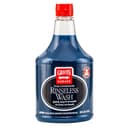
Griot’s Garage Rinseless Wash is the best clay lube to buy, and it is not sold as one. Griot’s states on its own listing that the concentrate dilutes down into a detailer and a clay lubricant as well as a rinseless wash — so one 35 oz bottle covers three jobs at three ratios. A dedicated clay lube is a bottle of mostly water with a few percent of slickness in it; buying the concentrate and adding the water yourself is the same chemistry at a fraction of the cost per panel.

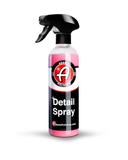
If you want a ready-to-use bottle with nothing to mix, buy Adam’s Detail Spray instead. Its listing names clay lubricant and drying aid alongside quick detailer, it needs no dilution, and it is slick enough to double as a post-polish wipe-down. The budget pick is Meguiar’s Quik Detailer, the cheapest bottle on this page as of November 23, 2026and the one that comes in the same Meguiar’s clay kit most people start with.

One thing to get straight first, because it is where the marring comes from: clay lube is not optional and it is not a soapy bucket. Clay works by shearing bonded contamination off the clear coat, and it needs a film between the bar and the paint the whole time. If the surface starts to grab or squeak, you have run out of lubricant, and the next pass is the one that leaves marks.

Clay lube is the cheapest product in detailing that can cost you a paint correction. The bar itself does not care what you spray; the film does all the protective work. Too little and the clay drags, picks up grit it has already pulled off, and drags that across the panel. Enough, and a clay pass is one of the safest things you can do to a car.

Which makes the market strange. Dedicated “clay lube” bottles are overwhelmingly water with a small fraction of polymer or surfactant, sold ready to use at a ready-to-use price. Meanwhile, two of the concentrates on this site are stated by their own makers to dilute into exactly that product — and a clay kit from a mainstream brand usually arrives with a bottle of lubricant already in the box. So this page is as much about not overpaying as it is about picking a winner.

So it ranks on three things, in this order.

  • Whether the maker states clay-lube use in print. Three products here do, by name. That is a documented use case rather than a forum habit, and it is the difference between a recommendation and a guess.
  • Whether a dilution ratio is published.A concentrate is only cheaper than a ready-to-use bottle if you know the ratio. Optimum publishes one; Griot’s publishes the use but not the number.
  • Cost per panel, not cost per bottle. The headline price on a 35 oz concentrate and a 16 oz ready-to-use spray are not comparable numbers, and the table above is where that gets reconciled against live prices.

For the bar itself, see our clay bar roundup, and for the technique the lubricant supports, see how to use a clay bar. If you are not sure you need to clay at all, start here instead.

How this is funded: we earn a commission if you buy through our links, at no extra cost to you. It never changes which product we recommend, and we’ll tell you when we’d skip one. Full disclosure.

Quick picks

Ranked on published specs, coverage and buyer fit. Select a row to jump to the full write-up. We haven’t tested these in a lab — here is exactly what we do instead.

#ProductKey specsBest forPrice
1
Griot's Garage Rinseless Wash

Griot's Garage Rinseless Wash

The most flexible bottle in the category: Griot's states it dilutes down into a detailer and a clay lubricant as well as a rinseless wash, so one 35 oz bottle covers three jobs at three different ratios.

Also dilutes to
Detailer, clay lubricant
Type
Rinseless (bucket dilution)
Best clay lube overall - lowest cost per panel
$19.75 · View on Amazon

Price as of November 23, 2026. #ad How we’re funded

2
Adam's Polishes Detail Spray

Adam's Polishes Detail Spray

The one enthusiasts buy by the gallon. It is the most versatile bottle here - quick detailer, clay lubricant, drying aid and polisher wipe-down all in one, which is why it tends to be the bottle that empties first.

Doubles as
Clay lubricant, drying aid
Dilution
Ready to use
Type
Multi-use quick detailer
Best ready-to-use clay lube - nothing to mix
$10.83 · View on Amazon

$14.9928% off

Price as of November 23, 2026. #ad How we’re funded

3
Optimum No Rinse Wash & Shine (ONR) Version 6

Optimum No Rinse Wash & Shine (ONR) Version 6

The product that created this category and still the benchmark. It is a concentrate you dilute into a bucket, so the per-wash cost is a fraction of what the bottle price suggests - and it is rated for coated paint, glass and interiors alike.

Dilution ratio
0.5 oz per gallon for rinseless washing (Optimum)
Type
Rinseless (bucket dilution)
Best concentrate with a published ratio
$29.98 · View on Amazon

Price as of November 23, 2026. #ad How we’re funded

4
Meguiar's Quik Detailer Mist & Wipe

Meguiar's Quik Detailer Mist & Wipe

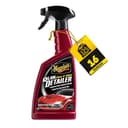
The category's reference point and the cheapest way into it. It is a light cleaner rather than a protectant, which is exactly what a quick detailer should be - use it on dust and fingerprints between washes, not as a substitute for one.

Dilution
Ready to use
Type
Cleaning quick detailer
Budget pick - the cheapest bottle here
$7.99 · View on Amazon

Price as of November 23, 2026. #ad How we’re funded

5
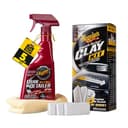
Meguiar's Smooth Surface Clay Kit

Meguiar's Smooth Surface Clay Kit

The most beginner-proof clay: a very forgiving bar plus Meguiar's Quik Detailer as the lubricant, from a brand you can buy anywhere. If you've never clayed a car, start here.

What it is
Beginner-friendly fine clay + Quik Detailer luber
Best kit with the lubricant included
$16.33 · View on Amazon

$29.9946% off

Price as of November 23, 2026. #ad How we’re funded

6
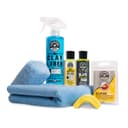
Chemical Guys Clay Bar & Luber Kit

Chemical Guys Clay Bar & Luber Kit

A complete system with a generous luber and multiple bars. Chemical Guys' clay is on the softer, more forgiving side, which is exactly what a nervous first-timer wants.

What it is
Soft-grade clay with dedicated lubricant
Best kit with a dedicated lubricant
$31.99 · View on Amazon

Price as of November 23, 2026. #ad How we’re funded

Specs as published on each product’s own listing, read between July 18, 2026 and August 18, 2026. Prices are live, as of November 23, 2026. A figure a brand does not publish is left out of this table and shown as “Not published” in that product’s full write-up below.

The coverage & cost-per-use math

The number nobody else on the first page of Google shows you. We take each product’s stated size and coverage, then divide the current price by the uses per unit — so the per-use figure is live arithmetic, not a number we typed. Here’s exactly how we work it out.

ProductSizeCoverage
Griot's Garage Rinseless Wash35 ozManufacturer states it dilutes into detailer and clay bar lubricant
Meguiar's Smooth Surface Clay KitNot publishedA car or two per kit
Chemical Guys Clay Bar & Luber KitNot publishedMultiple cars per kit with careful use

The picks in full

#1Top pick — Best clay lube overall - lowest cost per panel

Griot's Garage Rinseless Wash

The most flexible bottle in the category: Griot's states it dilutes down into a detailer and a clay lubricant as well as a rinseless wash, so one 35 oz bottle covers three jobs at three different ratios.

Who it is for: anyone who claybars more than one car, and anyone who already owns a rinseless concentrate and has been buying a separate lube bottle without needing to.

This wins on a published fact rather than an opinion: Griot’s states that the concentrate dilutes into a detailer anda clay lubricant as well as a rinseless wash. That is three products from one 35 oz bottle, at three ratios, and it is the largest bottle of the three liquids on this page. Mixed strong into a spray bottle it is as slick as any dedicated lube, and mixed weak into a bucket it is the wash that preceded the clay pass — which means the clay step costs you essentially nothing extra.

It is also the right chemistry for the job. A rinseless concentrate is built around polymers that encapsulate dirt and leave a lubricating film, which is precisely the behaviour clay needs, and the formulation is designed for indoor and driveway use where you cannot flood the panel with a hose.

The honest cons.There are multiple dilution ratios to keep straight, and Griot’s publishes the uses without publishing the numbers for them — the dilution-ratio cell in our table is empty because the listing leaves it empty. It is a newer formulation with less community track record than Optimum’s. And it is not a product you can use the minute it arrives: you need a spray bottle and a label before it becomes clay lube.

Strengths

  • Manufacturer states it dilutes into detailer and clay lubricant as well
  • Large 35 oz bottle for the money
  • No-rinse formulation designed for indoor and driveway use

Trade-offs

  • Multiple dilution ratios to keep straight
  • Newer formulation with less community track record than ONR
What it isRinseless concentrate that also dilutes to detailer / clay lube, 35 oz
Size35 oz
CoverageManufacturer states it dilutes into detailer and clay bar lubricant
TypeRinseless (bucket dilution)
Also dilutes toDetailer, clay lubricant
Dilution ratioNot published

Specs read from the product listing, on August 18, 2026. “Not published” means the brand does not state that figure.

#2Best ready-to-use clay lube - nothing to mix

Adam's Polishes Detail Spray

The one enthusiasts buy by the gallon. It is the most versatile bottle here - quick detailer, clay lubricant, drying aid and polisher wipe-down all in one, which is why it tends to be the bottle that empties first.

Who it is for: a first clay pass, a single car, or anybody who would rather spend a few dollars more than own a mixing bottle.

Adam’s names clay lubricant and drying aid on the listing alongside quick detailer, and it is ready to use straight out of the bottle. It is the most versatile single bottle in our registry for exactly this reason — the same spray does the clay pass, the drying aid and the wipe-down after machine polishing, which is why it tends to be the bottle that empties first in an enthusiast’s cupboard.

For a clay pass specifically, the ready-to-use format has a real advantage: the film thickness is consistent every time, with no chance of mixing it weaker than you meant to. On a job where running out of lubricant mid-panel is the failure mode, that is worth something.

The honest cons.It is priced above the supermarket detailers and well above the per-panel cost of a diluted concentrate, so on a whole-car clay pass you will get through a 16 oz bottle faster than you expect. Like every quick detailer, it is useless on a car that actually needs washing — it is a post-wash product, not a substitute for one. And it publishes no coverage figure, so there is no per-panel arithmetic to do.

Strengths

  • Genuinely multi-role: detailer, clay lubricant and drying aid
  • Slick enough to use as a wipe-down after machine polishing
  • Loyal following, so it is easy to buy in bulk

Trade-offs

  • Priced above the supermarket detailers
  • Like all quick detailers, useless on a car that actually needs washing
What it isMulti-role detailer / clay lube / drying aid, 16 fl oz
Size16 fl oz
CoverageNot published
TypeMulti-use quick detailer
Doubles asClay lubricant, drying aid
DilutionReady to use

Specs read from the product listing, on August 18, 2026. “Not published” means the brand does not state that figure.

#3Best concentrate with a published ratio

Optimum No Rinse Wash & Shine (ONR) Version 6

The product that created this category and still the benchmark. It is a concentrate you dilute into a bucket, so the per-wash cost is a fraction of what the bottle price suggests - and it is rated for coated paint, glass and interiors alike.

Who it is for: somebody who wants the concentrate route but would rather follow a printed number than work it out. It is also the pick if you wash rinseless already.

ONR created the rinseless category and is still the benchmark, and it is the only product on this page with a published dilution figure of any kind: 0.5 oz per gallon for rinseless washing. Optimum also rates it for paint, ceramic coatings, glass and interiors, and states that it doubles as a clay lubricant when mixed stronger. That is an unusually complete label for this aisle.

The practical version: wash the car rinseless at the published wash ratio, then mix a stronger solution in a spray bottle for the clay pass. Same bottle, same afternoon, two ratios.

The honest cons.Optimum publishes the wash ratio but not the clay ratio — “mixed stronger” is as specific as it gets, so you are still estimating the one number this page cares most about. Rinseless technique matters: one clean towel side per panel, or you will marr the paint you just decontaminated. And it is not a product for a genuinely filthy car; heavy grit still wants a pressure rinse first.

Strengths

  • Highly concentrated - a 32 oz bottle covers a great many washes
  • Manufacturer rates it for paint, ceramic coatings, glass and interior
  • Doubles as a clay lubricant when mixed stronger

Trade-offs

  • Technique matters: one clean towel side per panel, or you will marr the paint
  • Not for a genuinely filthy car - heavy grit still needs a pressure rinse
What it isRinseless wash concentrate, 32 oz
Size32 oz
CoverageNot published
TypeRinseless (bucket dilution)
Rated surfacesPaint, coatings, glass, interior
Dilution ratio0.5 oz per gallon for rinseless washing (Optimum)

Specs read from the product listing, on August 18, 2026. “Not published” means the brand does not state that figure.

#4Budget pick - the cheapest bottle here

Meguiar's Quik Detailer Mist & Wipe

The category's reference point and the cheapest way into it. It is a light cleaner rather than a protectant, which is exactly what a quick detailer should be - use it on dust and fingerprints between washes, not as a substitute for one.

Who it is for:the lowest-cost route to a safe clay pass, and the bottle you already have if you bought the Meguiar’s clay kit.

This is the budget pick: the cheapest liquid on this page as of November 23, 2026, ready to use, widely stocked, and the same Quik Detailer that ships as the lubricant inside Meguiar’s own Smooth Surface clay kit. That last point is the useful one — a mainstream maker shipping this exact product as its clay lubricant is a stronger endorsement of its suitability than a marketing claim would be.

The honest cons.It is a light cleaning detailer rather than a dedicated high-lubricity lube, so use it generously and re-mist more often than you would with the Adam’s. It leaves less gloss behind than the premium sprays. And at 16 oz ready-to-use, it is the most expensive option here per panel despite being the cheapest per bottle — which is the whole argument for the concentrates above.

Strengths

  • Cheap, widely stocked, and it does the one job well
  • Light cleaning formula rather than a heavy gloss agent
  • Doubles as a clay lubricant in a pinch

Trade-offs

  • Adds almost no durable protection - it is a cleaner, not a sealant
  • On a genuinely dirty car it will drag grit; this is for light soil only
What it isLight cleaning quick detailer, 16 oz
Size16 oz
CoverageNot published
TypeCleaning quick detailer
Added protectionNot published
DilutionReady to use

Specs read from the product listing, on August 18, 2026. “Not published” means the brand does not state that figure.

#5Best kit with the lubricant included

Meguiar's Smooth Surface Clay Kit

The most beginner-proof clay: a very forgiving bar plus Meguiar's Quik Detailer as the lubricant, from a brand you can buy anywhere. If you've never clayed a car, start here.

Who it is for: a first-time clay user who does not want to make two decisions. The bar, the lubricant and the instructions arrive together.

There is a real argument for buying the lube and the bar as one purchase: the maker has matched the lubricity of the spray to the aggressiveness of the clay, which is a pairing you would otherwise have to guess at. This is the beginner-friendly fine-grade kit, supplied with Quik Detailer as the luber, and fine clay plus a light detailer is a deliberately forgiving combination.

The honest cons.The bottle in the box is small — enough for the first car and not much more, so you will be buying lubricant separately before you buy clay again. A fine-grade bar will not shift heavy industrial fallout, which is an iron remover job rather than a clay job. And buying the kit twice is a more expensive way to own clay than buying the bar and a concentrate once.

Strengths

  • Very soft, forgiving clay
  • Uses Meguiar's Quik Detailer as a proven lubricant
  • Available at any auto store

Trade-offs

  • Soft clay is slow on heavy contamination
  • Bars are on the smaller side
What it isBeginner-friendly fine clay + Quik Detailer luber
SizeNot published
CoverageA car or two per kit
GradeFine (soft)
IncludesClay + Quik Detailer
ReusableUntil dropped or fully soiled

Specs read from the product listing, on July 18, 2026. “Not published” means the brand does not state that figure.

#6Best kit with a dedicated lubricant

Chemical Guys Clay Bar & Luber Kit

A complete system with a generous luber and multiple bars. Chemical Guys' clay is on the softer, more forgiving side, which is exactly what a nervous first-timer wants.

Who it is for: somebody who wants a soft bar and a lubricant specifically formulated as a lubricant, rather than a quick detailer standing in for one.

The distinction matters more than it sounds. Most clay kits include a detailer that also lubricates; this one ships a dedicated clay lubricant, which is the higher-lubricity, lower-cleaning end of the formulation spectrum. Paired with a soft clay, it is the gentlest combination on this page, and soft clay is the right starting grade for paint in good condition.

The honest cons.It is the priciest kit here, and the lubricant it includes does only the one job — unlike the Griot’s or Adam’s bottles, it is not also your drying aid or your detailer, so it takes up cupboard space for one afternoon a year. A soft bar also takes more passes on heavily contaminated paint than a medium grade would. And no coverage figure is published for the lubricant, so there is no per-panel math.

Strengths

  • Soft, forgiving clay that grabs without much drag
  • Comes with a big bottle of luber
  • Grades available for light or heavier contamination

Trade-offs

  • Soft clay wears a touch faster
  • You'll refill the luber before the clay runs out
What it isSoft-grade clay with dedicated lubricant
SizeNot published
CoverageMultiple cars per kit with careful use
GradeFine / medium options
IncludesClay + luber
ReusableUntil dropped or fully soiled

Specs read from the product listing, on July 18, 2026. “Not published” means the brand does not state that figure.

What clay lube actually does

Clay does not dissolve anything. It is an engineered abrasive-free medium that grabs bonded contamination — tar specks, overspray, rail dust, embedded industrial fallout — and shears it off the clear coat as the bar slides past. Two things follow from that.

First, every particle the bar removes is now onthe bar, sitting between it and your paint. Second, the only thing stopping that particle from being dragged across the clear coat is the liquid film. That is the whole job of clay lube: keep the bar hydroplaning so the grit it has collected never touches the paint again. It is why experienced detailers use far more lubricant than beginners do, and why “I clayed my car and now it has fine scratches” is almost always a lubrication story.

What you can and cannot use as clay lube

  • A rinseless or waterless concentrate, mixed strong. This is the enthusiast default and it is what the top two picks on this page are. Both makers state the use in print.
  • A quick detailer, used generously. Works fine, and is what every mainstream clay kit ships. Cheapest per bottle, dearest per panel.
  • A dedicated clay lubricant. The highest lubricity and the narrowest use. Worth it if you are claying a car with paint you are precious about.
  • Not plain water. It has almost no lubricity and evaporates fast; this is the single most common cause of clay marring.
  • Not a bucket of car shampoo.It is sometimes suggested, and it is better than water, but a wash solution is formulated to lift dirt and foam rather than to hold a slick film. It also means you are reaching into a bucket that may already have grit in it, which defeats the point of the exercise — see the two-bucket method for why.
  • Not a wax or a spray sealant. Clay will smear it, and you want a bare, clean surface for the coating or wax that comes afterwards anyway.

The cost arithmetic nobody shows you

This is the part that decides the ranking. A clay pass on a mid-size car uses a surprising amount of liquid — you are re-misting every panel section, and the film needs to be wet rather than damp. A 16 oz ready-to-use bottle does not comfortably cover a whole car with the generosity the job wants.

A 35 oz concentrate that dilutes for clay lube, by contrast, makes multiple spray bottles of the stuff. The live prices in the table above are what they are on any given day, but the structural point holds regardless of the numbers: you are buying water at ready-to-use prices, or you are buying chemistry and adding the water yourself. Our cost-per-use method is why this site keeps coming back to that distinction.

How to use it without marring the paint

  • Wash and dry the car first. Clay is not a cleaning step. Loose dirt must be gone before the bar touches anything.
  • Soak the panel, not the bar. Mist a two-foot square until it is visibly wet, then work the clay in straight overlapping lines rather than circles.
  • Re-mist the moment the glide changes. The bar should feel like it is floating. Grabbing, squeaking or audible friction means stop and spray.
  • Fold the clay often, and drop it on the floor once. Fold to a clean face every panel; if the bar hits the ground it goes in the bin, because it is now a grit applicator.
  • Protect afterwards, always. Clay leaves the clear coat bare. Follow with a sealant, a coating or a wax the same day. Our paint decontamination overview covers where clay sits in the full sequence.

A clay mitt or towel changes the lube requirement

If you are using a synthetic clay mitt or towel rather than a bar, lubrication matters more, not less. A mitt covers a much larger area per pass and cannot be folded to a clean face, so the film is the only thing managing everything it has collected. Flood the panel and rinse the mitt frequently. Our clay bar versus clay mitt comparison goes through the trade in full.

About the prices on this page

Every figure is read live from the price layer and stamped with its own date; nothing is typed into this page. The claim that the Meguiar’s detailer is the cheapest bottle here is true as of November 23, 2026and is re-checked on every refresh rather than written in. If the daily refresh ever stops, the numbers disappear and the buttons fall back to “Check price on Amazon” rather than showing you something stale.

Frequently asked questions

What is the best clay lube?

Griot's Garage Rinseless Wash, because Griot's states on its own listing that the concentrate dilutes into a clay lubricant as well as a detailer and a rinseless wash - so one 35 oz bottle covers three jobs and the cost per panel is far below a ready-to-use bottle. If you want something you can use without mixing, Adam's Detail Spray names clay lubricant on its label and needs no dilution. The budget pick is Meguiar's Quik Detailer, the cheapest bottle here and the same product Meguiar's ships inside its own clay kit.

Can you use a quick detailer as clay lube?

Yes, and it is what most mainstream clay kits actually ship. Meguiar's Smooth Surface clay kit includes Quik Detailer as its lubricant, and Adam's names clay lubricant on the Detail Spray label. The only caveat is quantity: a light cleaning detailer has less lubricity than a dedicated clay lube, so use more of it and re-mist the moment the bar stops gliding. A 16 oz bottle will not comfortably do a generous whole-car clay pass.

Can you use water as clay lube?

No - this is the most common cause of clay marring. Plain water has almost no lubricity and evaporates quickly, so the bar ends up dragging the contamination it has already collected across your clear coat. Clay works by shearing bonded particles off the paint, which means every particle it removes is sitting between the bar and the panel, and the liquid film is the only thing keeping them apart. Use a product that was formulated to leave a slick film.

Can you use car shampoo as clay lube?

It is better than water but worse than the right product. Wash solution is formulated to lift dirt and generate foam, not to hold a thick lubricating film, so the glide is noticeably shorter. There is also a practical problem: using a bucket means dipping into water that may already have grit suspended in it, which defeats the purpose of claying. If a bucket is your only option, use a rinseless concentrate mixed strong in a spray bottle instead.

How much clay lube do you need for one car?

More than people expect. A clay pass means re-misting every two-foot section until it is visibly wet, and a mid-size car will go through most of a 16 oz ready-to-use bottle if you are being as generous as the job deserves. This is exactly why the concentrates rank above the sprays here: a 35 oz rinseless concentrate that dilutes to clay lube makes several spray bottles of the stuff, so the per-panel cost is a fraction of a ready-to-use bottle's.

Do clay bar kits come with lubricant?

Most do. Meguiar's Smooth Surface kit includes Quik Detailer, and the Chemical Guys kit ships a dedicated clay lubricant rather than a general detailer. Buying them together has a genuine advantage - the maker has matched the lubricity of the spray to the grade of the clay - but the bottles included are small, enough for the first car and little more. Plan on buying lubricant separately before you buy clay again.

Does a clay mitt need more lube than a clay bar?

More, not less. A synthetic clay mitt or towel covers a far larger area per pass than a bar and cannot be folded to a clean face, so the liquid film is the only thing managing all the contamination it has picked up. Flood the panel, rinse the mitt frequently, and stop immediately if the glide changes. The larger contact area is what makes a mitt faster, and it is also what makes under-lubricating one more damaging.

What do you do after claying a car?

Protect it the same day. Clay removes bonded contamination and leaves the clear coat completely bare, with no wax, sealant or coating on it - so the car is more vulnerable immediately after a clay pass than it was before. Follow with a sealant, a paste wax or a ceramic coating depending on how long you want the protection to last. If the paint also has swirls, claying is the step before polishing, not after it.

Sources

  • Chemical Guys — How To Clay Bar Your Car — Clay removes bonded contaminants (brake dust, rail dust, fallout, overspray, tar, sap) that washing can't; lubricant prevents marring (accessed July 18, 2026)
  • Meguiar's — Smooth Surface Clay Kit (G191700) — Maker page, read via live search of meguiars.com on October 12, 2026 because the domain refused a direct fetch: "Prior to waxing, wash and dry your car thoroughly, then inspect the surface by using your eyes and hands" — "rub your fingertips across the top surfaces" and if the paint "does feel rough, what you feel is the presence of harmful environmental contaminants such as over-spray, fallout, brake dust, tree sap and more that have bonded to your paint finish". Contamination shows as "micro speed bumps", usually on horizontal surfaces, and as "small, dark spots/specks on the rear and lower surfaces of a light colored car". Publishes NO claying interval and NO number of uses per bar (accessed October 12, 2026)
  • Optimum Polymer Technologies — Top 30 Uses of Optimum No Rinse (ONR) — Maker page publishing a full dilution table in oz per gallon, which is why ONR can be compared on a number at all. Rinse Free Car Washing 0.5 oz/gal; Clay Lube 2 oz/gal; Quick Detailer 8 oz/gal; Drying Aid 8 oz/gal; Glass Cleaner 6 oz/gal; Interior Cleaner 6 oz/gal; Headliner Cleaner 6 oz/gal; Window Tint Cleaner 6 oz/gal; PPF Cleaner 8 oz/gal; Pad Primer, Pad Washer, Windshield Washer Fluid, Steamer Additive, Wet Sanding, Carpet Extractor and APC Neutralizer all 1 oz/gal; Polish Residue Remover and "Car Wash Soap Bucket Water Softener" both 0.5 oz/gal; plus household uses (countertops, stainless, floors, screens, eyeglasses) at 6 oz/gal. The page publishes NO ceramic-coating compatibility statement, NO surface-rating list, NO pH, NO application method and NO statement of whether a "gallon" means finished solution or added water (accessed October 19, 2026)
  • Chemical Guys — Two Bucket Method Car Wash Guide — Separate wash and rinse buckets keep contaminated water off the mitt — the main source of wash-induced swirl marks (accessed July 18, 2026)

Keep reading