What Chemical Guys is actually good at
A page like this is only useful if it is honest about the brand it is offering alternatives to, so here is the case for staying.
The range covers a whole car from one brand. That is worth more than enthusiasts usually admit: products from one range are formulated to work with each other, and a single-brand shelf removes a whole class of compatibility worry.
The concentrates are genuinely concentrated, and the labels mostly say so. Mr. Pink publishes 1–3 oz per 5 gallons. Diablo is sold as a dilutable concentrate. VRP is dilutable and rated across tires, exterior plastic and interior trim. In a category where most brands publish no ratio at all, that is a real advantage.
The two-stage correction system is a system. V36 is explicitly the cutting stage of a two-step process rather than a one-bottle compromise, which is what a proper correction actually wants. Several of the alternatives on this page are one-step products, and a one-step product is a deliberate compromise.
The kits make a complete setup affordable. Our sub-$100 kit page has two CG kits in its top three on exactly that basis.
Where the alternatives genuinely win
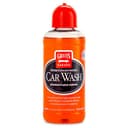
Soap, on arithmetic. This is the clearest swap on the page and it is not close. Both soaps are pH-neutral and coating-safe; one publishes a tighter dilution at a lower price. Over a year of weekly washes that difference is a bottle or two.
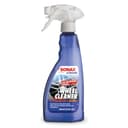
Wheels, on convenience. Ready-to-use beats dilutable for most people because most people do not dilute carefully, and an iron-reactive colour change tells you something a gel does not.
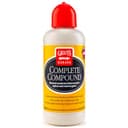
Compound, on disclosure.“Rated for all automotive paint finishes” is the sentence you want when you are about to put an abrasive on a car whose clear coat hardness you do not know.
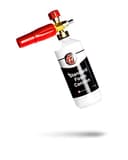
Hardware, on materials. Brass fittings outlast plastic ones, and a foam cannon is a product you connect and disconnect dozens of times a year.
Swaps we are NOT recommending, and why
VRP, for all-round trim and tire duty. It is dilutable and rated across three surface families, which almost nothing else is, and it is one of the cheapest products in our entire registry. Keep it.
The clay bar kit. Chemical Guys bundles clay with its own lubricant, which removes the most common beginner mistake. Our clay roundup rates it on exactly that basis.
Total Interior Cleaner, as a one-bottle cabin product. It is a cleaner and a protectant in one ready-to-use bottle at a low price, which is a hard combination to beat if you want simplicity inside the car. See the interior cleaner roundup.
Hex-Logic pads. The sampler kit with a pad cleaner is the pick on our paint correction kit page for a specific reason: it lets a first-timer work down through grades rather than guessing one.
How to switch without wasting what you own
Switch one category at a time, and finish the bottle first. Detailing chemicals are bought in volumes most people never use up, so the cheapest swap is always the one you make when something runs out.
Start with the consumable you use most. That is almost always soap, which is why it leads this page. A compound you use twice a year is not where the money is.
Do not mix a two-stage system with a one-step product mid-job. If you own V36, buy the finishing polish that belongs behind it rather than switching to a one-step halfway through a correction.
Check dilution before you judge a price. Three of the six comparisons on this page turn on concentration rather than sticker price, and in two of them the cheaper-looking bottle is the more expensive product per bucket.
About the prices on this page
Every figure comes live from the price layer with the date stamped in the table. Nothing is stored here, so a swap that is cheaper today may not be next month — the point of each write-up is the published basis for the comparison, which does not move, rather than the gap on any single day.