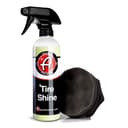
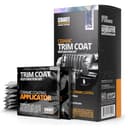
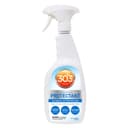
Coating, durable dressing or dressing: which do you actually want?
Pick a coating if you want to stop thinking about it. One careful application onto properly prepared rubber and plastic, then months of not reapplying. The cost is the prep, which is real: clean, decontaminate, dry completely, and remove every trace of previous dressing, because silicone residue stops a coating bonding. Only one product here is in this category.
Pick a durable SiO2 dressing if you wash regularly anyway. This is the right answer for most people and it is where the two published longevity claims live. You reapply every few washes rather than every wash, the finish is controllable, and nothing can go badly wrong.
Pick a cheap dressing if you dress tires every single wash.If the tires are getting done weekly regardless, durability is worth nothing to you and cost per application is worth everything — which is exactly the case the budget pick wins.
Pick the UV protectant if the rubber is aging rather than dull. Gray, chalky, slightly crazed sidewalls are a different problem from undressed ones, and darkening them cosmetically does not address it.
What nobody in this category publishes
- Four of six products publish no durability figure at all.Including the only genuine ceramic coating here and the only dedicated UV protectant — the two products whose entire proposition is lasting. Two publish a figure, and both say “weeks” rather than a number of washes or months.
- Nobody publishes a UV rating, an SPF-equivalent or an ozone-resistance figure. Protection claims in this category are qualitative everywhere.
- Three of six publish no size. Which makes price comparison structurally difficult and is why the cost-per-tire figure below is only available for the products that do.
- Nobody publishes a cure time or a time-before-driving. Which is the one figure that would actually prevent sling, the most common complaint about every product in this category.
Given that, a page claiming to rank these on measured durability would be inventing the measurements. This one ranks on what is published, what form the work takes, and which problem each product is actually for.
Cost per tire, where the arithmetic is possible
Only one product here publishes the numbers needed to do this honestly. Meguiar’s Endurance Tire Gel is 16 fl oz used a small amount at a time, which works out at roughly forty tires — about ten full sets — from one bottle. At the live price in the table that is a cost per tire in pennies, and it is the strongest value argument on the page.
For the rest, coverage is qualitative: “many tires per bottle, apply thin” for the Griot’s, “dilutable, dozens of applications” for VRP, and nothing at all for the Adam’s combo or the Cerakote kit. The dilutable products have a structural advantage here that the sticker price hides: a concentrate you can thin for trim is two products in one bottle.
How to apply any of these without sling
Clean the tire first, properly.New dressing over old dressing is the root cause of most blotchy results. Scrub the sidewall with an all-purpose cleaner and a brush until the foam stops coming off brown — see how to clean tires.
Let it dry completely. Every product here goes onto dry rubber. A coating in particular will not bond to damp rubber.
Apply to the applicator, not to the tire. Overspray on a wheel face is what makes brake dust stick, and overspray on paint is what you will be removing later.
Thin, and wipe the excess.Two thin coats beat one thick one on every product in this category. Then let it set before driving — nobody publishes how long, so give it as long as you reasonably can. Full method in how to apply tire shine.
Does any of this help the tire itself?
Honestly: no maker publishes a figure saying so, and we are not going to assert one. What is documented is that rubber ages from UV and ozone exposure as well as from use, which is why 303 sells a protectant rather than a shine and why the Car Care Council treats tire condition as a maintenance and safety item rather than a cosmetic one. A protectant keeps the surface from drying out in sunlight. It does not add service life that anyone will quantify, and it does not substitute for checking pressure, tread depth and age — the NHTSA’s tire safety guidance is the authority on that, and it is the part of tire care that matters most.
One practical warning that goes with any dressing: keep all of it off the tread. A silicone film on a contact surface is exactly what you do not want, and that applies to the aerosols most of all because they are the hardest to control.
About the prices on this page
Every number in the table is read live from the price layer and stamped with its own date; none is stored in this page. Remember that three of these products publish no size at all, so comparing stickers compares unknown volumes — the cost-per-tire figure above is the only honest value comparison available, and it is available for exactly one product.