Clay & Coat

Best Leather Conditioner for Cars

Seven leather conditioners ranked on what each maker will actually put in writing - a stated SPF figure, a named conditioning oil, a promise not to darken light leather - and on which ones publish nothing at all.

By Stephen V.Last updated How we pick

The verdict

Buy Adam’s Leather Conditioner if your car parks outside, and Bick 4 if your leather is light tan or cream. Those two are the only products in this set that publish the specific thing a buyer needs. Adam’s states premium UV blockers at SPF 65 — a number, where every rival says “protects” and leaves it there. Bick 4 states on its own label that it will not darken leather, which is the single most common regret after conditioning a light interior and the only claim on this page that is falsifiable the moment you use it.

The budget pick is Mothers VLR, and it is not a compromise: it is the cheapest bottle here, the biggest at 24 oz, and the only one that names its conditioning agents — neatsfoot oil and lanolin — instead of referring vaguely to nourishing oils. If your leather has already gone dry and stiff, Leather Honey is the restoration pick rather than the maintenance one.

The uncomfortable finding behind this ranking: of the seven products here, one publishes a UV figure, one publishes a darkening promise, one names its oils, and not a single one publishes a coverage figure or a reapplication interval. Nobody will tell you how often to do this.

Leather in a car does not fail from being dirty. It fails from drying out: the hide loses its plasticizers to heat and ultraviolet light, the finish goes brittle, and then the first normal flex of a seat bolster cracks it. Once it cracks, nothing in a bottle fixes it. That is the entire reason conditioning exists, and it is why the product you want is the one that addresses sun and moisture loss rather than the one that smells best.

It is also why this page is separate from our leather cleaner roundup. Cleaning and conditioning are two different jobs in two different directions — one lifts soil out of the grain, the other puts oils back in — and a conditioner applied over dirt seals the dirt in. If you only read one thing here: clean first, then condition, and do not try to do both at once on neglected leather.

What makes this category hard to shop is that almost every claim on the shelf is unquantified. “Nourishes.” “Protects.” “Restores vital nutrients.” None of that can be compared between two bottles. So we ranked on the three claims in this category that are specific enough to check, and treated silence as information rather than as a neutral.

  • A published UV figure. Sun is the failure mode. One product in seven states a number.
  • A named conditioning agent.Neatsfoot oil and lanolin are real, checkable ingredients. “Nutrients” is not.
  • A stated position on darkening. The most common real-world complaint, and the one most makers decline to address.

One format note. Several products here are one-step clean-and-condition sprays rather than conditioners. We have not excluded them, because for most people a one-step product used monthly beats a two-step routine used never — but they are labeled as what they are in the table, and they are the wrong tool for leather that is already dirty.

How this is funded: we earn a commission if you buy through our links, at no extra cost to you. It never changes which product we recommend, and we’ll tell you when we’d skip one. Full disclosure.

Quick picks

Ranked on published specs, coverage and buyer fit. Select a row to jump to the full write-up. We haven’t tested these in a lab — here is exactly what we do instead.

#ProductKey specsBest forPrice
1
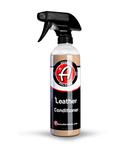
Adam's Polishes Leather Conditioner

Adam's Polishes Leather Conditioner

The only conditioner in this set that puts a number on its UV protection - the listing states premium UV blockers at SPF 65. Sun is what actually kills a dashboard and a seat bolster, so a product willing to quantify that claim earns the top slot over one that only promises to nourish.

Type
Conditioner only
Stated UV protection
Premium UV blockers, SPF 65
Rated surfaces
Leather, vinyl, plastic
Size
16 oz
Best overall
$19.54 · View on Amazon

Price as of November 12, 2026. #ad How we’re funded

2
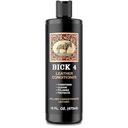
Bickmore Bick 4 Leather Conditioner & Cleaner

Bickmore Bick 4 Leather Conditioner & Cleaner

The one product here that makes the claim nobody else will make: it states on its own label that it will not darken leather. That is the single most common complaint about conditioning a light-colored interior, and Bickmore is the only maker in this set willing to put it in writing.

Type
Cleaner + conditioner (one step)
Darkens leather
Stated not to darken
Rated surfaces
Auto interiors, footwear, furniture, apparel
Size
16 oz
Best for light-colored leather
$16.99 · View on Amazon

$19.9915% off

Price as of November 12, 2026. #ad How we’re funded

3
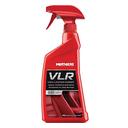
Mothers VLR Vinyl-Leather-Rubber Care

Mothers VLR Vinyl-Leather-Rubber Care

The budget pick, and the most specific ingredient disclosure in the set - the listing names neatsfoot oil and lanolin, which is a real answer to 'what is actually in this'. One 24 oz bottle is the largest here, and it is pH balanced and rated for vinyl and rubber as well as leather.

Type
Cleaner + conditioner + protectant (one step)
Rated surfaces
Vinyl, leather, rubber
Size
24 oz
Best budget pick
$8.02 · View on Amazon

Price as of November 12, 2026. #ad How we’re funded

4
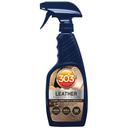
303 Products Leather 3-In-1 Complete Care

303 Products Leather 3-In-1 Complete Care

The one that addresses the failure mode by name. The listing states it helps prevent fading and cracking and repels dust, lint and staining - and dust is the honest reason a conditioned seat looks dirty again a week later. It is rinse-free, so it suits a quick interior pass.

Type
Cleaner + conditioner + protectant (one step)
Stated UV protection
Helps prevent fading and cracking (no figure)
Rated surfaces
Leather
Size
16 fl oz
Best for keeping an interior clean between details
$12.95 · View on Amazon

Price as of November 12, 2026. #ad How we’re funded

5
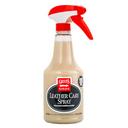
Griot's Garage Leather Care Spray (10994)

Griot's Garage Leather Care Spray (10994)

A 22 oz trigger spray at the cheapest price in this set, which makes it the one you will actually use on a schedule. Griot's rates it beyond the car - upholstery, furniture and clothing - and the spray format is the reason it gets done rather than postponed.

Type
Cleaner + conditioner (spray)
Rated surfaces
Car seats, upholstery, furniture, clothing
Size
22 oz
Best for perforated and ventilated seats
$11.99 · View on Amazon

Price as of November 12, 2026. #ad How we’re funded

6
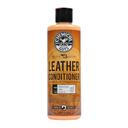
Chemical Guys Vintage Series Leather Conditioner

Chemical Guys Vintage Series Leather Conditioner

A straight conditioner rated for faux and synthetic leather as well as the real thing, which matters more than enthusiasts admit - most modern 'leather' seats are coated or part-synthetic, and a product that only names natural hide leaves you guessing.

Type
Conditioner only
Rated surfaces
Natural, synthetic and faux leather
Size
16 oz
Best for synthetic and faux leather
$19.97 · View on Amazon

Price as of November 12, 2026. #ad How we’re funded

7
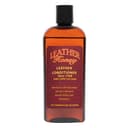
Leather Honey Leather Conditioner

Leather Honey Leather Conditioner

The restoration option. It is a thick, non-toxic conditioner made in the USA since 1968, and it is what people reach for when leather has already dried out rather than as routine maintenance.

Type
Restorative conditioner
Best for leather that has already dried out
$19.99 · View on Amazon

$27.9929% off

Price as of November 12, 2026. #ad How we’re funded

Specs as published on each product’s own listing, read between August 18, 2026 and November 10, 2026. Prices are live, as of November 12, 2026. A figure a brand does not publish is left out of this table and shown as “Not published” in that product’s full write-up below.

The picks in full

#1Top pick — Best overall

Adam's Polishes Leather Conditioner

The only conditioner in this set that puts a number on its UV protection - the listing states premium UV blockers at SPF 65. Sun is what actually kills a dashboard and a seat bolster, so a product willing to quantify that claim earns the top slot over one that only promises to nourish.

Who it is for: a car that lives on a driveway or a street rather than in a garage, which is most cars. If sun is the thing eating your interior, this is the bottle that claims to address it in a checkable way.

It wins on disclosure. The listing states premium UV blockers providing SPF 65 protection, and that is the only numeric protection claim anywhere in this category on this site. Everything else here says it protects against fading and leaves you to decide what that means. We cannot verify the figure ourselves — we own no spectrophotometer and we do not pretend otherwise — but a maker willing to print a number has committed to something, and that is worth more than a brand that has not.

It is also a conditioner and nothing else, which matters structurally: a dedicated conditioner layers correctly after a dedicated cleaner, where a one-step product re-cleans what it just conditioned. The listing rates it for leather, vinyl and plastic, so the same bottle handles a dash and door cards rather than seats alone.

The honest cons.It does not clean, so a neglected interior needs a cleaner bought alongside it — budget for two bottles, not one. No coverage figure and no application count are published, so there is no way to work out cost-per-use from the listing. And the cabin-wide surface rating is a double-edged thing: a product formulated for three materials is optimized for none of them.

Strengths

  • Publishes an SPF figure (65) rather than an unquantified 'UV protection' claim
  • Rated for leather, vinyl and plastic, so one bottle covers the whole cabin
  • Conditioner only - it does not pretend to be a cleaner as well

Trade-offs

  • Conditioner only, so you still need a separate cleaner for soiled leather
  • No published coverage or application count on the listing
What it isDedicated conditioner with stated SPF 65 UV blockers, 16 oz
Size16 oz
CoverageNot published
TypeConditioner only
Stated UV protectionPremium UV blockers, SPF 65
Rated surfacesLeather, vinyl, plastic
Darkens leatherNot published

Specs read from the product listing, on November 10, 2026. “Not published” means the brand does not state that figure.

#2Best for light-colored leather

Bickmore Bick 4 Leather Conditioner & Cleaner

The one product here that makes the claim nobody else will make: it states on its own label that it will not darken leather. That is the single most common complaint about conditioning a light-colored interior, and Bickmore is the only maker in this set willing to put it in writing.

Who it is for: tan, cream, beige or white leather you want to keep the color it is. This is the only product here that makes the promise out loud.

Bickmore prints “won’t darken” on the label, and that is a genuinely unusual thing to do, because it is immediately testable by every customer. Most conditioners darken light leather slightly — oils in a porous hide deepen its tone — and most makers handle that by saying nothing. On a cream interior the difference between a product that darkens and one that does not is the difference between conditioning the seats and ruining their look.

It cleans as well as conditions, which is why it also works as the simple answer for someone who wants one bottle and a monthly habit rather than a two-stage process. Bickmore sells it for saddlery, boots and furniture as much as for cars, and it is made in the USA.

The honest cons.Doing two jobs in one bottle means it is the strongest at neither — on a seat with ground-in denim dye you want a dedicated cleaner first. There is no UV or SPF claim at all, so if your car bakes in the sun this is the wrong primary pick. And it is not formulated specifically for modern automotive coated leather; the breadth of its rated uses is a hint that it is a general leather product adapted to cars rather than the reverse.

Strengths

  • The only listing in this set that states it will not darken leather
  • Cleans and conditions in one step, so it works as a maintenance product
  • Made in the USA and sold for saddlery and footwear as well as car interiors

Trade-offs

  • A combined cleaner/conditioner is a compromise at both jobs
  • No UV or SPF claim, which matters on a convertible or a sun-parked car
  • Not formulated specifically for automotive coated leather
What it isCleaner + conditioner, states it will not darken leather, 16 oz
Size16 oz
CoverageNot published
TypeCleaner + conditioner (one step)
Stated UV protectionNot published
Rated surfacesAuto interiors, footwear, furniture, apparel
Darkens leatherStated not to darken

Specs read from the product listing, on November 10, 2026. “Not published” means the brand does not state that figure.

#3Best budget pick

Mothers VLR Vinyl-Leather-Rubber Care

The budget pick, and the most specific ingredient disclosure in the set - the listing names neatsfoot oil and lanolin, which is a real answer to 'what is actually in this'. One 24 oz bottle is the largest here, and it is pH balanced and rated for vinyl and rubber as well as leather.

Who it is for: anyone who wants the whole cabin done cheaply and often. It is the lowest price here and the largest bottle at 24 oz, which is a combination nothing else in this set offers.

What raises it above a generic cheap option is the ingredient disclosure. The listing names neatsfoot oil and lanolin — two specific, long-established leather conditioning agents — where its rivals describe their contents as nutrients or oils. It also states that the formula is pH balanced, and it is rated for vinyl and rubber as well as leather, so one bottle covers a vinyl dash, rubber seals and leather seats in the same pass.

In practice this is the bottle to buy if the real problem is that you have never conditioned your interior. Leather dies of neglect, not of being treated with a $9 product, and a cheap bottle used four times a year beats a premium one used once.

The honest cons.One-step cleaning and conditioning is light duty — it will not lift set-in grime from perforated seats. No UV or SPF figure is published, which is a real gap given this is the budget pick for sun-exposed interiors. And a combined product cannot be layered: you cannot clean with it and then condition with it and expect two distinct results.

Strengths

  • Cheapest per ounce in this set and the largest bottle (24 oz)
  • Names its conditioning agents - neatsfoot oil and lanolin - rather than saying 'nourishing oils'
  • Stated pH balanced, and rated for vinyl and rubber as well as leather

Trade-offs

  • One-step clean-and-condition, so it is light on heavily soiled leather
  • No UV or SPF figure published
  • A one-step product cannot be layered the way a dedicated conditioner can
What it isOne-step clean/condition/protect, pH balanced, 24 oz
Size24 oz
CoverageNot published
TypeCleaner + conditioner + protectant (one step)
Stated UV protectionNot published
Rated surfacesVinyl, leather, rubber
Darkens leatherNot published

Specs read from the product listing, on November 10, 2026. “Not published” means the brand does not state that figure.

#4Best for keeping an interior clean between details

303 Products Leather 3-In-1 Complete Care

The one that addresses the failure mode by name. The listing states it helps prevent fading and cracking and repels dust, lint and staining - and dust is the honest reason a conditioned seat looks dirty again a week later. It is rinse-free, so it suits a quick interior pass.

Who it is for: someone whose complaint is not dry leather but that the seats look dusty and grey again a week after being cleaned.

303 is the only listing here that claims repellency as well as conditioning — it states that it repels dust, lint and staining, and that it helps prevent fading and cracking. Dust is the honest reason a conditioned interior stops looking conditioned, and it is the only product in this set to name it as a target. The formula is rinse-free, so it suits a fast interior wipe-down rather than a project.

303 is also a brand with a track record in UV protection specifically — the same company’s Aerospace Protectantis the registry’s dedicated UV product for trim — which makes the fade-prevention claim here consistent with the rest of its range rather than an outlier.

The honest cons.Three jobs in one bottle is two compromises. The fade-prevention claim carries no number, unlike Adam’s SPF 65, so it is weaker evidence for the same benefit. And the repellency claims have no stated duration at all — “repels dust” for how long is not published anywhere.

Strengths

  • States the two failure modes it targets - fading and cracking - rather than only 'nourishing'
  • Claims dust, lint and stain repellency, which no other product in this set does
  • Rinse-free formula; cleans, conditions and protects in one pass

Trade-offs

  • Three jobs in one bottle means it is the strongest at none of them
  • No UV or SPF number, only a fade-prevention claim
  • Repellency claims are unquantified - no duration is published
What it isRinse-free clean/condition/protect with stain repellency, 16 fl oz
Size16 fl oz
CoverageNot published
TypeCleaner + conditioner + protectant (one step)
Stated UV protectionHelps prevent fading and cracking (no figure)
Rated surfacesLeather
Darkens leatherNot published

Specs read from the product listing, on November 10, 2026. “Not published” means the brand does not state that figure.

#5Best for perforated and ventilated seats

Griot's Garage Leather Care Spray (10994)

A 22 oz trigger spray at the cheapest price in this set, which makes it the one you will actually use on a schedule. Griot's rates it beyond the car - upholstery, furniture and clothing - and the spray format is the reason it gets done rather than postponed.

Who it is for: perforated or ventilated leather, and anyone who will only keep up a habit that takes ten minutes. A 22 oz trigger spray for about what a 16 oz bottle costs elsewhere is the cheapest per ounce here after Mothers.

We read Griot’s own product page for this one, and the useful detail is not in the marketing: the page states it dries clear on perforated leather. That is the specific failure this format normally causes — liquid conditioner pooling in perforations and drying to white rings — and Griot’s is the only maker in this set to address it. The page also claims a non-greasy surface and a supple finish after a final buff, and it is sold in a gallon for anyone doing several cars.

The honest cons, straight from the maker’s own page. Griot’s publishes no UV claim, no rated-surface list beyond naming perforated leather, and nostep-by-step directions or reapplication interval — the page describes only a spray-and-wipe application. It is also a combined cleaner and conditioner rather than a dedicated conditioner, so the same layering caveat applies as to the other one-step products here.

Strengths

  • 22 oz trigger spray for about the price of a 16 oz bottle elsewhere
  • Rated for upholstery, furniture and clothing as well as car seats
  • Spray format is quick enough for a monthly pass over the whole interior

Trade-offs

  • Combined cleaner/conditioner rather than a dedicated conditioner
  • No UV or SPF claim published
  • Spray can go on unevenly across perforated or ventilated seats
What it isTrigger-spray cleaner and conditioner, 22 oz
Size22 oz
CoverageNot published
TypeCleaner + conditioner (spray)
Stated UV protectionNot published
Rated surfacesCar seats, upholstery, furniture, clothing
Darkens leatherNot published

Specs read from the product listing, on November 10, 2026. “Not published” means the brand does not state that figure.

#6Best for synthetic and faux leather

Chemical Guys Vintage Series Leather Conditioner

A straight conditioner rated for faux and synthetic leather as well as the real thing, which matters more than enthusiasts admit - most modern 'leather' seats are coated or part-synthetic, and a product that only names natural hide leaves you guessing.

Who it is for: a modern car. Most seats sold as leather today are coated, part-synthetic or entirely faux, and a product that only names natural hide leaves you guessing about your own car.

Chemical Guys states the rating explicitly: natural, synthetic and faux leather. That is a small thing that resolves a real doubt — it is the difference between conditioning a vinyl-coated seat with confidence and hoping. It is a conditioner only, so it sits correctly in a two-step routine after a cleaner, and it is also sold in a gallon, which is unusual at this level.

If you are already buying Chemical Guys chemicals, this is the in-range conditioner; if you are not, our Chemical Guys alternatives page covers where the brand is and is not the best value, category by category.

The honest cons. No UV or SPF claim is published, which is the spec that decides the top of this page. Nothing is stated about coverage, drying time or how often to reapply. And it does not clean, so a neglected interior still needs a second bottle.

Strengths

  • Explicitly rated for natural, synthetic and faux leather
  • Conditioner only, so it layers properly after a dedicated cleaner
  • Also sold in a gallon, which is unusual at this level

Trade-offs

  • No UV or SPF claim published on the listing
  • No stated coverage, drying time or reapplication interval
What it isConditioner rated for natural, synthetic and faux leather, 16 oz
Size16 oz
CoverageNot published
TypeConditioner only
Stated UV protectionNot published
Rated surfacesNatural, synthetic and faux leather
Darkens leatherNot published

Specs read from the product listing, on November 10, 2026. “Not published” means the brand does not state that figure.

#7Best for leather that has already dried out

Leather Honey Leather Conditioner

The restoration option. It is a thick, non-toxic conditioner made in the USA since 1968, and it is what people reach for when leather has already dried out rather than as routine maintenance.

Who it is for:leather that is already stiff, thirsty and starting to look dull — a neglected used car, or a classic that has sat. This is a recovery product, not a maintenance one.

It is the thickest product in the set and it is meant to soak in rather than sit on top, which is the right behavior when the hide has genuinely lost moisture. It has been made in the USA since 1968 and is sold as a leather product first and a car product second, which is also true of Lexol in our leather cleaner roundup.

The honest cons.It is not the right choice for routine upkeep on healthy leather — it is slower to apply and heavier than a spray, and heavier is not better on a seat that is already supple. It makes no UV claim. And on light leather, a thick oil-based conditioner is precisely the product class most likely to deepen the color, which is why Bick 4 rather than this one leads the light-leather slot.

Strengths

  • Thick formulation aimed at genuinely dry, neglected leather
  • Non-toxic, long-established formula
  • A little goes a very long way

Trade-offs

  • Needs a long dwell and can feel tacky if over-applied
  • Too heavy for routine monthly maintenance
What it isHeavy-duty restorative leather conditioner
SizeNot published
CoverageNot published
TypeRestorative conditioner
Rated leatherNot published
pH balancedNot published

Specs read from the product listing, on August 18, 2026. “Not published” means the brand does not state that figure.

How to choose, in one decision

Almost everyone reading this page needs one of three answers, and the rest of the comparison is noise:

  • Car parks outside?Buy the product with a UV number. That is Adam’s, and it is the only one.
  • Light-colored leather? Buy the product that promises not to darken it. That is Bick 4, and it is the only one.
  • Neither, and you have never conditioned it? Buy the cheapest big bottle and do it four times a year. That is Mothers VLR.

Everything after that is format preference: a dedicated conditioner if you are willing to clean first, a one-step spray if you are not.

Clean first. This is not optional on dirty leather

A conditioner’s job is to get oils into the hide. Anything sitting on top of the hide — body oils, denim dye, dust bound into the grain — gets between the conditioner and the leather, and the result is a sealed layer of dirt with a satin finish. On a seat that genuinely needs cleaning, use a pH-balanced leather cleaner and a soft brush, agitate, wipe off, and then condition. Our guide to cleaning car seats covers the method and the brush pressure, and the leather cleaner roundup covers which bottle.

The one-step products on this page exist for the case where the leather is not actually dirty — a monthly wipe on a cared-for interior. That is a real use case and it is the majority one. It is just not the same job.

What this category refuses to publish

We looked for four figures across seven products. Here is the scoreboard, because the gaps are the most useful thing on this page:

  • Coverage: zero products in seven. Not one maker states how many seats, or how many applications, a bottle does. That is why there is no cost-per-use column on this page while there is one on our wash soap roundup— the arithmetic needs a denominator and this category will not give one.
  • Reapplication interval: zero products in seven.Nobody says whether this is a monthly, quarterly or annual job. Griot’s own product page, which we read directly, publishes no directions at all.
  • A UV or SPF figure: one in seven.Adam’s states SPF 65. 303 claims fade prevention without a number. The other five say nothing.
  • A position on darkening: one in seven. Bick 4 states it will not darken. Nobody else engages with the question.

When a whole category declines to publish a reapplication interval, the sensible reading is that the honest answer is “when it stops feeling supple” — and that checking it with the back of your hand every few months is more reliable than any schedule a label could print.

Perforated and ventilated seats need a different hand

Ventilated seats are increasingly standard, and they change the application rules. Liquid that pools in a perforation does not dry the way it dries on a flat panel: it wicks, leaves a ring, and can block the perforation that makes the ventilation work. Two rules follow. Spray the applicator or towel, never the seat. And work in thin passes, buffing each one off before it can settle into the holes. Griot’s is the one product here whose maker addresses perforated leather by name, which is why it holds that slot.

Where conditioning sits in a full interior detail

Conditioning is the last wet step inside the car, after everything that could put dust back on the seats. The order that works is vacuum, then hard surfaces, then fabric, then glass, then leather — so a conditioned seat is not the thing catching the dust you knock off a headliner. Our interior detailing guide runs the full sequence, and the interior detailing kit page covers buying the stages together rather than one bottle at a time.

If your seats are cloth rather than leather, none of this applies and a fabric protector is the equivalent step. And if the dash and door tops are the part that looks tired, the plastic and vinyl equivalent is a trim restorer.

About the prices on this page

Every figure in the table is read live from the price layer and stamped with its own date. Nothing is typed into this page, which is why a price here cannot go stale. Where a live price is unavailable the button falls back to a tagged search rather than showing you a number we cannot stand behind.

Frequently asked questions

What is the best leather conditioner for car seats?

Adam's Leather Conditioner, because it is the only one that publishes a UV figure - the listing states premium UV blockers at SPF 65, and sun is what actually destroys car leather. If your leather is light tan or cream, buy Bick 4 instead: it is the only product here whose maker states it will not darken leather. If you simply want the cheapest way to stop neglecting the interior, Mothers VLR is the largest bottle at the lowest price and the only one that names its conditioning oils.

How often should you condition leather car seats?

No maker in this category publishes a reapplication interval - we checked all seven, including Griot's own product page, and not one states one. The practical test is tactile: press the back of your hand into a seat bolster, and if the leather feels dry or stiff rather than supple, it is time. For a car that parks outside, every three to four months is a reasonable working rhythm; for a garaged car, twice a year. Anyone quoting you a precise schedule is not reading it off a label.

Do you need to clean leather before conditioning it?

On dirty leather, yes, and it is the one step people skip. A conditioner works by getting oils into the hide, so anything sitting on the surface - body oils, denim dye, dust bound into the grain - ends up sealed under the conditioner instead of being removed. Use a pH-balanced leather cleaner with a soft brush first, wipe it off, then condition. On leather that is genuinely not dirty, a one-step clean-and-condition spray is fine and is the format most people will keep up with.

Will leather conditioner darken my seats?

It can, and on light leather it often does slightly, because oils absorbed into a porous hide deepen its tone. Only one product in this set addresses it: Bickmore prints 'won't darken' on the Bick 4 label, which is a claim you can check the first time you use it. Every other maker here declines to say anything either way. If your interior is cream, tan or white, treat that silence as a reason to test any new conditioner on a hidden area - under a seat edge or on the back of a bolster - before doing a whole panel.

Is a leather conditioner different from a leather cleaner?

Yes, and they work in opposite directions. A cleaner lifts soil out of the grain; a conditioner puts oils back into it. Several products sold as leather care do both in one pass, which is a sensible compromise for routine upkeep but the wrong tool on neglected leather, because you cannot meaningfully clean and condition the same surface in the same wipe. The practical rule: one-step products for maintenance, two separate products when the leather is actually dirty or actually dry.

Can you use leather conditioner on synthetic or faux leather?

Only where the maker says so, and most do not. Chemical Guys Vintage Series Leather Conditioner explicitly rates itself for natural, synthetic and faux leather, which is why it holds that slot here - most modern 'leather' seats are coated or part-synthetic, and a product that only names natural hide leaves you guessing about your own car. Mothers VLR is rated for vinyl and rubber as well as leather, which covers the same ground from the other direction.

What about conditioning perforated or ventilated leather seats?

Change the application, not the product. Spray the applicator or towel rather than the seat, work in thin passes, and buff each pass off before anything can settle into the perforations - liquid that pools in a hole wicks, leaves a ring and can block the ventilation it is there to provide. Griot's Garage is the only maker in this set whose own page addresses perforated leather, stating that the spray dries clear on it, which is why it holds the perforated-seat slot here.

Does leather conditioner stop cracking?

It delays the cause; it does not repair the result. Car leather cracks because heat and ultraviolet light drive out the plasticizers that keep the finish flexible, after which a normal flex of the bolster splits it. Conditioning replaces some of what is lost and a UV claim addresses the driver, which is why a stated SPF figure matters more here than any other spec. But once leather has actually cracked, no product in a bottle closes the crack - at that point you are looking at repair or replacement, and the honest advice is to condition the panels that have not cracked yet.

Sources

  • Chemical Guys — How to Clean and Protect Leather Car Seats — Use a pH-balanced leather cleaner and condition periodically; vacuum, clean, then condition (accessed July 18, 2026)
  • Griot's Garage — Leather Care Spray (item 10994) — Maker page: the spray is said to 'Replace vital nutrients' and to leave a 'non-greasy surface' with a 'supple finish after the final buff', and it 'Dries clear' on perforated leather. Sold in 22 ounces and a gallon (SKU 11055), listed at $11.99 and $49.99 respectively at the time of reading. NO UV or SPF claim appears anywhere on the page, NO rated-surface list is published beyond perforated leather being named, and NO step-by-step directions or reapplication interval are given — the page describes only a 'spray-and-wipe application' (accessed November 10, 2026)
  • US EPA — Volatile Organic Compounds' Impact on Indoor Air Quality — VOCs are off-gassed by cleaners and solvents; ventilate when using interior chemicals in an enclosed cabin (accessed July 18, 2026)

Keep reading