Clay & Coat

Best Car Glass Cleaner

Automotive glass cleaners compared on ammonia content, tint safety and format - and the two-towel method that actually eliminates streaks.

By Stephen V.Last updated How we pick

Glass is the surface where amateur detailing shows most obviously. Streaked windows catch the light at every junction, and the greasy film that builds on the inside of a windscreen turns oncoming headlights into a starburst that genuinely affects how safely you can drive at night.

There is one specification that matters more than any other, and it is easy to check: ammonia-free. Household glass cleaner is usually ammonia-based, and ammonia attacks the adhesive and dye in aftermarket window tint, causing it to purple and bubble. It can also damage the anti-glare coatings on the infotainment screens that now sit inches from your windscreen. A five-dollar bottle of automotive cleaner avoids a several-hundred-dollar re-tint.

After that, the differences are about format and volume rather than chemistry — and about technique, which matters more than the bottle you buy.

How this is funded:we earn a commission if you buy through our links, at no extra cost to you. It never changes which product we recommend, and we’ll tell you when we’d skip one. Full disclosure.

Quick picks

Ranked on published specs, coverage and buyer fit. Select a row to jump to the full write-up. We haven’t tested these in a lab — here is exactly what we do instead.

#ProductBest forPrice
1
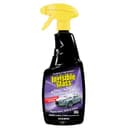
Invisible Glass Premium Glass Cleaner

Invisible Glass Premium Glass Cleaner

The category benchmark, and remarkably cheap. It is ammonia-free, which is the specification that actually matters in a car - ammonia attacks window tint and can damage the anti-glare coatings on screens.

Best overall
$4.48 · View on Amazon

Price as of August 31, 2026. #ad How we’re funded

2
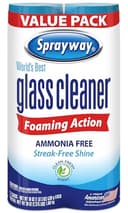
Sprayway Glass Cleaner Foaming Aerosol

Sprayway Glass Cleaner Foaming Aerosol

The foaming aerosol is the trick here: foam clings to vertical glass instead of running straight down into the door seal, so it gets dwell time where a liquid gets none. Ammonia-free, and cheap in a two-pack.

Best for vertical glass
$4.74 · View on Amazon

Price as of August 31, 2026. #ad How we’re funded

3
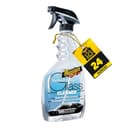
Meguiar's Perfect Clarity Glass Cleaner

Meguiar's Perfect Clarity Glass Cleaner

The biggest trigger bottle in this group at 24 oz, ammonia-free, and explicitly rated safe on tinted glass. The catch is on Amazon rather than in the bottle: there is no featured offer right now, so it ships from third-party sellers and what you pay moves around.

Best big bottle
4
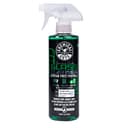
Chemical Guys Signature Series Glass & Window Cleaner

Chemical Guys Signature Series Glass & Window Cleaner

Explicitly labeled tint safe, which is the reassurance worth paying a couple of dollars for if your car has aftermarket film. Otherwise it does the same job as the cheaper bottles, well.

Best for tinted windows
$9.99 · View on Amazon

Price as of August 31, 2026. #ad How we’re funded

5
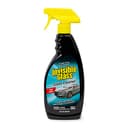
Invisible Glass Glass Cleaner + Rain Repellent

Invisible Glass Glass Cleaner + Rain Repellent

Cleans and leaves water repellency in one pass. It will not match a dedicated glass coating for durability, but it delivers most of the wet-weather benefit with none of the prep - and it is the same price as a plain cleaner.

Best 2-in-1 with repellent
$9.99 · View on Amazon

Price as of August 31, 2026. #ad How we’re funded

The picks in full

#1Top pick — Best overall

Invisible Glass Premium Glass Cleaner

The category benchmark, and remarkably cheap. It is ammonia-free, which is the specification that actually matters in a car - ammonia attacks window tint and can damage the anti-glare coatings on screens.

Strengths

  • Ammonia-free, so it is safe on aftermarket window tint
  • Leaves no residue film, which is what causes night-time glare
  • Costs a few dollars and is available everywhere

Trade-offs

  • Trigger spray produces a wider mist than an aerosol
  • Heavy interior film may need two passes
What it isAmmonia-free automotive glass cleaner, tint safe
SizeNot published
CoverageNot published
Ammonia-freeYes
Tint safeYes
FormatTrigger spray

Specs read from the product listing, on August 18, 2026. “Not published” means the brand does not state that figure.

#2Best for vertical glass

Sprayway Glass Cleaner Foaming Aerosol

The foaming aerosol is the trick here: foam clings to vertical glass instead of running straight down into the door seal, so it gets dwell time where a liquid gets none. Ammonia-free, and cheap in a two-pack.

Strengths

  • Foam clings and dwells instead of running off the glass
  • Ammonia-free and streakless by design
  • Very cheap per can in multipacks

Trade-offs

  • Aerosol overspray gets onto dash and trim - mask or wipe promptly
  • Cans run out faster than a refillable trigger bottle
What it isAmmonia-free foaming aerosol glass cleaner, 19 oz
Size19 oz
CoverageNot published
Ammonia-freeYes
Tint safeNot published
FormatFoaming aerosol

Specs read from the product listing, on August 18, 2026. “Not published” means the brand does not state that figure.

#3Best big bottle

Meguiar's Perfect Clarity Glass Cleaner

The biggest trigger bottle in this group at 24 oz, ammonia-free, and explicitly rated safe on tinted glass. The catch is on Amazon rather than in the bottle: there is no featured offer right now, so it ships from third-party sellers and what you pay moves around.

Strengths

  • 24 oz, the largest trigger bottle in this group
  • Ammonia-free and stated safe on clear and tinted glass alike
  • Anti-hazing formula aimed at the greasy film inside a windshield

Trade-offs

  • No featured Amazon offer, so it comes from third-party sellers at varying prices
  • Cleaner only - no water repellency, unlike the 2-in-1 in this group
What it isAmmonia-free, tint-safe glass cleaner, 24 oz
Size24 oz
CoverageNot published
Ammonia-freeYes
Tint safeYes
FormatTrigger spray

Specs read from the product listing, on August 18, 2026. “Not published” means the brand does not state that figure.

#4Best for tinted windows

Chemical Guys Signature Series Glass & Window Cleaner

Explicitly labeled tint safe, which is the reassurance worth paying a couple of dollars for if your car has aftermarket film. Otherwise it does the same job as the cheaper bottles, well.

Strengths

  • Tint safe is stated on the label rather than implied
  • No streaking or residue on interior glass
  • Available in a two-pack for refills

Trade-offs

  • More expensive than the equally tint-safe Invisible Glass
  • Nothing it does that the budget options do not
What it isTint-safe glass and window cleaner, 16 oz
Size16 oz
CoverageNot published
Ammonia-freeNot published
Tint safeYes
FormatTrigger spray

Specs read from the product listing, on August 18, 2026. “Not published” means the brand does not state that figure.

#5Best 2-in-1 with repellent

Invisible Glass Glass Cleaner + Rain Repellent

Cleans and leaves water repellency in one pass. It will not match a dedicated glass coating for durability, but it delivers most of the wet-weather benefit with none of the prep - and it is the same price as a plain cleaner.

Strengths

  • Cleaning and water repellency in a single product
  • Noticeably better wet-weather visibility for very little effort
  • Same price as a plain glass cleaner

Trade-offs

  • Repellency lasts a fraction as long as a dedicated glass coating
  • Repellent chemistry means it is exterior-first, not ideal inside
What it is2-in-1 glass cleaner and rain repellent
SizeNot published
CoverageNot published
Ammonia-freeNot published
Adds repellencyYes
FormatTrigger spray

Specs read from the product listing, on August 18, 2026. “Not published” means the brand does not state that figure.

How to choose a glass cleaner

Ammonia-free and tint safe

These usually go together but are stated separately, and not every brand states either. Ammonia-free is the chemistry; tint safe is the manufacturer’s explicit assurance. If your car has aftermarket film, buy a product that says tint safe on the label rather than one that merely omits ammonia from its marketing. Note in the table above how inconsistently these two facts are actually published.

Aerosol foam or trigger spray

A foaming aerosolclings to vertical glass instead of running straight down into the door seal, which gives it dwell time to work — genuinely useful on side windows and the steeply raked inside of a modern windscreen. The trade is overspray onto the dash and trim, and cans that empty faster than a refillable bottle. Trigger sprays are cheaper per ounce, more controllable, and better for the exterior.

Cleaner, or cleaner plus repellent

The 2-in-1 products clean and leave a water-repellent layer in one pass. They will not last as long as a dedicated glass coating, but they cost the same as a plain cleaner and deliver a real improvement in rain. Keep them for the exterior — repellent chemistry is not what you want on the inside.

The technique that actually removes streaks

Streaks are almost never the cleaner’s fault. They come from three things: working in direct sun, using one towel for both cleaning and drying, and using a towel that has fabric softener in it.

Use two towels.A dedicated glass microfiber — low pile, waffle or tight weave, not a plush drying towel — to clean, and a second, bone dry one to buff. This single change eliminates most streaking on its own.

Spray the towel, not the glass on interior windows. Spraying the glass directly means overspray on the dash, and on a modern car, on the screen.

Wipe in one direction inside and the other outside— horizontal strokes on the inside, vertical outside. When you spot a streak later, you immediately know which side it is on.

Do the windows last, after the interior surfaces, because dressing overspray from a dashboard product lands on the glass and is exactly the film you just removed. And roll each window down an inch to clean the top edge, which is the strip that shows as a dirty band the moment you lower it.

The inside film nobody talks about

Interior glass builds a haze from plasticizer off-gassing — the vinyl and plastics in the cabin release compounds that condense on the glass, particularly in a hot car. That is why the inside of a windscreen fogs up greasy while the outside stays clean. It needs a proper cleaner and often two passes; a dry wipe just moves it around. Using low-gloss, non-greasy interior products reduces how fast it comes back.
Frequently asked questions

Can I use household glass cleaner on my car?

Not if the car has tinted windows. Most household glass cleaners are ammonia-based, and ammonia attacks the adhesive and dye in aftermarket window film, causing it to discolour, purple and bubble over time. It can also damage anti-glare coatings on infotainment screens. Automotive glass cleaners are ammonia-free for exactly this reason, and they cost a few dollars - it is a bad place to economize.

Why does my windshield streak no matter what I use?

Usually technique rather than product. The three common causes are cleaning in direct sunlight so the product flashes off before you can buff it, using one towel for both cleaning and drying, and using microfiber that has been washed with fabric softener - which leaves a residue that smears. Use two towels, one to clean and one dry to buff, work in the shade, and keep glass towels out of the softener.

What is the film on the inside of my windshield?

Off-gassing from the interior plastics and vinyl. In a hot cabin those materials release plasticizer compounds that condense on the cool glass as a greasy haze, which is why the inside films up while the outside stays clear. It is also what turns oncoming headlights into a starburst at night. It needs a proper cleaner and often two passes, and using low-gloss, non-greasy dashboard products slows how quickly it returns.

Should I use a glass cleaner with rain repellent?

On the exterior, it is good value - you get a real improvement in wet-weather visibility for the same price as a plain cleaner and no extra step. It will not last anything like as long as a dedicated glass coating, so think of it as a bonus rather than a substitute. Keep repellent products for the outside; the inside just wants a plain, streak-free clean.

What kind of towel should I use on glass?

A dedicated low-pile glass microfiber - waffle weave or a tight flat weave - not the plush towel you use for drying paint. Deep pile holds too much product and leaves lint and streaks. Keep two: one for cleaning, one bone-dry for the final buff. Wash them separately from paint and wheel towels, and never with fabric softener, which coats the fibers and guarantees smearing.

Sources

Keep reading