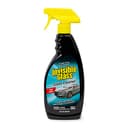
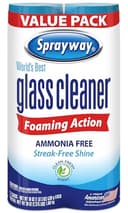
Buy Invisible Glass if your car has aftermarket tint, and Sprayway if your problem is the inside of a steeply raked windshield. Both are sold ammonia-free. Only Invisible Glass carries a tint-safe claim on its listing, and that single row is the whole decision for anyone with film on their windows. For everyone else, the choice is physical: a trigger spray you control, or a foam that clings to glass you can barely reach.
One honest finding first, because it changes how much weight to put on the claims below. We read Invisible Glass’ own website, and the maker’s product page does not mention ammonia or window tint anywhere — it sells the automotive cleaner purely on removing “road film, interior haze, and grime… without streaks or residue”. Sprayway’s own site redirected to a brand landing page with no readable product spec. So the ammonia-free and tint-safe rows on this page come from the retail listings, not from the manufacturers’ spec pages. That is normal in this category and it is still worth knowing.
What each one publishes
| Published claim | Invisible Glass | Sprayway |
|---|
| Ammonia-free | Yes | Yes |
| Tint safe | Yes | Not published |
| Format | Trigger spray | Foaming aerosol |
| Size | 22 fl oz | 19 oz |
| Ingredient list | Not published | Not published |
| pH or VOC figure | Not published | Not published |
| Maker’s own site mentions tint? | No | Could not be read |
Why the tint row is the one that matters
Aftermarket window film is a plastic laminate bonded to the inside face of the glass. Ammonia is the ingredient the whole industry steers away from on film, and the concern is the laminate and its adhesive rather than the glass underneath. Factory tint — where the glass itself is dyed in manufacture — has nothing to damage, so none of this applies.
That is why both products advertising “ammonia-free” already puts them ahead of the blue bottle under your kitchen sink. But ammonia-free and “tint safe” are different statements, and only one of these two makes the second one. If you have paid for ceramic film, buy the product that says the words.
Spray or foam is a question about your windshield
Here is the thing nobody mentions until you own both. Modern windshields are raked hard, which means cleaning the inside involves reaching across a dashboard at an awkward angle with a towel. A liquid sprayed onto that glass runs downhill into the defroster vents before you get there. A foam does not.
The same logic applies to side windows, where a trigger spray drains into the door seal and reappears as a drip two days later. Foam clings, you work it, you buff it off.
The cost of that convenience is overspray. An aerosol coats everything within a foot of the glass — dashboard, A-pillar, headliner edge, infotainment screen — none of which glass cleaner is formulated for. With a trigger spray you can do the thing you should be doing anyway: spray the towel, not the glass.
The haze neither bottle will permanently fix
If the inside of your windshield goes foggy again a week after you clean it, the cleaner is not failing. Vinyl, plastics and dressings off-gas in a hot cabin and condense on the coldest, flattest interior surface in the car — which is the inside of your windshield. That is the “interior haze” Invisible Glass names in its own copy.
The fix is upstream: stop feeding it. Avoid glossy silicone dressings on the dash, use a matte interior cleaner and protectant, and crack the windows when the car bakes. Our dashboard guide and interior cleaner roundup both cover the residue question, and how to detail your car interior puts glass last in the order for exactly this reason.
When to stop buying cleaner and buy something else
Three cases where neither bottle is the answer. Hard-water spots that survive cleaning are etched mineral, and need a dedicated remover or polishing. Rain that sheets badly at speed is a repellency problem, which is Aquapel or Rain-X territory rather than a cleaner. And wiper judder on clean glass is usually the blade, not the window.
Everything else — road film outside, plasticiser haze inside, fingerprints on the rear glass — is a cleaner and two clean towels. Pick the format that suits your windshield, and pick the one with the tint claim if your car has film.